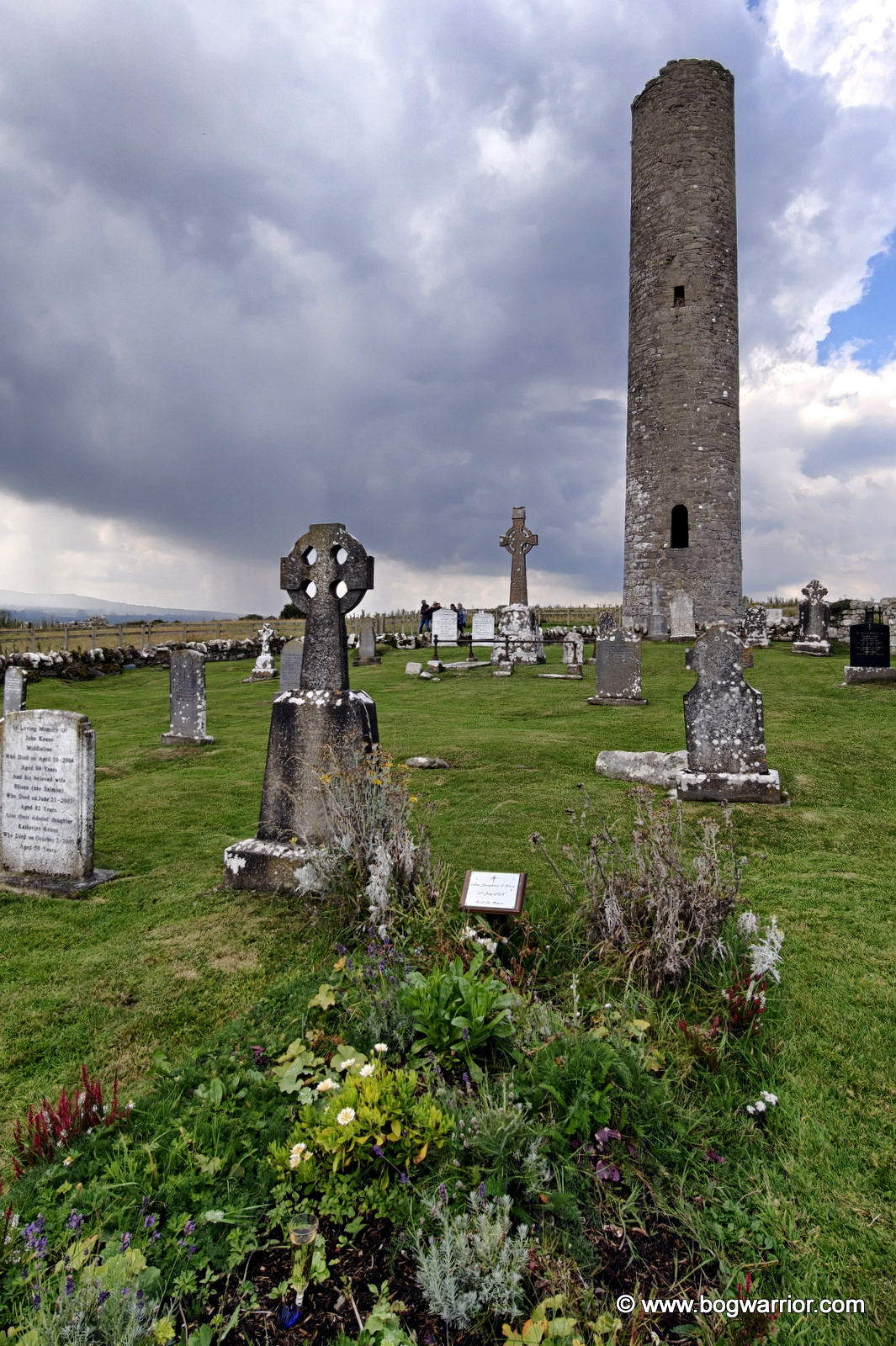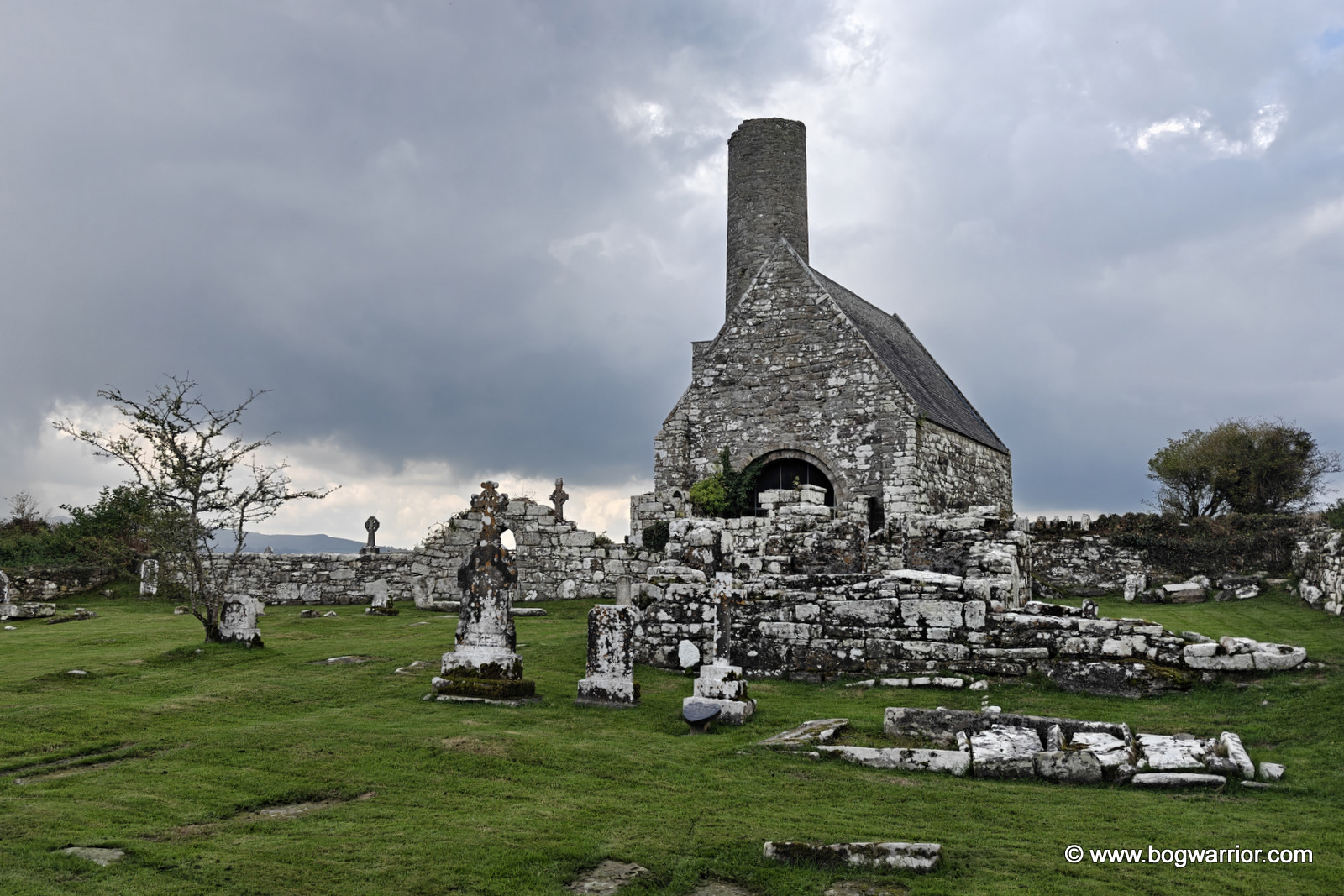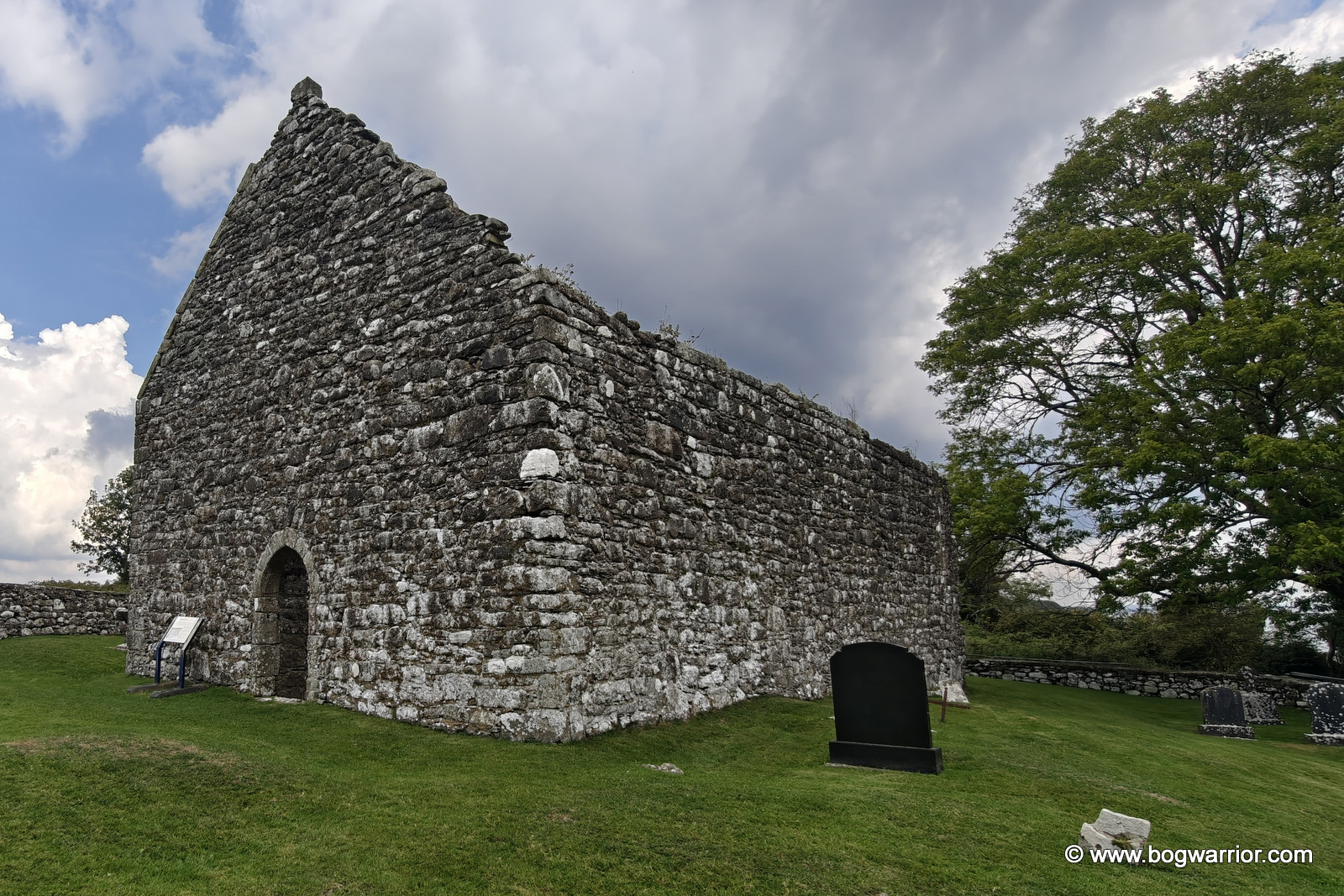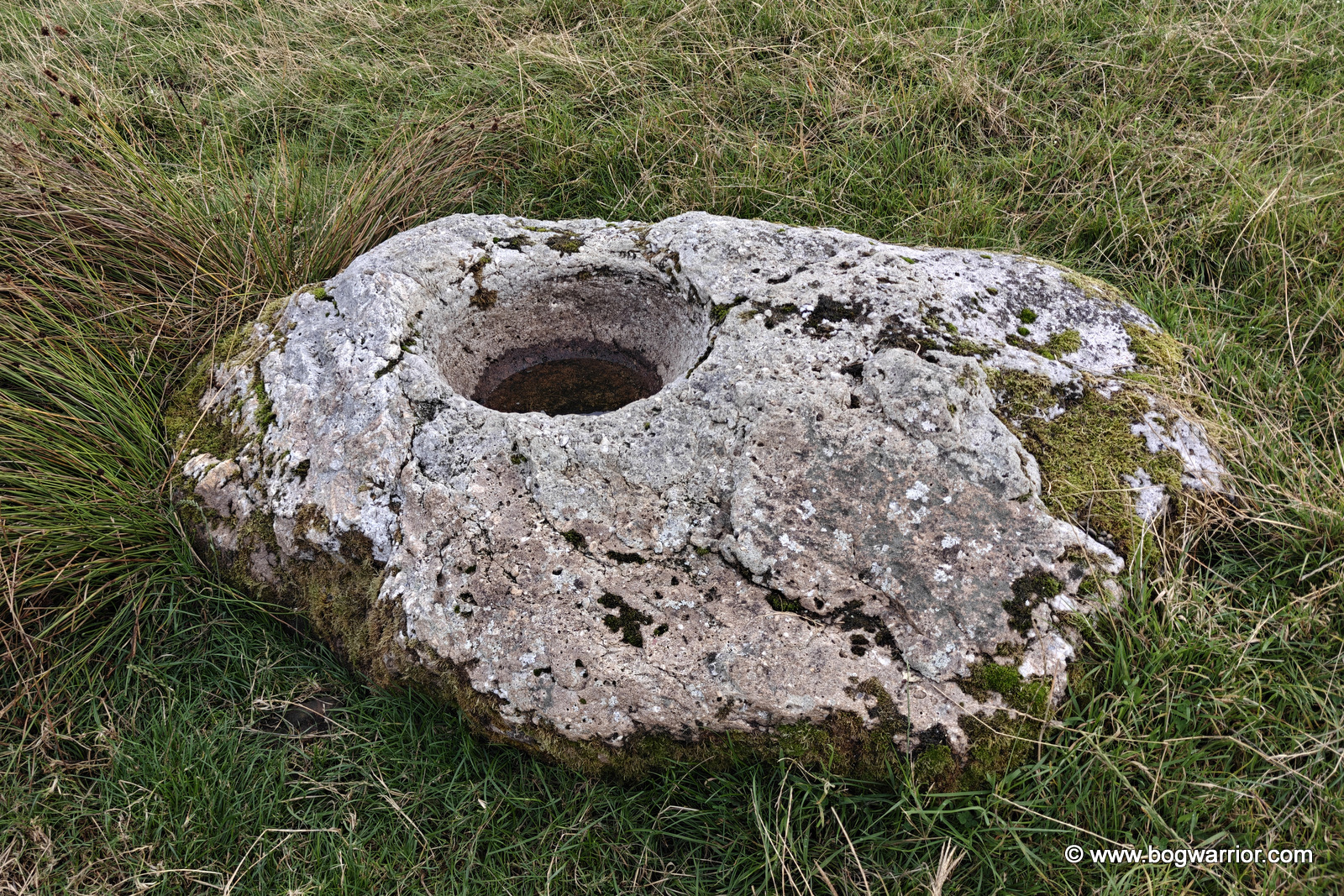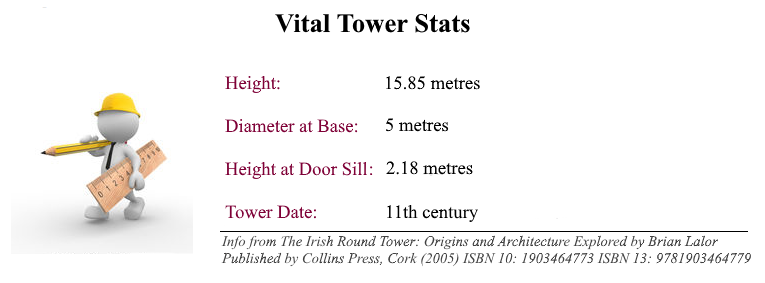
My Last Mayo Round Tower: Killala

Killala was the last of the five Mayo round towers for me. I visited it in September, so it was nice to finally cross it off the list and mark Mayo as done.

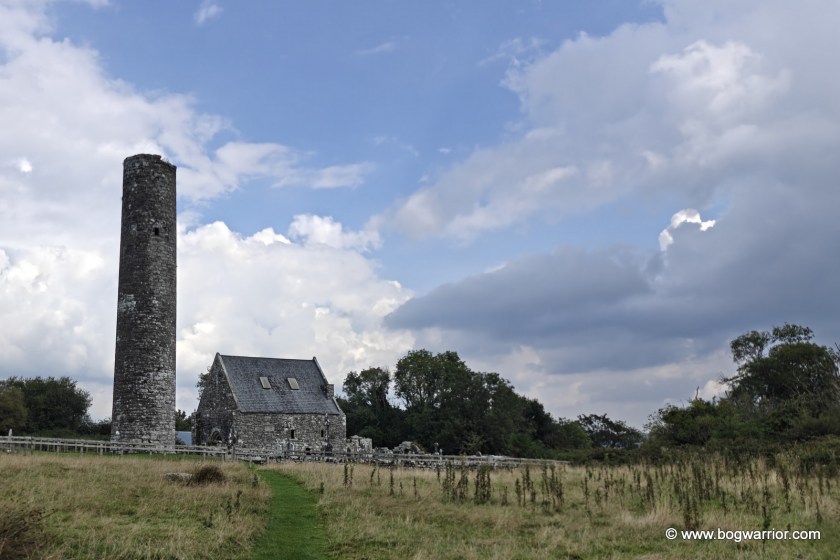
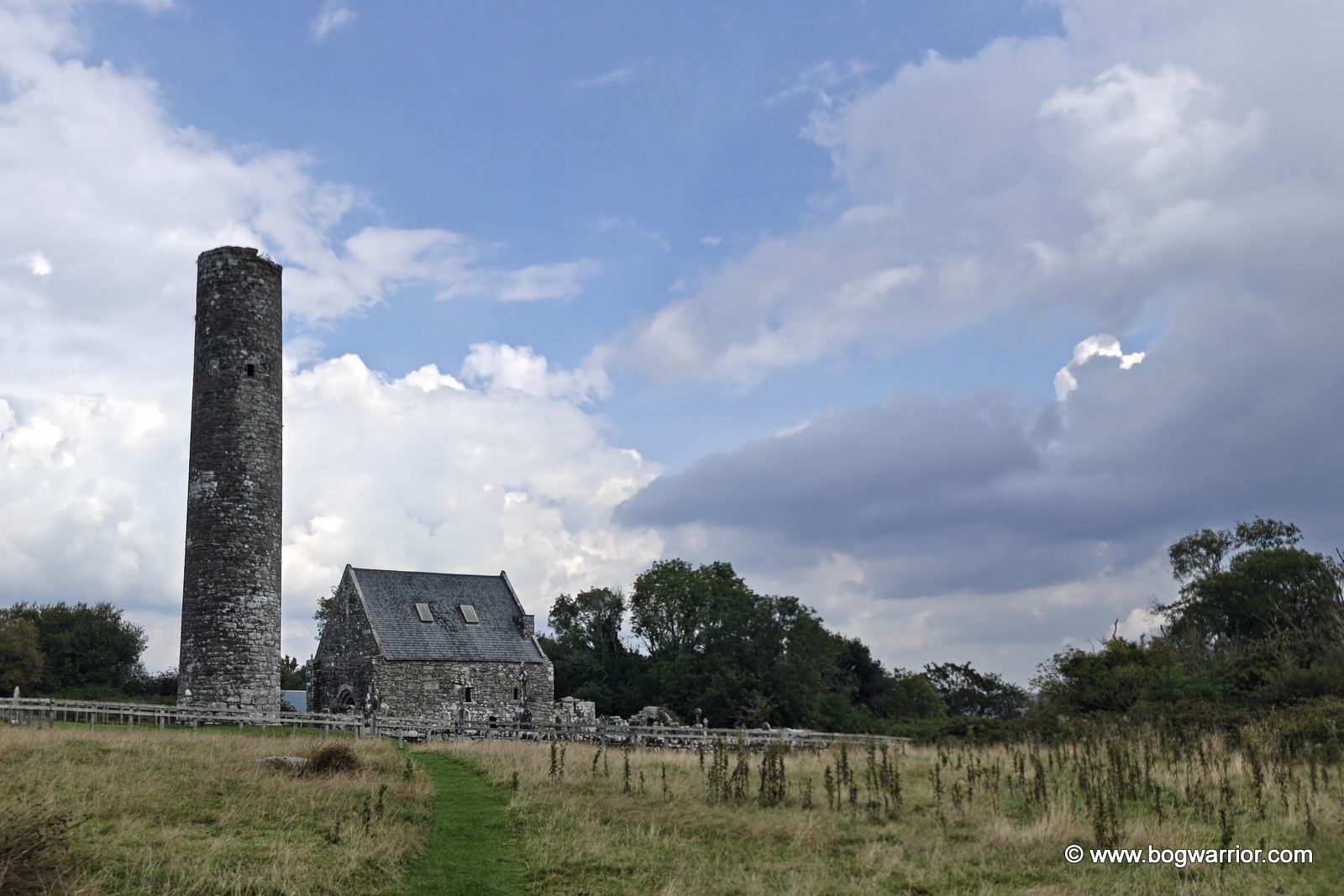
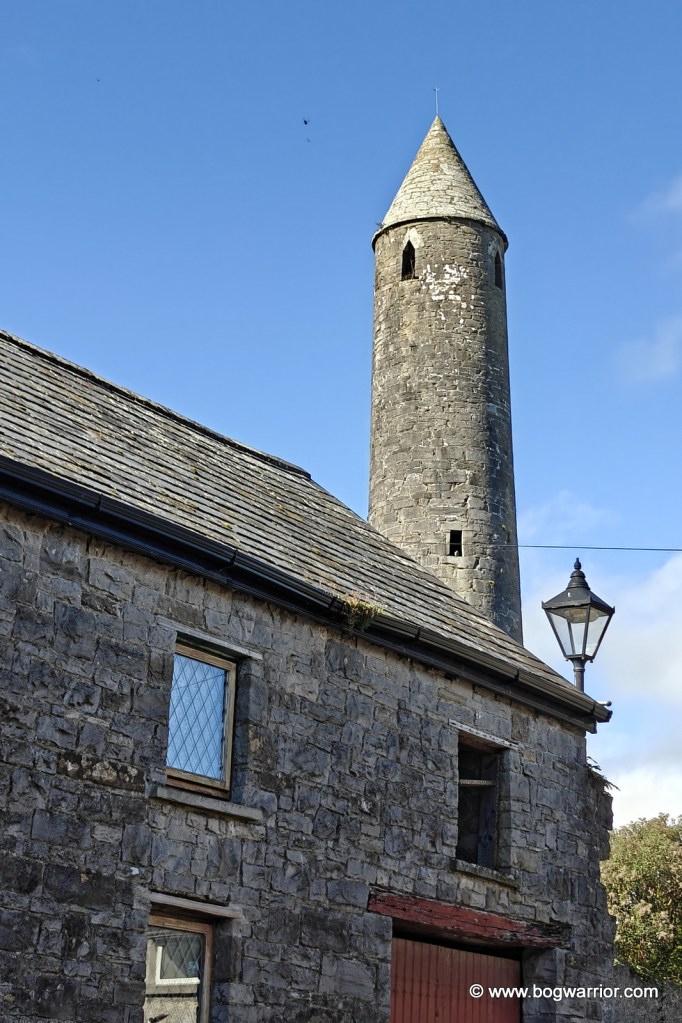
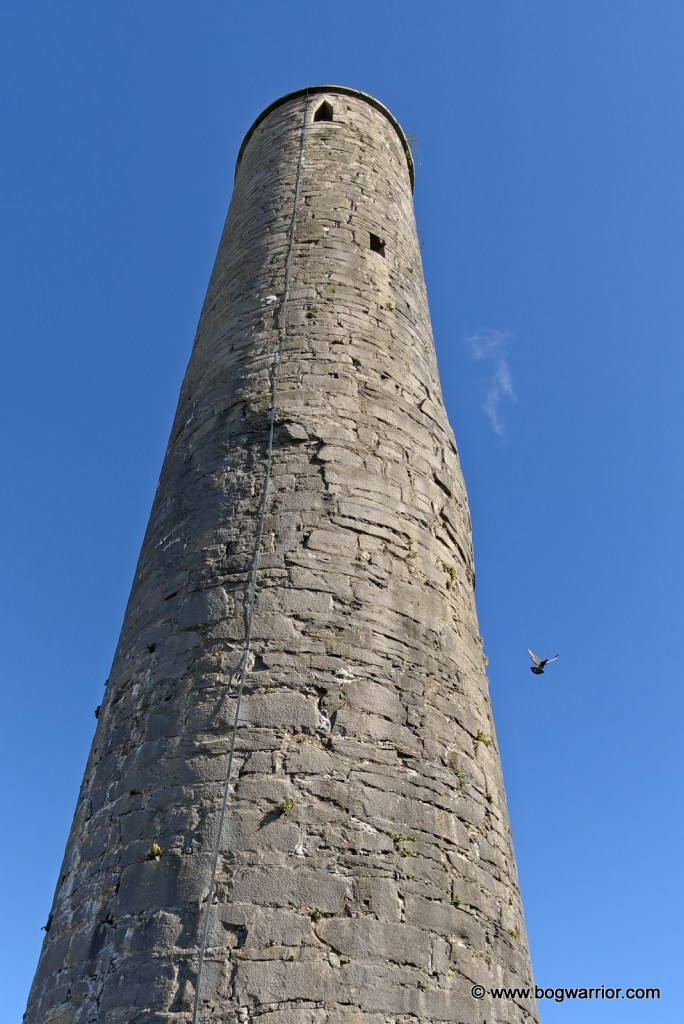
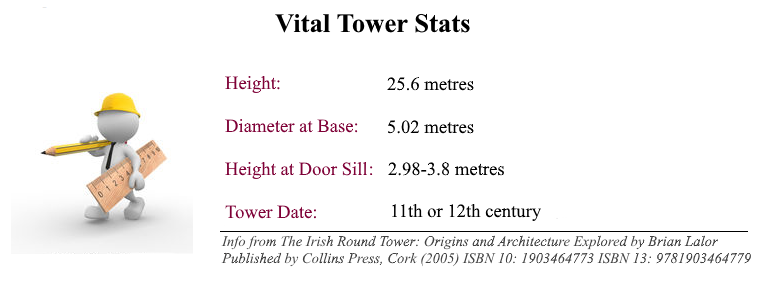
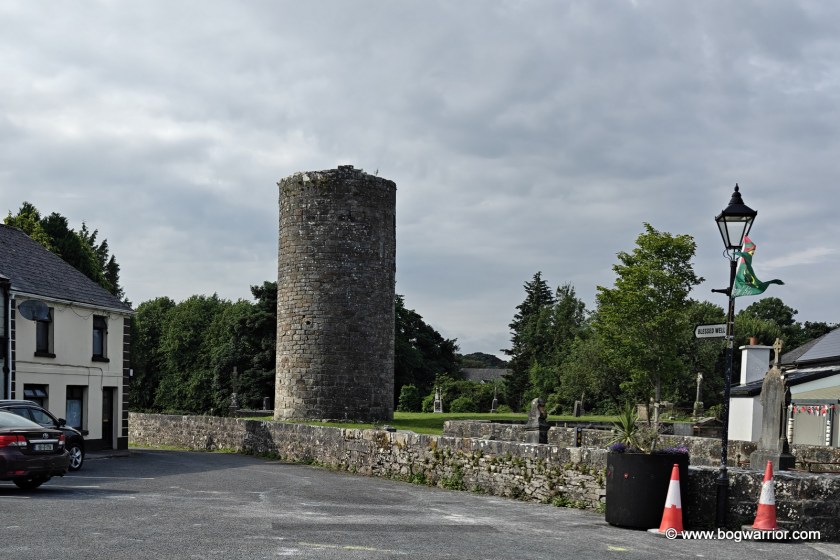
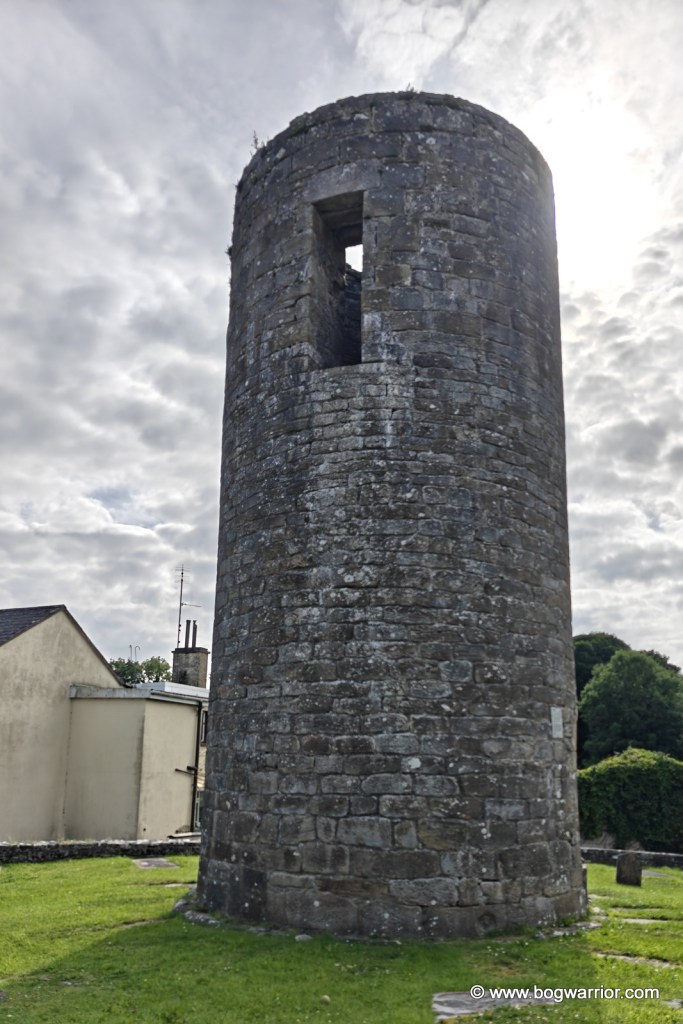
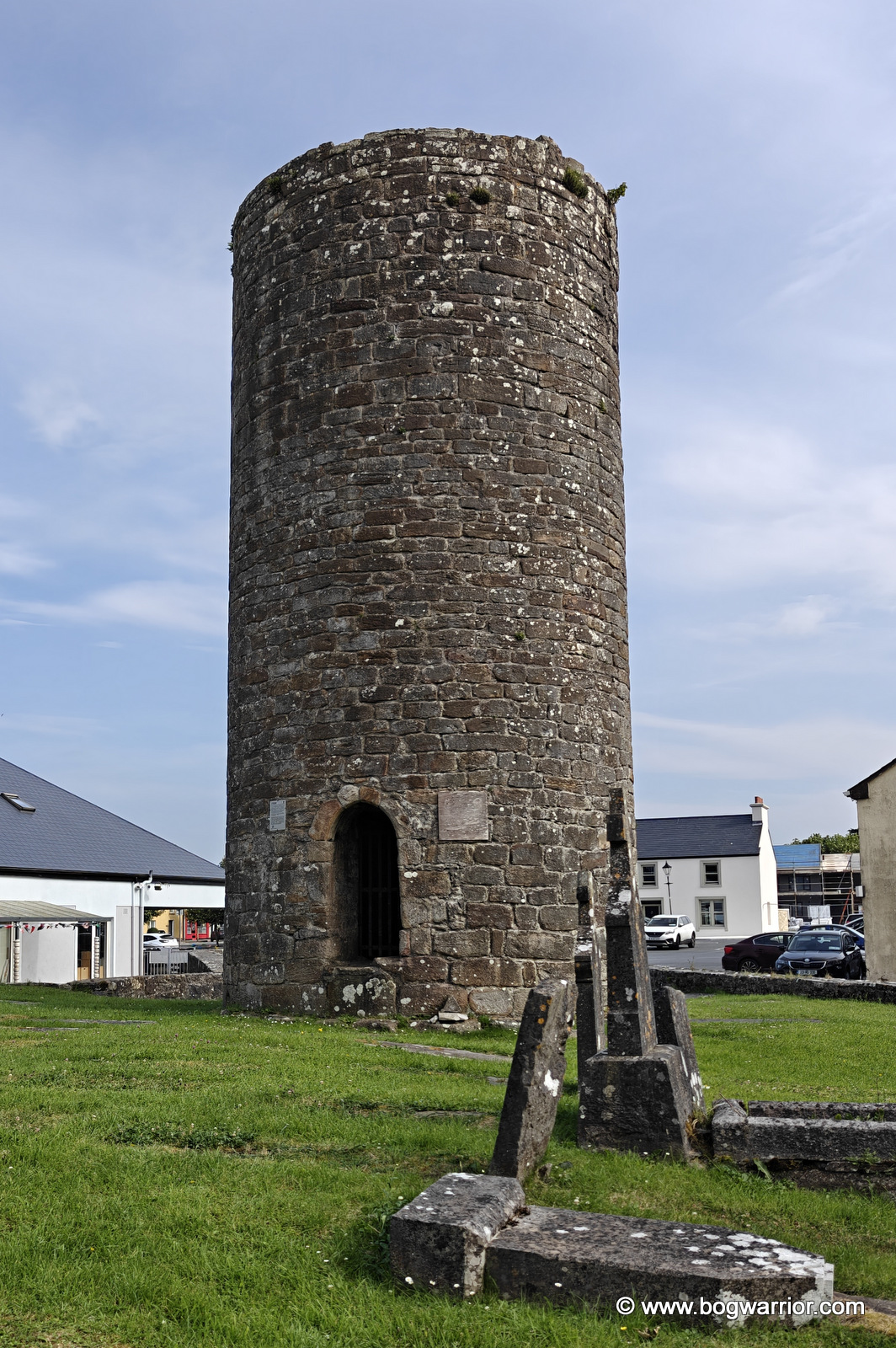
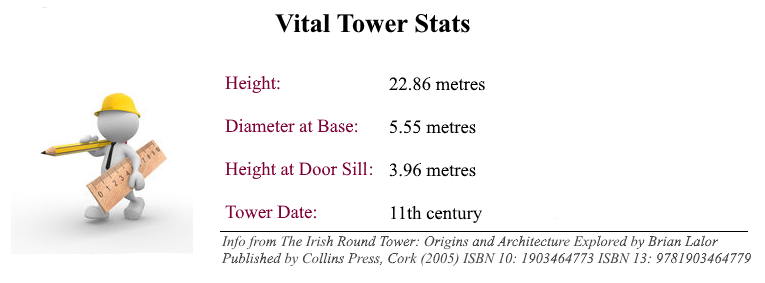
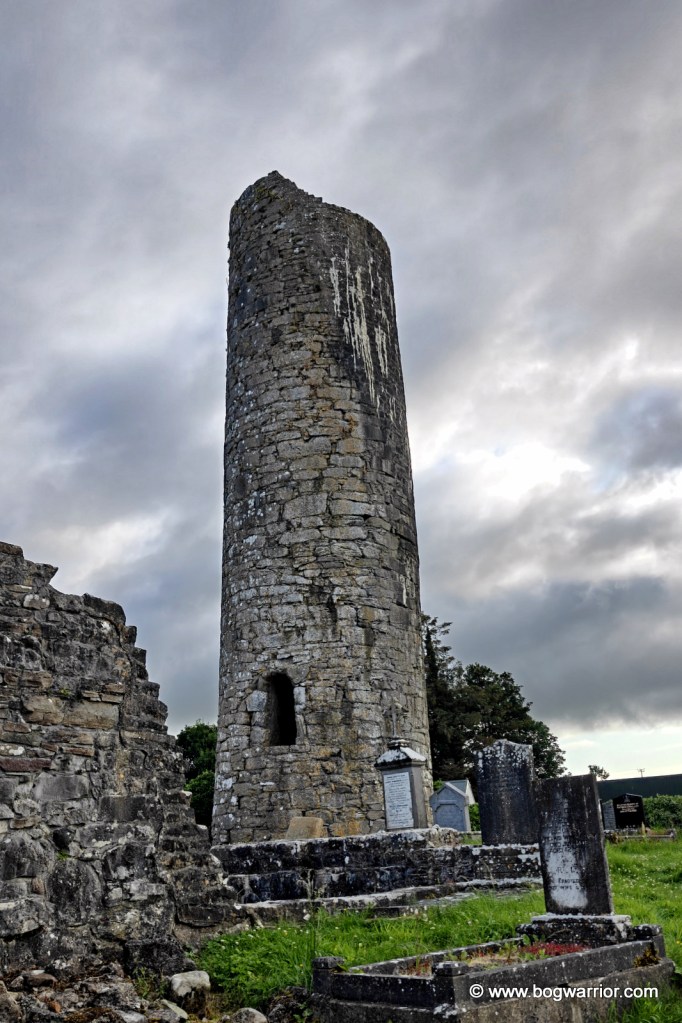
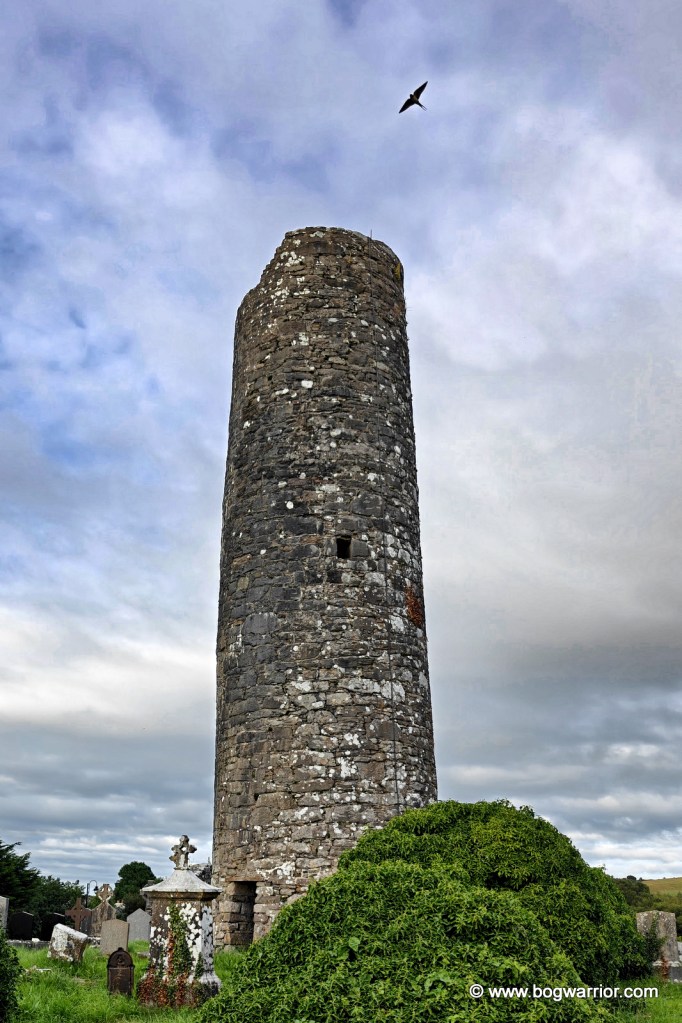
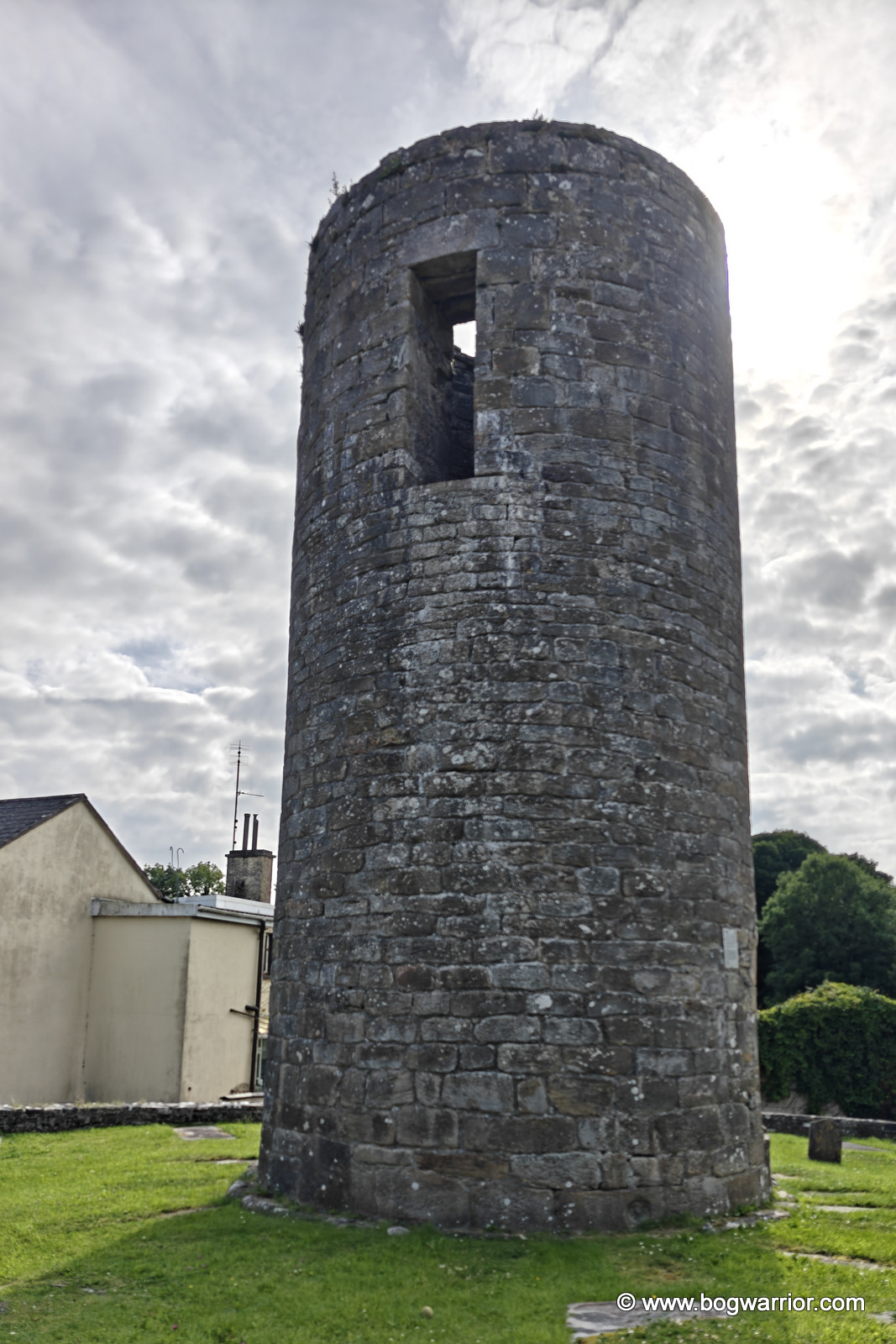
This one is impossible to miss. It towers (ha!) over the town and is in wonderful condition. Unlike all too many of these towers, it is complete and still has its cap.

The tower, as seen from the side street

The frustrating thing is the location. It’s just off a side street and at the top of some stone steps. It’s jammed into a small yard with very little room around it, which just feels like a waste of a really good tower. You can get a good look at it up close and personal, but there’s no room to stand back and enjoy it properly.

Killala Round Tower
What the tower looks like when you climb the steps

Some repairs were carried out in the 19th century, including the restoration of the cap (roof). The caps fell in on most of these towers but were later reinstated. At least they did a good job here, unlike the one in Swords, where the restored cap looks like the round tower equivalent of the infamous Spanish fresco restoration fail.

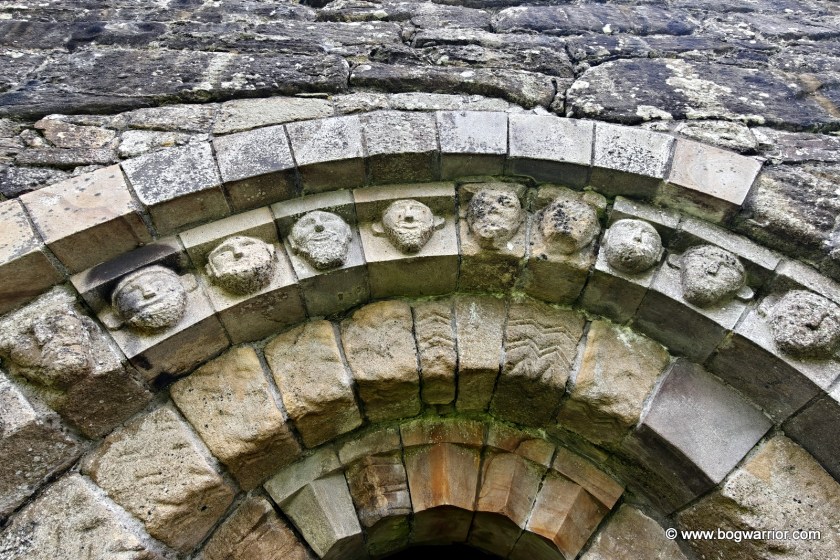
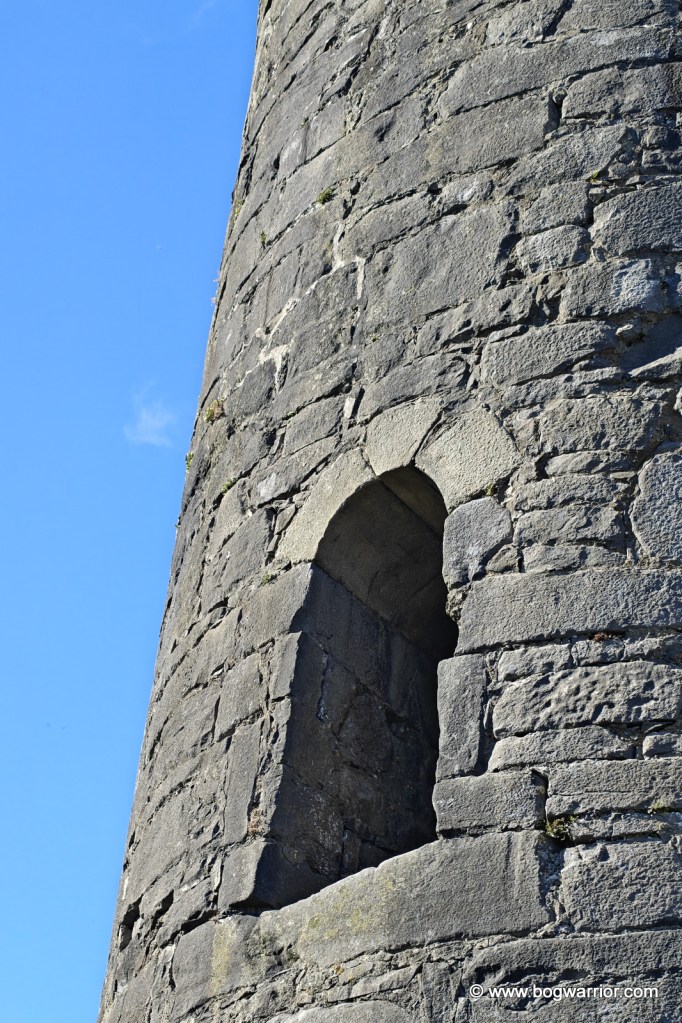
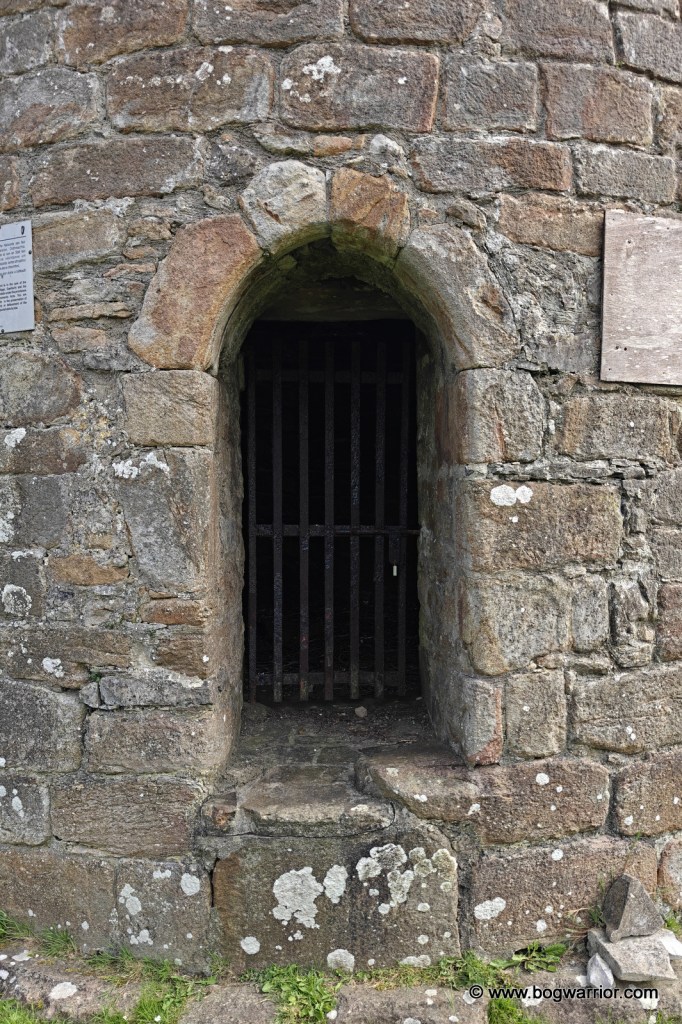
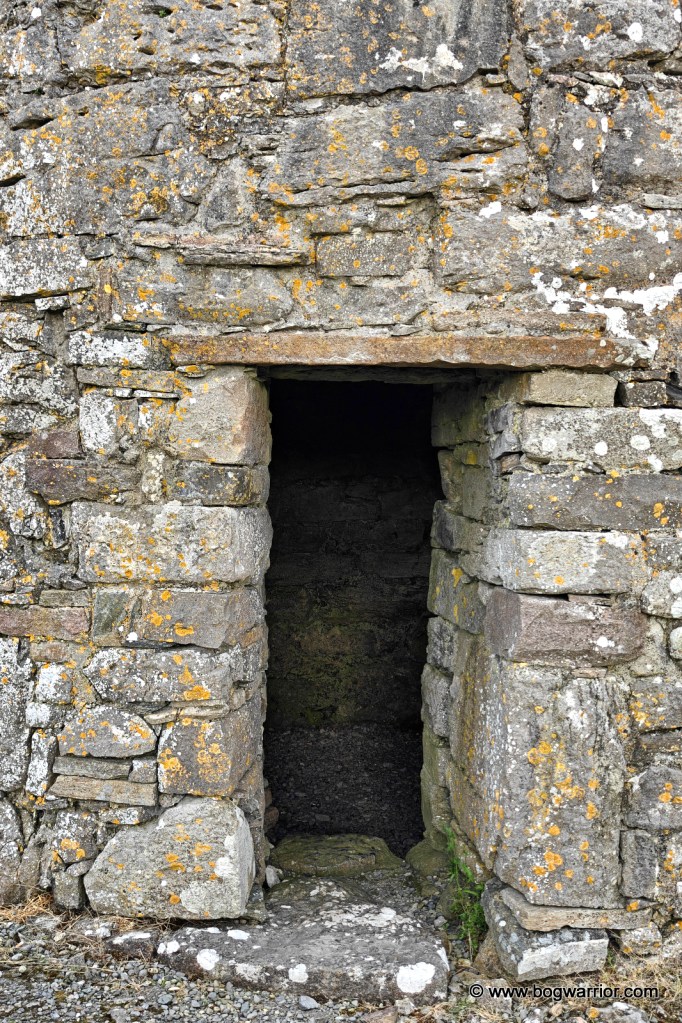
The doorway of the tower

The ruins of Rosserk Abbey are 8km down the road. There is a small carving of a round tower on a piscina (stone basin) there, and it’s thought to depict this tower.

Getting There

Drive into Killala and look up. It’s hard to miss! Big tower, hill...you get the idea. There is a car park beside the nearby Church of Ireland cathedral. On the off-chance you can’t find the tower, they’ve signposted it

Balla’s Rogue Round Tower

The Mayo round towers have been remarkably easy to find so far. More importantly, they haven’t involved too much driving on narrow country roads. Even as a seasoned driver who’s used to those roads, there are times when I question my decisions and pray that there’s nobody coming in the opposite direction.

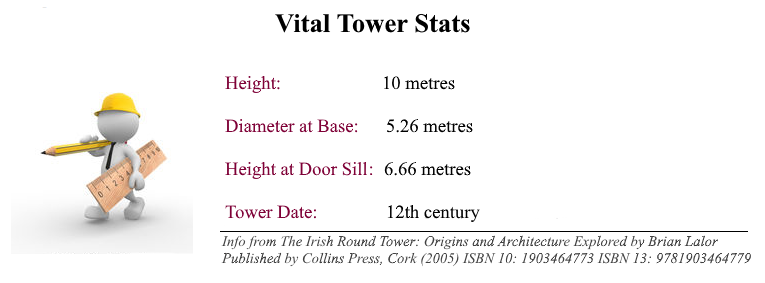
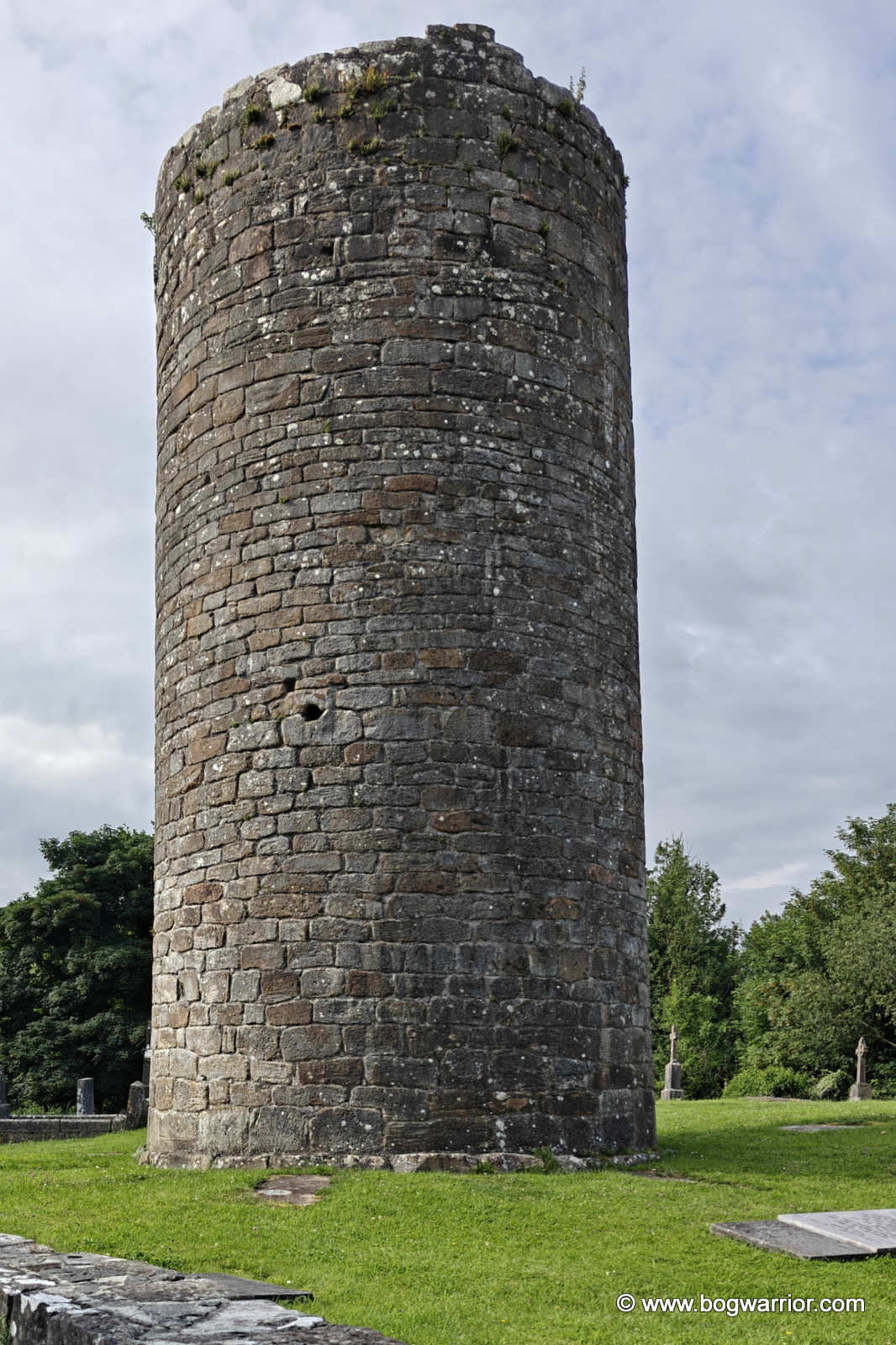
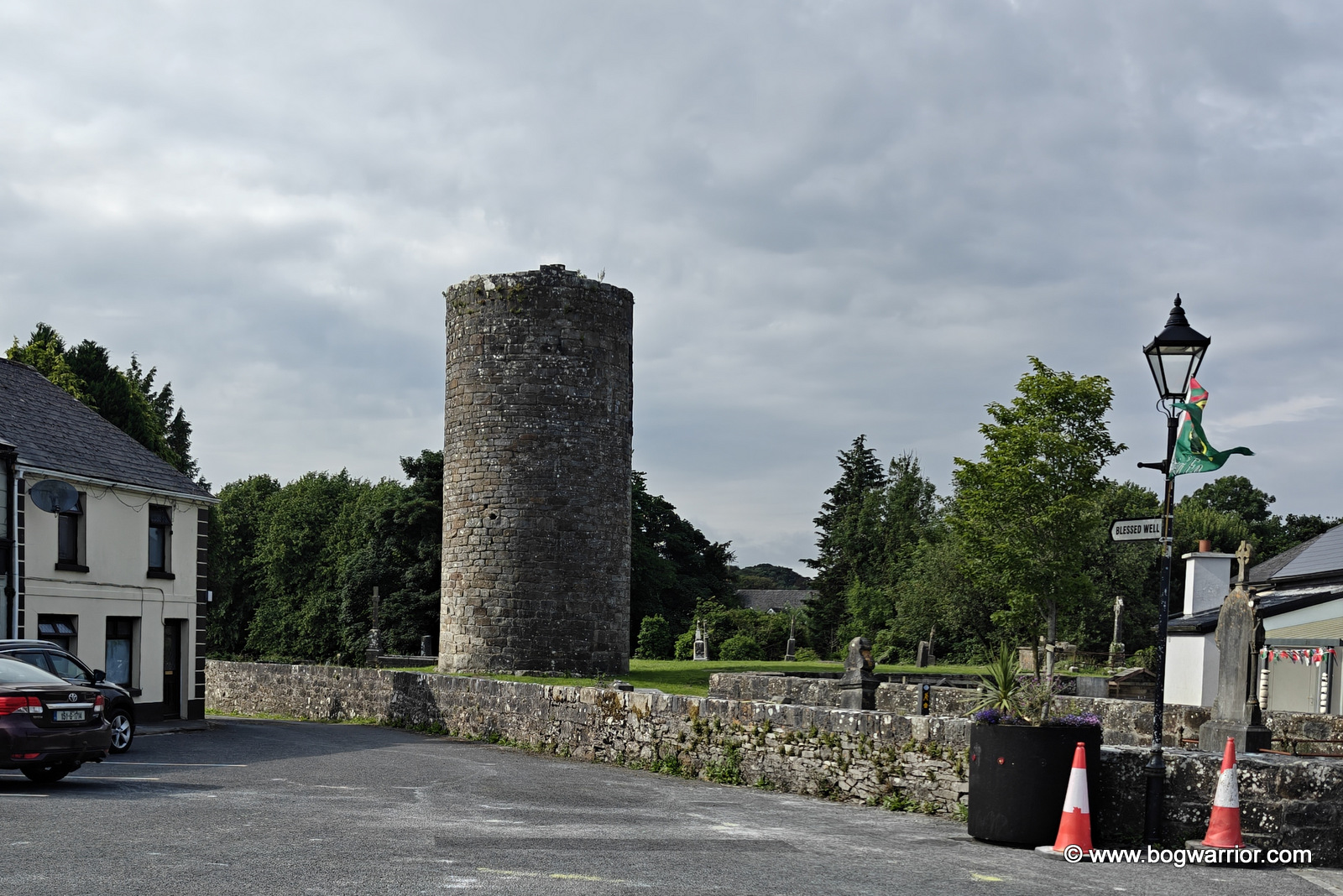
The village was on my route home, and for a change I didn’t need help from certain navigation apps from evil tech giants. Despite the tower being only about 10m tall nowadays, I spotted it from a distance and pulled the car up in the square beside it. The monastery at Balla was founded by St Mochua, who died in 637. The church was burnt in 780 and again in 1179. The round tower is all that survives from the monastery.

Balla round tower
Approaching from the square

The tower stands in a beautifully maintained old graveyard in the centre of the village. It is believed to have been about 15m tall as recently as the 19th century, and we know that a bell was installed here during the 1830s. It must have been considerably taller originally, but exactly how tall it was is another question. With the passage of time, who knows? Like the tower at Aughagower, just 30 km away, this one has two doorways.

Brian Lalor’s excellent book on Ireland’s round towers has been an invaluable companion on these trips and on this blog. He rather tantalisingly describes Balla as a “rogue tower”, which immediately made my ears prick up. Well, as much as a human’s ears can without looking ridiculous.

Part of the answer seems to lie with the original upper doorway. Lalor points out that it is lintelled, something more commonly found in some of the earlier round towers. But in Balla’s case, the doorway appears to have been altered while the tower was being built, rather than being part of the original design.

The masonry also suggests that the tower was built in several phases. So even before it was finished, it seems to have been going off-script.

Balla round tower
The original doorway

The second doorway is unusual too. In most round towers, the later ground-level doorway tends to be the crude one, while the original elevated entrance is the more carefully finished of the two. At Balla, it’s the other way around. The ground-level doorway is thought to date from the 16th century, and it’s a very nice piece of work. Part of it also appears to incorporate a piece of an early mediaeval cross slab that has been reused in the construction. Carrying on with the recycling theme, there are a couple of stones in the walls that look very much like bullauns. The tower also has what appears to be a very small window, or a gun loop, in the south-facing wall. Hmm.

Balla round tower lower doorway

For a truncated tower with no crumbly old companions left in the vicinity, it has a lot going on. Even if you’re not a round-tower fanatic – like most regular people 😁 – it’s worth a quick detour if you’re on the road.

Getting There

The village of Balla is on the N60, roughly half way between Castlebar and Claremorris. It’s just off the village square, so it’s a piece of cake to get to.

Gallery

Meelick: A race against the dying light

If you read my post about my visit to Turlough round tower, you might remember me banging on about arriving so late in the evening that everything else had already closed. As a reminder of just how insanely long summer evenings are in Ireland, I managed to find time to visit the round tower at Meelick on that very same evening.

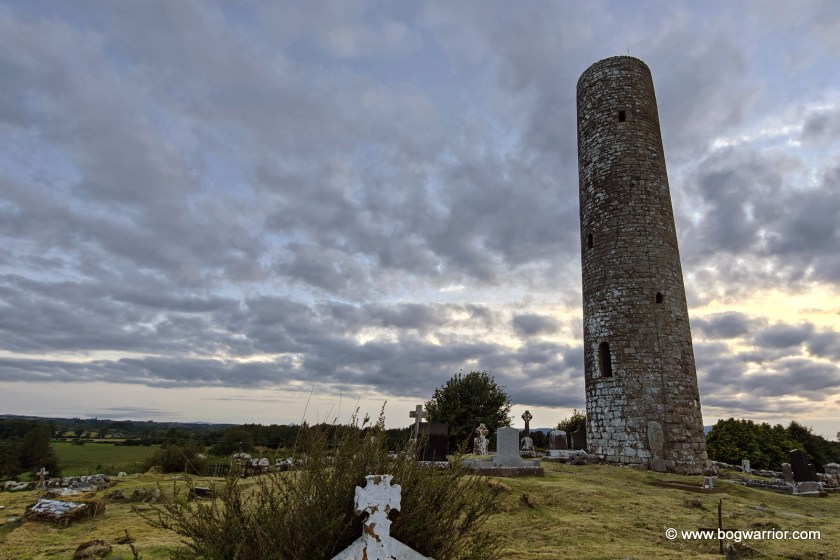
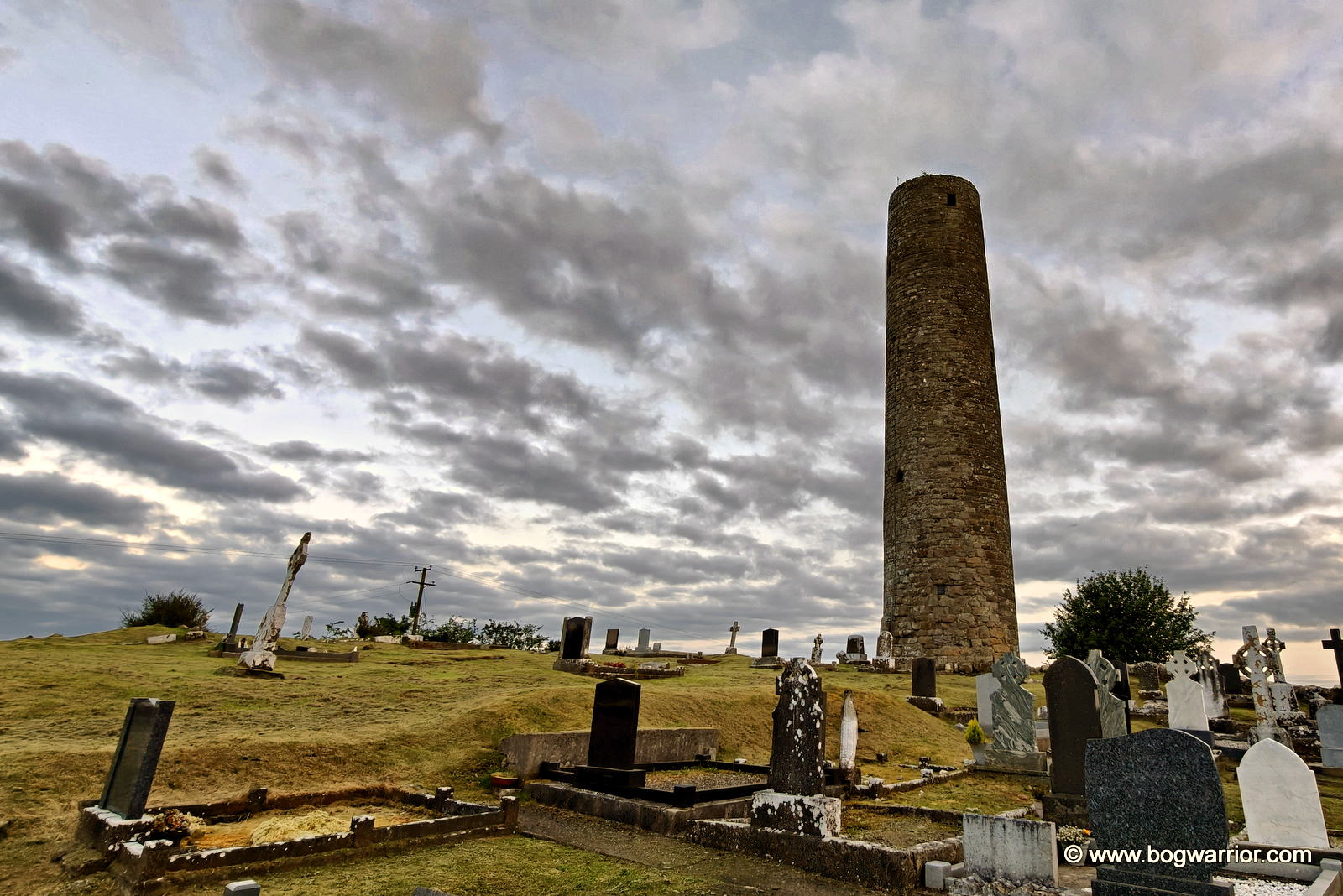
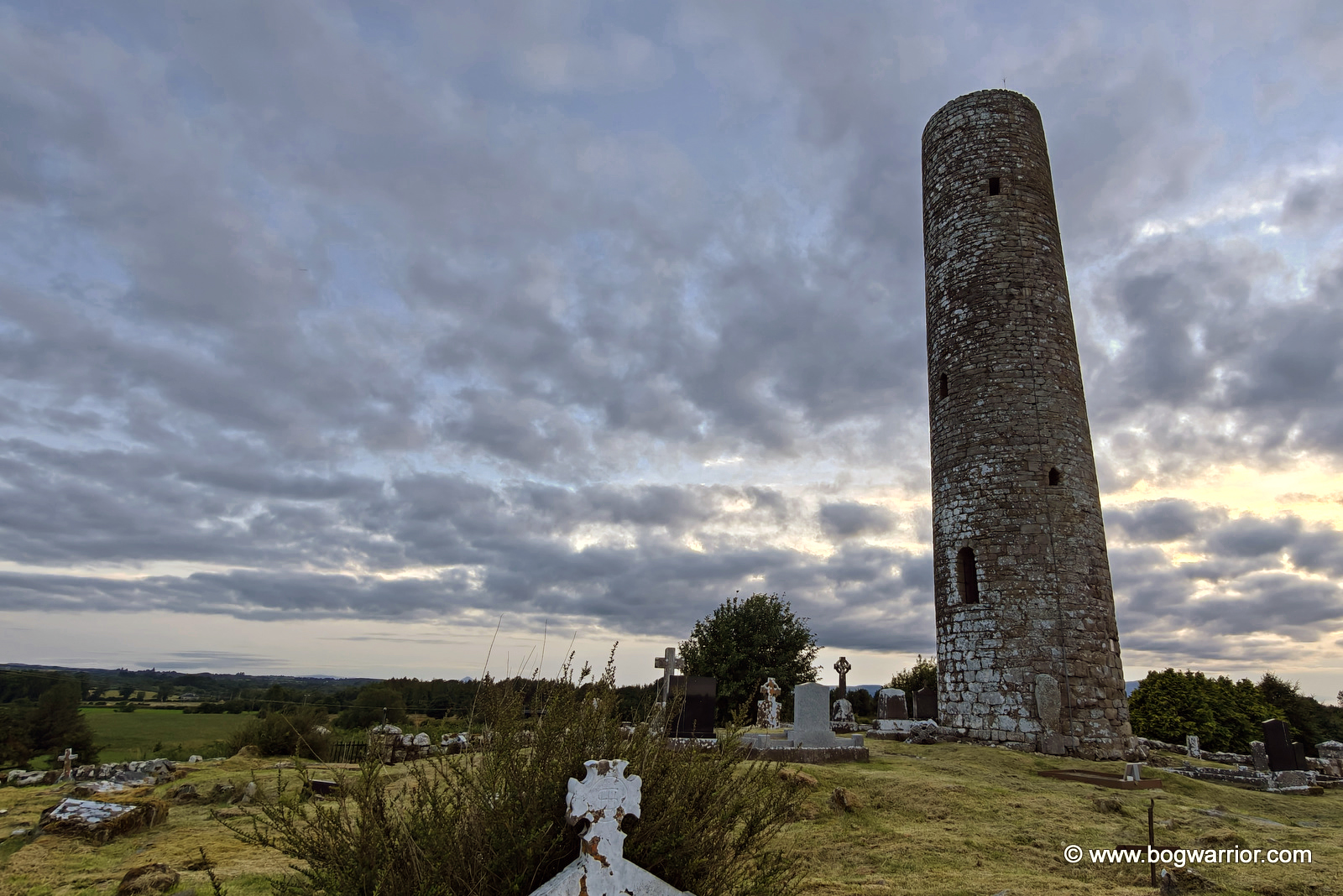
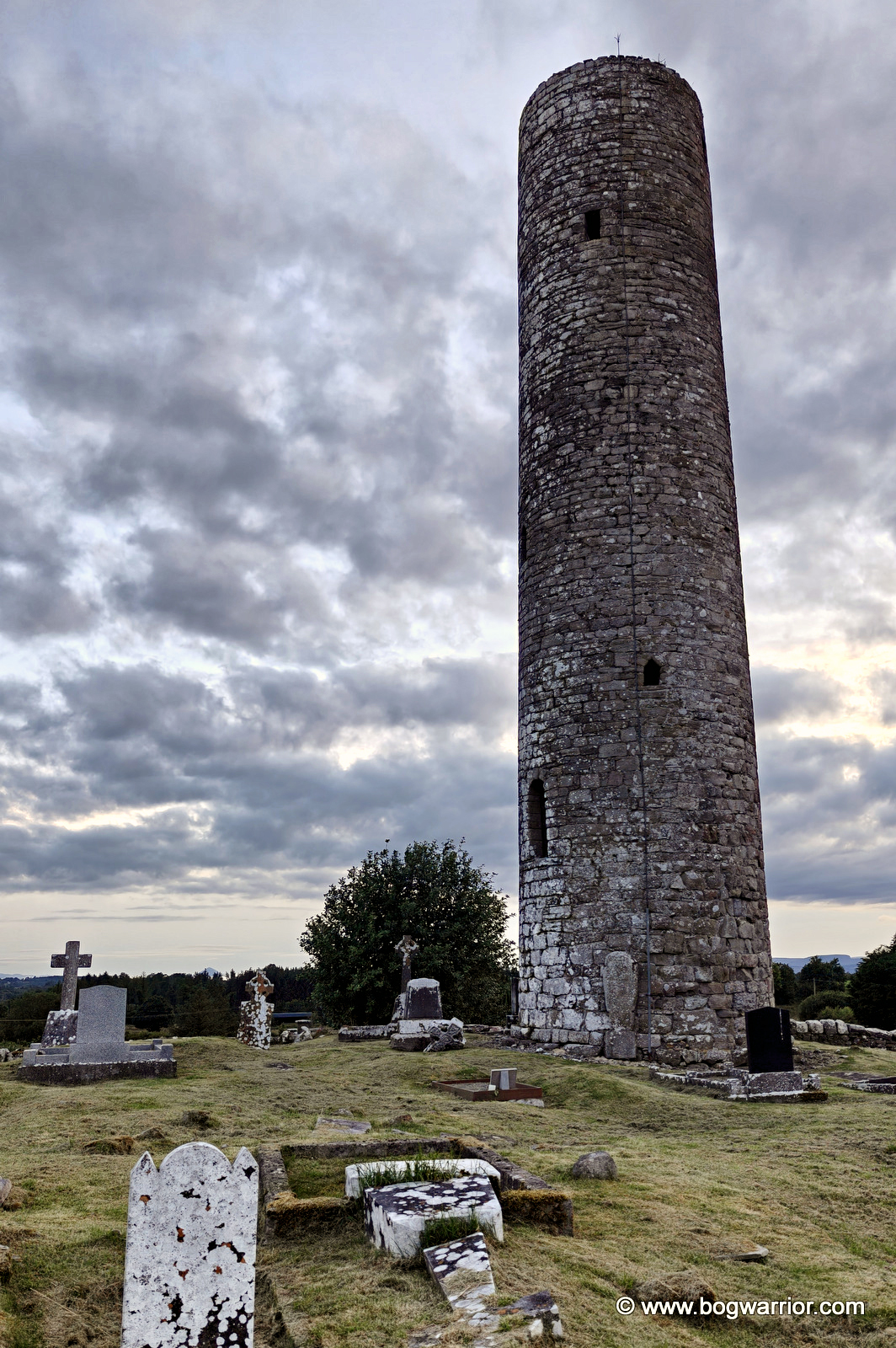
Meelick Round Tower
Meelick Round Tower

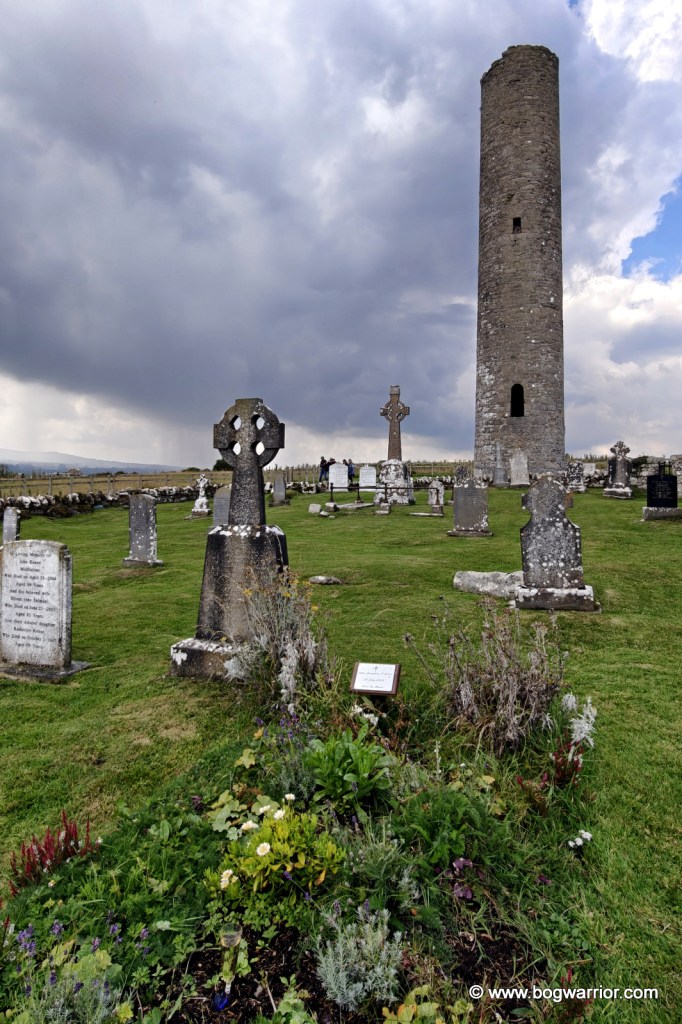
Meelick’s tower stands in a lovely, peaceful old graveyard on a hill out in the countryside. The modern cemetery is across the road, both sitting quietly alongside a country road with little to disturb the peace.

A word of praise is also due to whoever looks after the graveyard. The ground around the tower is far from even, but the grass has been cut beautifully. Whoever is responsible for keeping this place mown is a lawn-mowing hero!

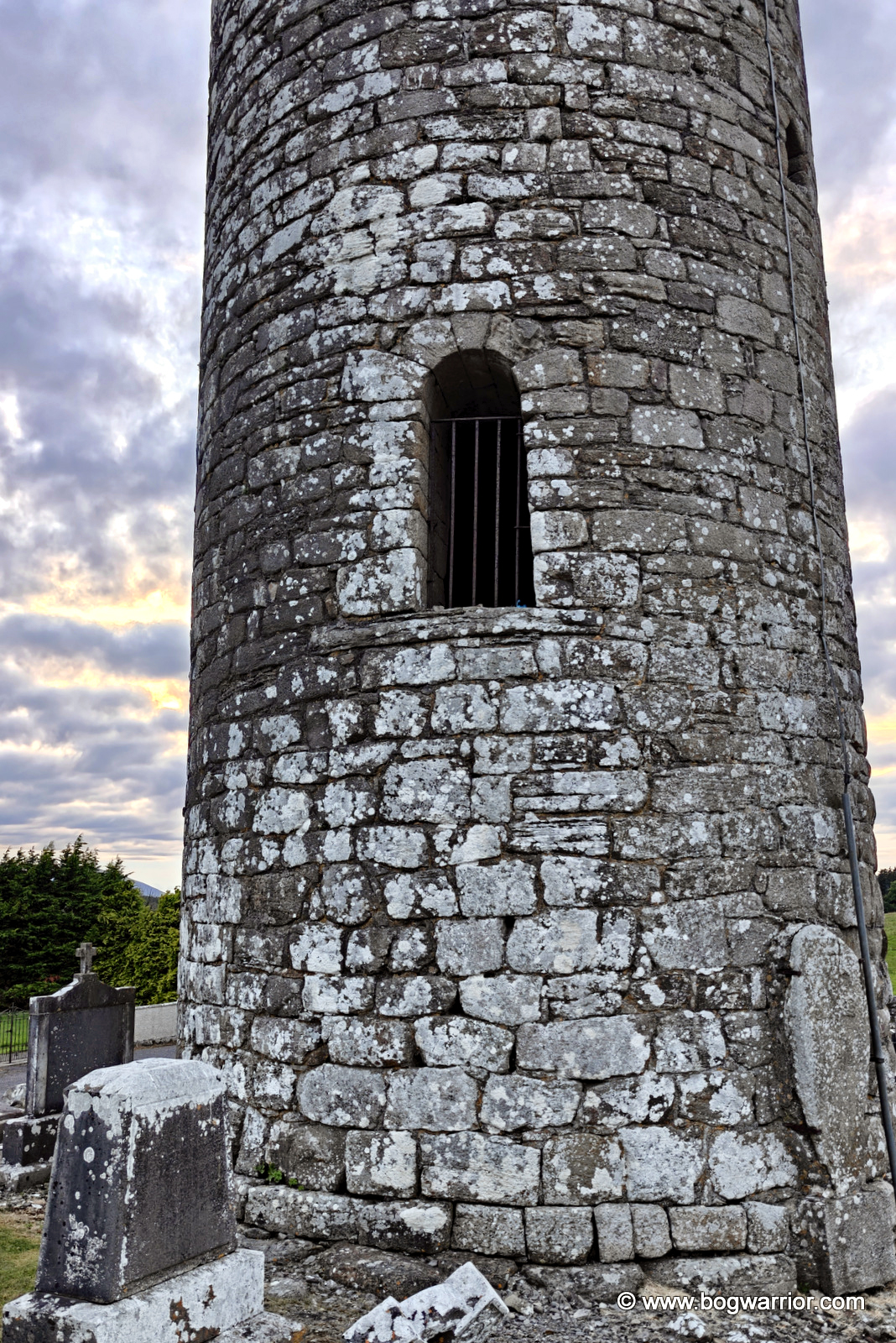
As with Turlough, very little is known about the monastery that once stood here. We don’t know who founded it or when exactly it was established. In fact, the round tower is now all that remains of the monastic site.

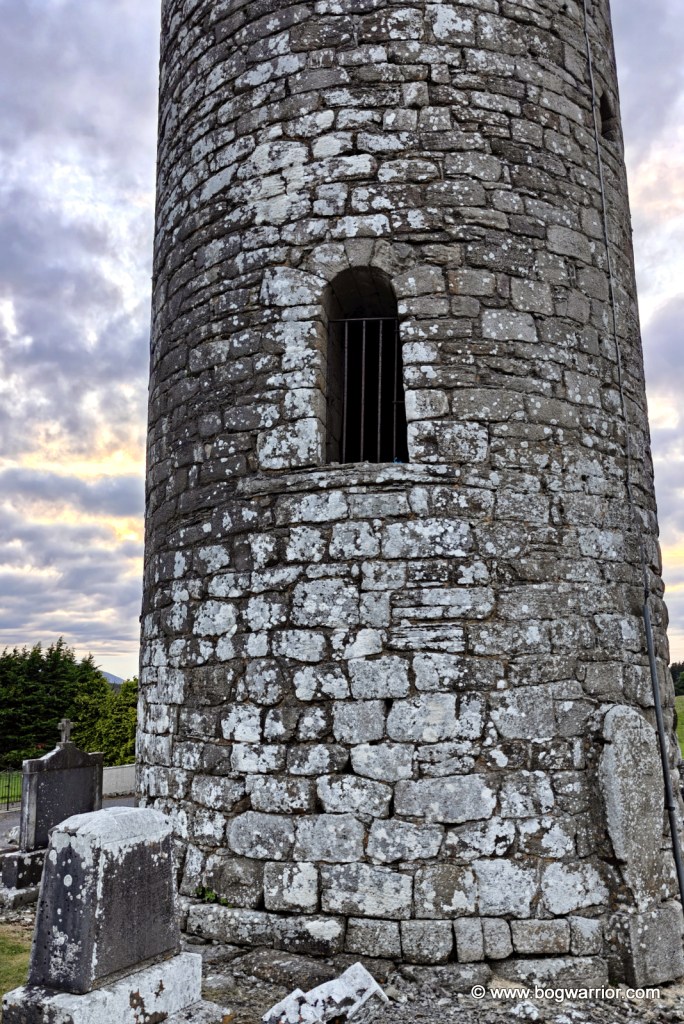
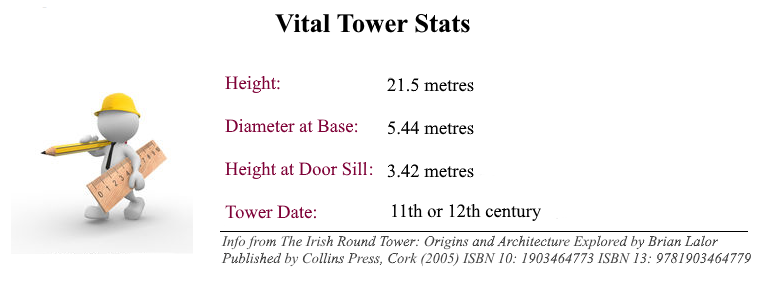
And it is an impressive survivor. Although Meelick’s tower has lost its cap, it still cuts a fine dash, rising about 21 metres above the surrounding countryside. From its position on the hill, it has a commanding view over the fields and landscape around it.

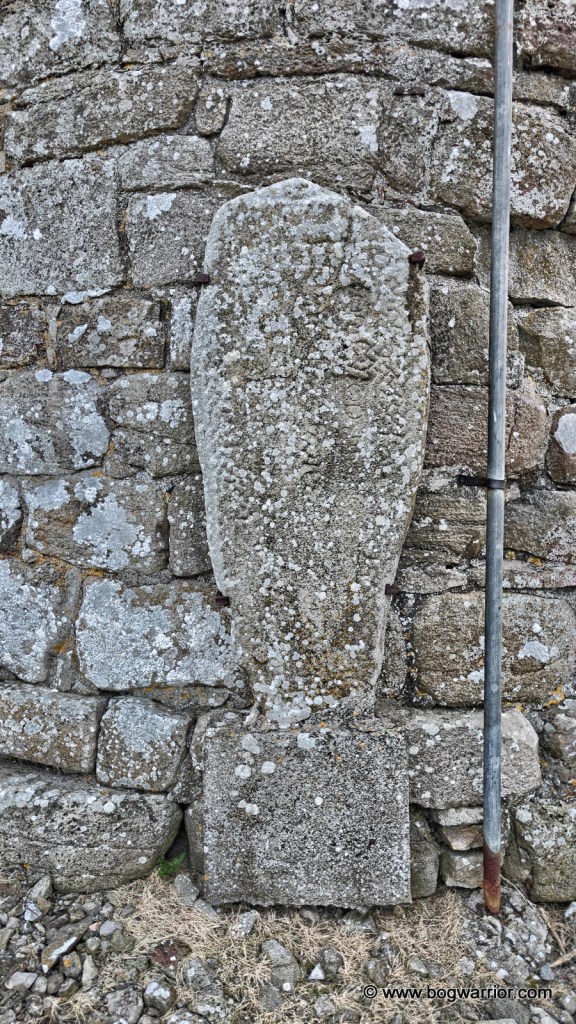
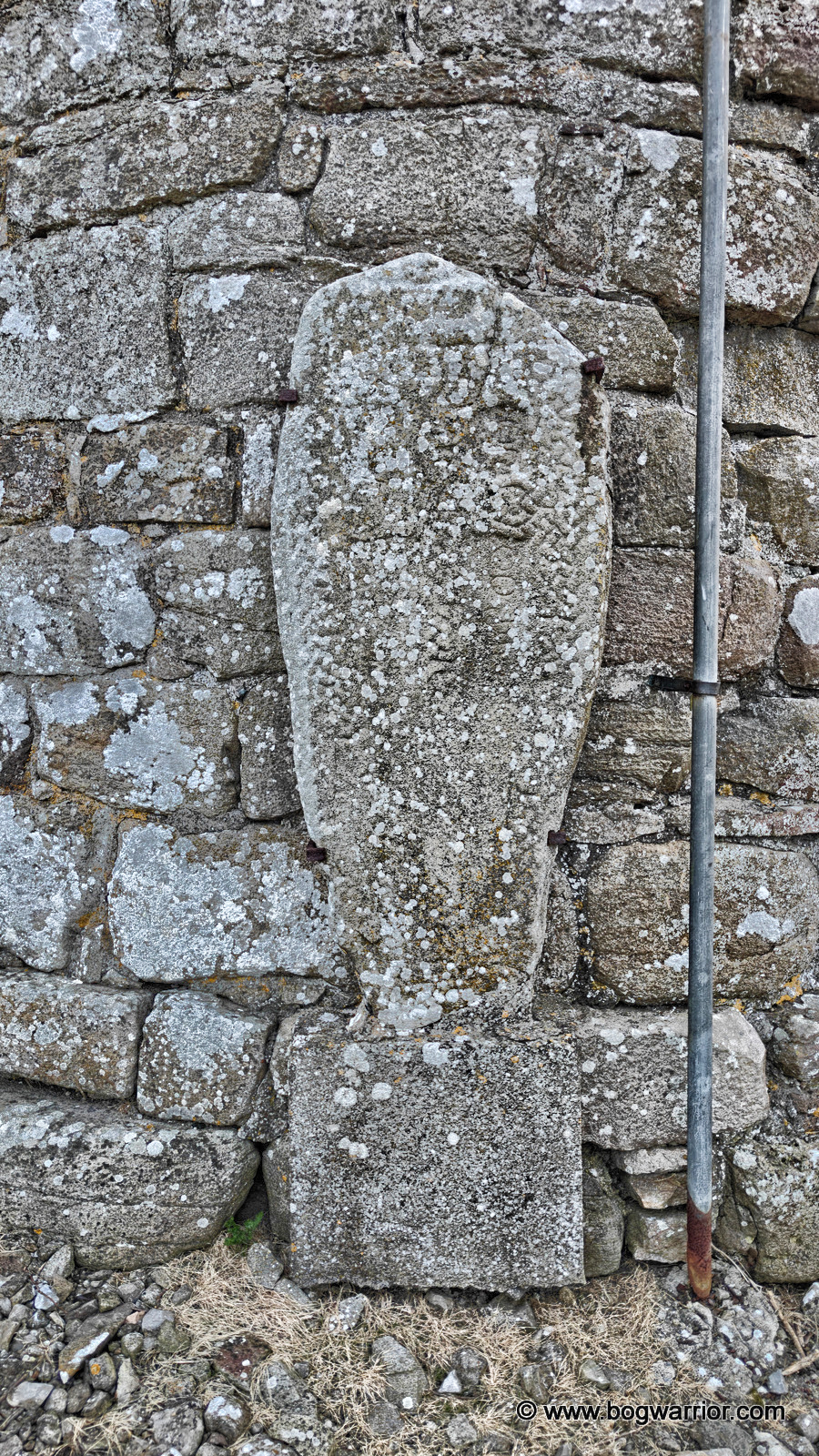
There is an interesting little detail on the eastern side of the tower. Attached to the wall is an old cross slab, thought to bear the inscription “Or do Gricour”, interpreted as meaning “A prayer for Gricour”. It is a small surviving fragment of the community that once existed here, and perhaps the closest thing we have to a name from Meelick’s early history.

The rather old grave slab

There isn’t a huge amount left to see at Meelick, but that is part of what makes the place appealing. There is no ruined church crowding the round tower, like in Turlough, or anything else other than graves and the lovely countryside.

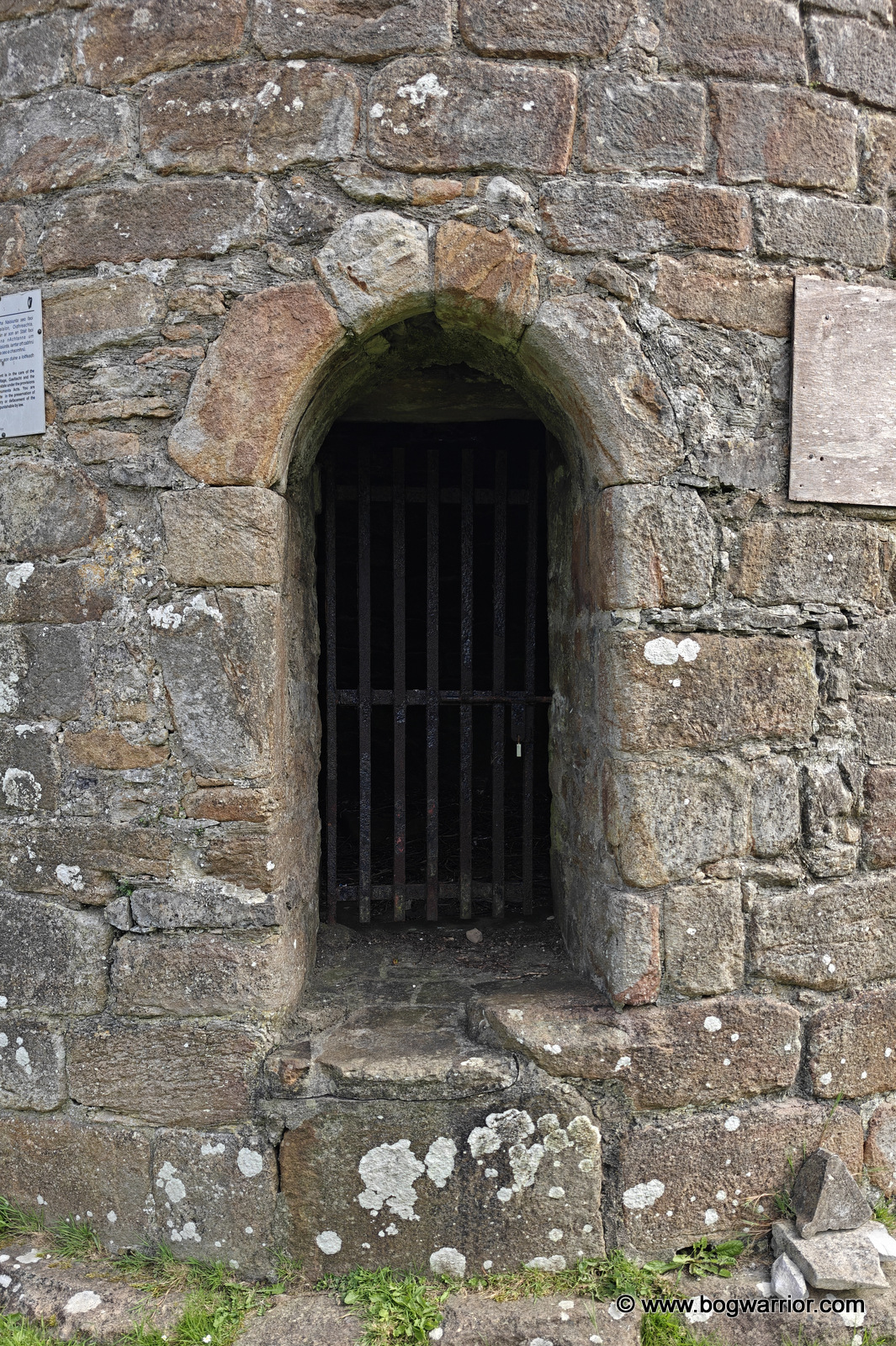
Doorway of Meelick Round Tower

By the time I was taking my photographs, the light was finally beginning to fade. This caused my phone to overcook the photos and made them look like those HDR pics which were all the rage years ago. You know the ones. I’ve tried to calm the photos down afterwards, but there’s only so much you can do. Perhaps it’s an excuse to call back next time I’m in Mayo.

Getting There

The round tower is on a quiet country road and is easy to find. There’s plenty of parking, helped by the presence of the modern-day cemetery across the road.

Turlough Round Tower: Open All Hours

One of the nice things about going round tower hunting on a long summer’s evening is that there is time to pack lots of sightseeing in. The downside, of course, is that there is also plenty of time to spot places that look interesting but have been closed for hours.

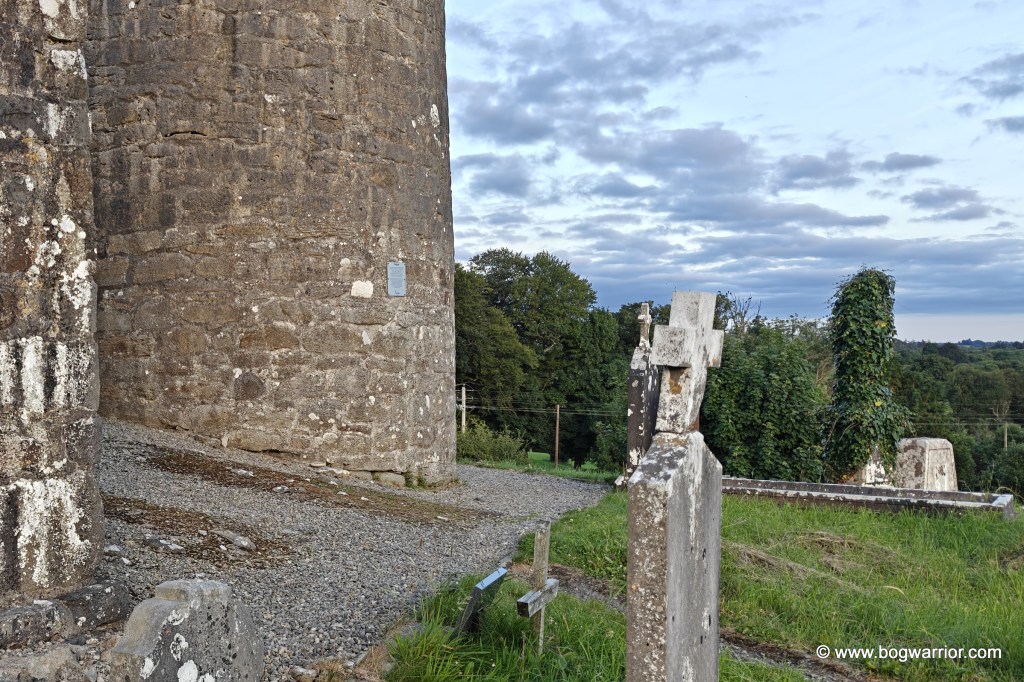
Turlough cemetery
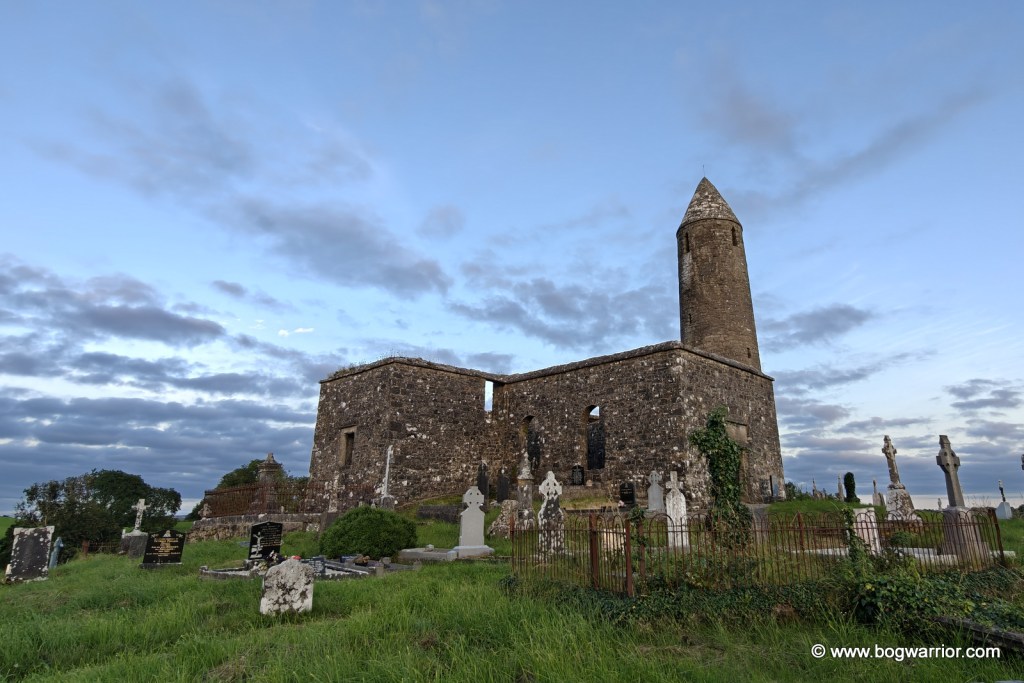
The tower, as seen from the entrance gate

The round tower I was in search of was the one on a hill overlooking the village of Turlough, Co. Mayo. To get there, I had to drive past the gates of The Museum of Country Life. It looked like a place worth visiting, but it had sensibly been closed for hours by then.

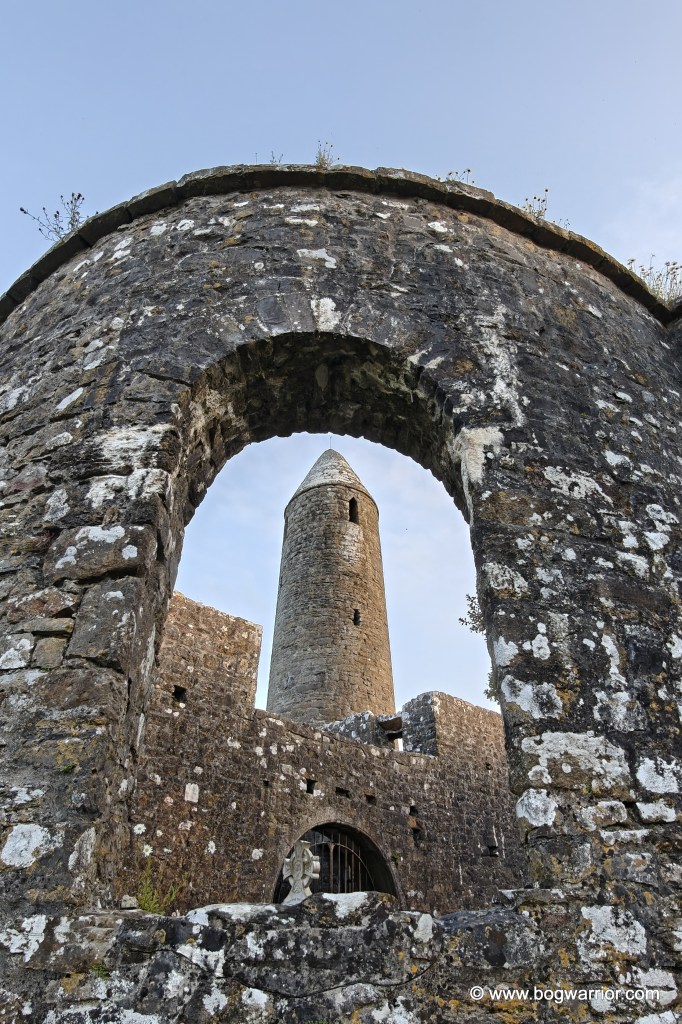
Happily, the graveyard where Turlough’s round tower stands is open at all hours. There are no neighbours to annoy, either inside or outside the cemetery walls, which is always a good thing. Allegedly.

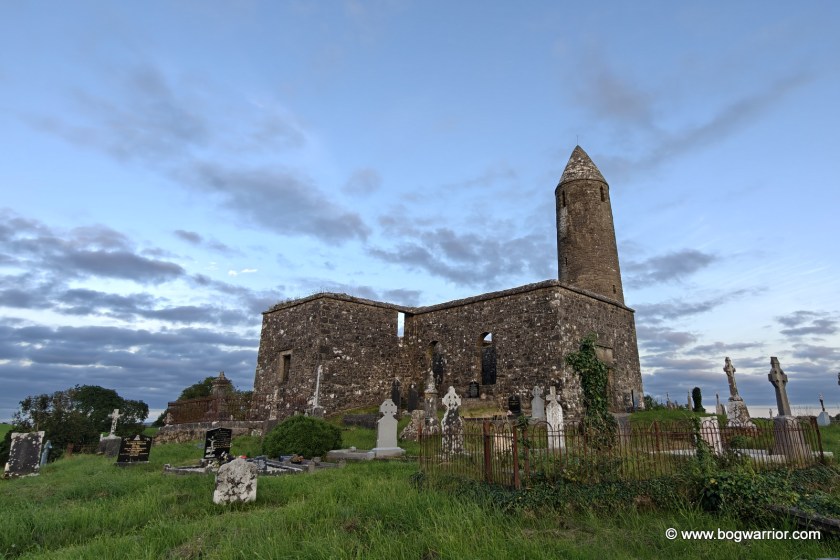
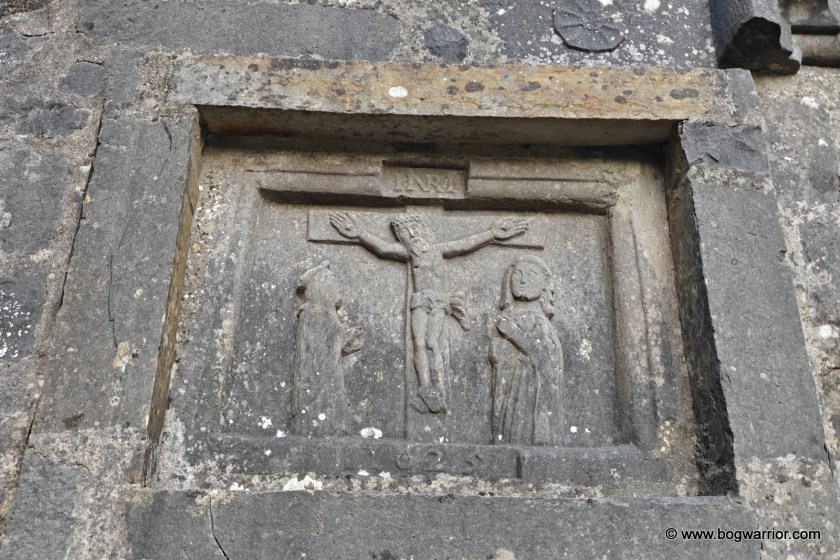
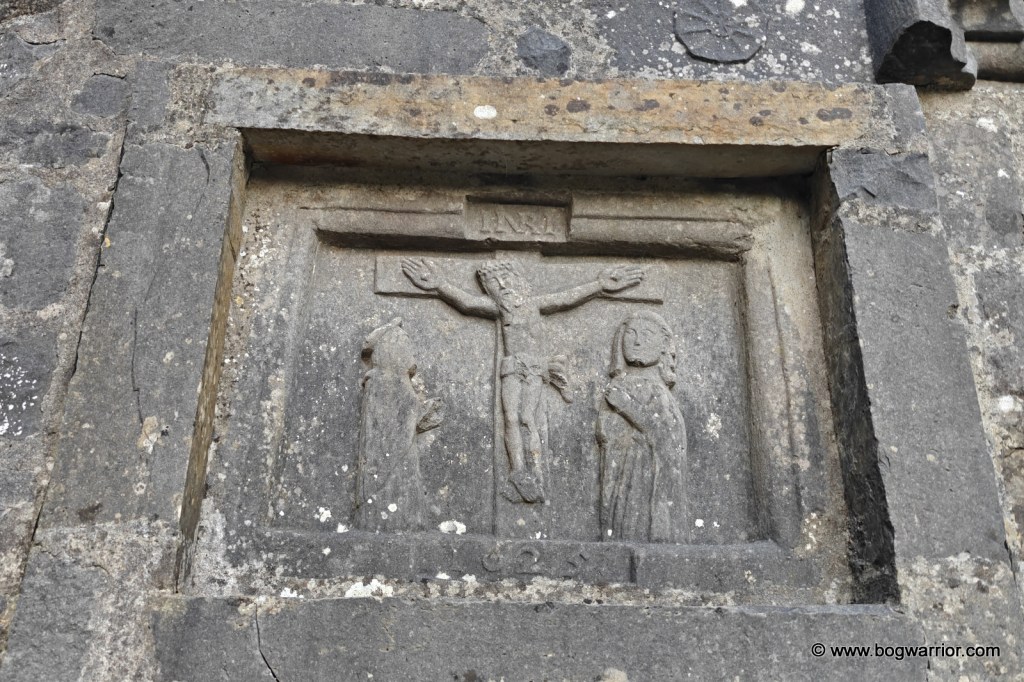
The tower stands on top of a hill beside the remains of a ruined church. The church dates from the eighteenth century, although parts of an earlier church are incorporated into it. One of its walls has a particularly striking plaque depicting the Crucifixion, dating from 1625. “Lovely” probably isn’t the appropriate word for a scene involving crucifixion, but it is certainly an interesting piece of decoration.

1625 crucifixion plaque

Little is known about the monastery that once stood here. We don’t know who founded it or exactly when the round tower was built. Tradition has it that St. Patrick founded the original church which stood here, and that’s as good as it gets, really. What is immediately noticeable about the tower is its proportions. Unlike some of Ireland’s taller and more elegant round towers, Turlough’s is comparatively short and looks distinctly squat. It’s likely the tower’s lack of height was down to economics. Commerce was a thing even in olden times.

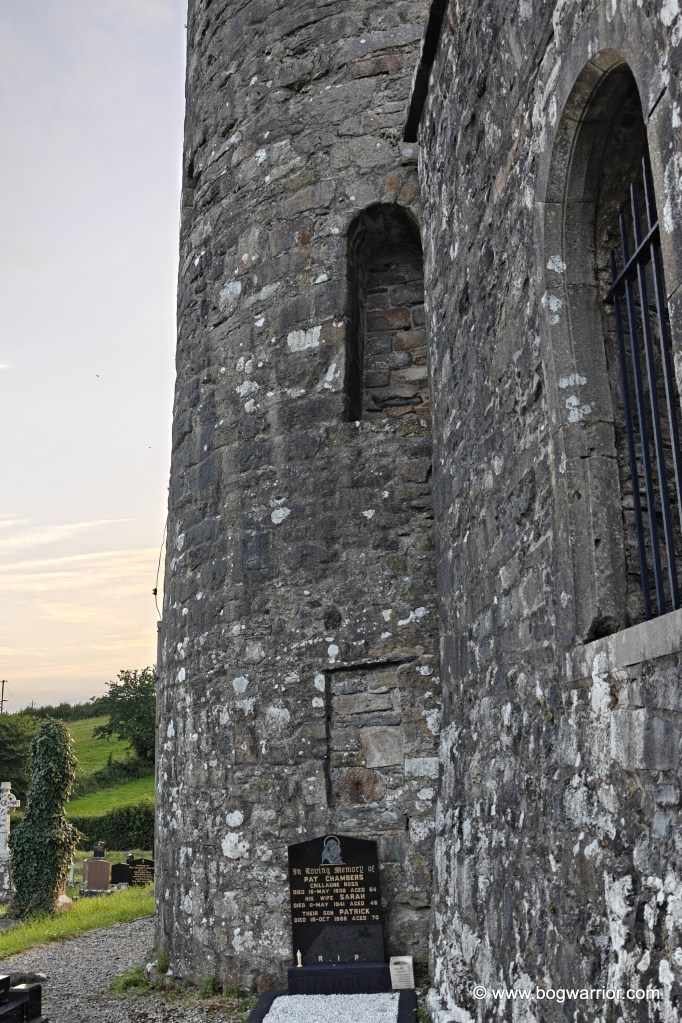
Unhappily the later church has been built right up against the tower. It actually gets in the way, literally and visually, and blocks a part of the tower. It’s one of those cases where you wish that the builder of the later church had picked a slightly different spot. Which is especially frustrating because the church is right up to the doorway of the tower, ruining what is (to me) a highlight of round towers.

The tower doorways
The doorways

The original doorway of the tower has been blocked up, while a second doorway was added at a later date and has also been blocked. A grave now sits immediately in front of it,

The ruined church itself is locked, so there is no opportunity to poke around inside. There is still plenty to see outside, however, and the position on the hill makes the visit worthwhile even beyond the tower itself. The surrounding views are pleasant, and on a long summer evening there is little reason to hurry away.

And if you happen to arrive after the Museum of Country Life has closed, at least the round tower isn’t keeping office hours.

Getting there

This one is nice and easy to find and access. There’s plenty of room to park on the road outside.

Aughagower: Two Doors, One Tower and a Famous Visitor

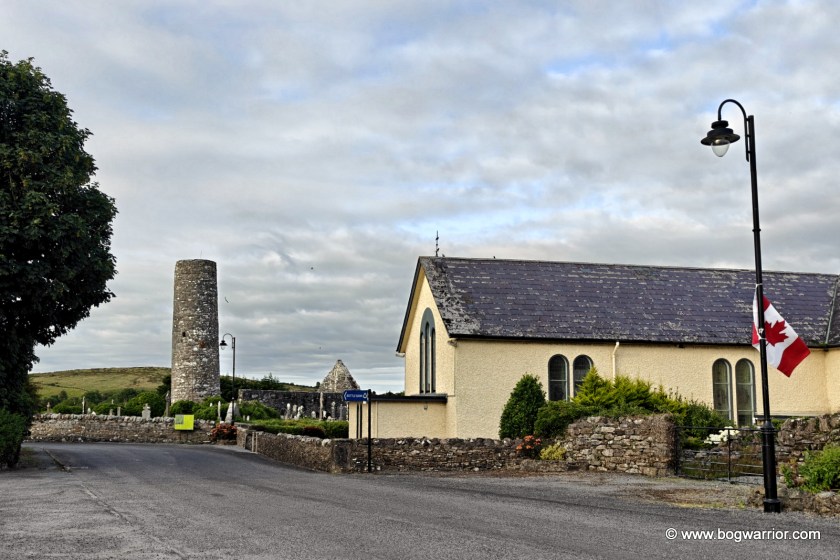
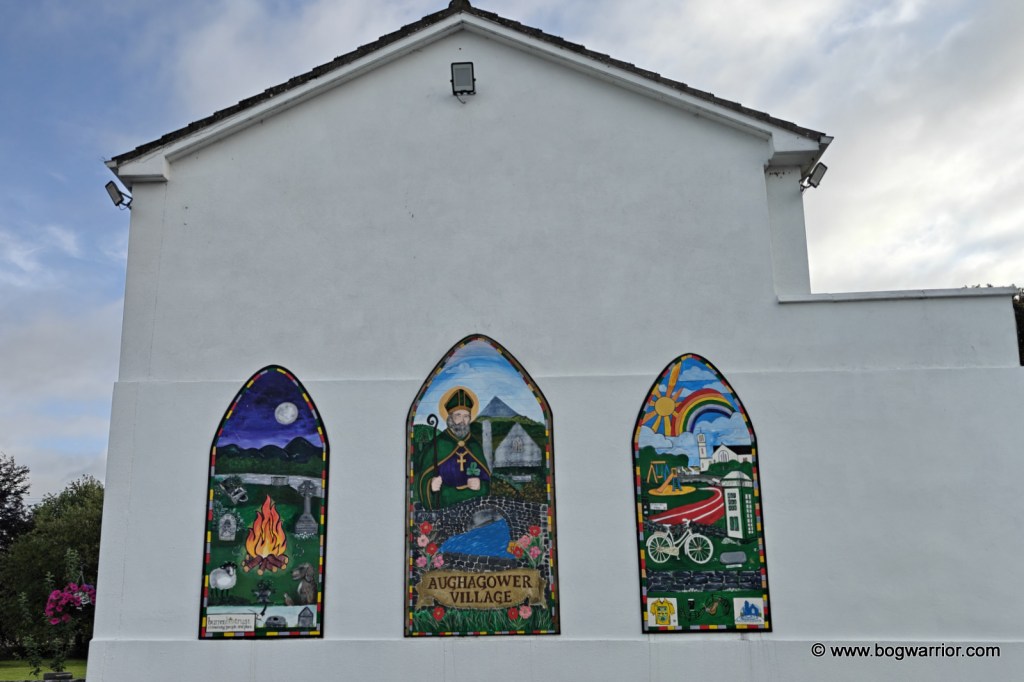
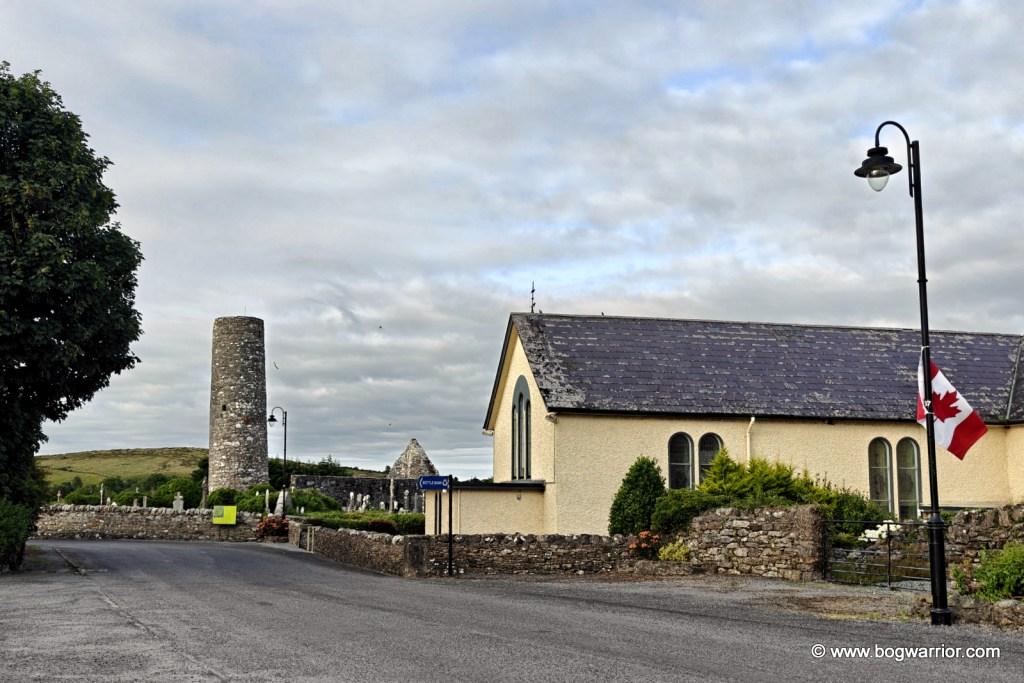
On a trip to Mayo, I decided to add a few more round towers to my stagnant checklist. First up was the tower at Aughagower, which is an easy one to find, standing as it does in the middle of a graveyard in a small village. As it happened, Canadian Prime Minister Mark Carney had visited Aughagower just three weeks before yours truly. There were still a few Canadian flags fluttering about, adding a bit of colour to the quiet little village.

Aughagower church, tower and Canadian flag

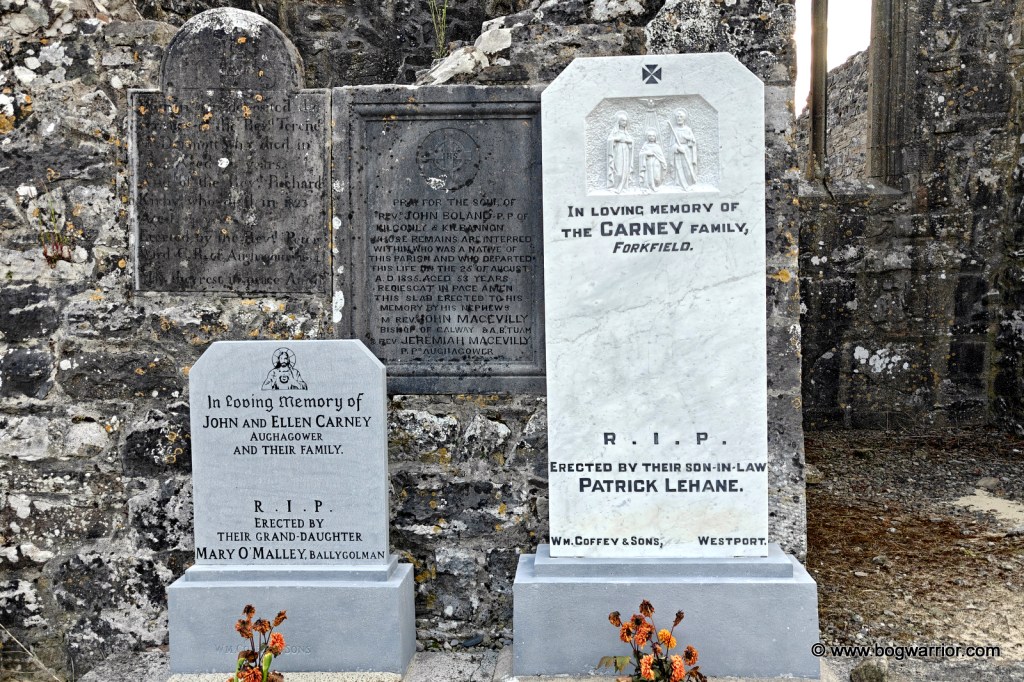
I was amused to discover that the headstones belonging to Carney’s ancestors were located in what turned out to be a remarkably convenient spot for a visiting dignitary. They had clearly received a bit of attention recently and were looking remarkably spruce — almost as if they were expecting company. A quick look at Google Street View’s 2019 imagery suggests that they hadn’t always looked quite so pristine.

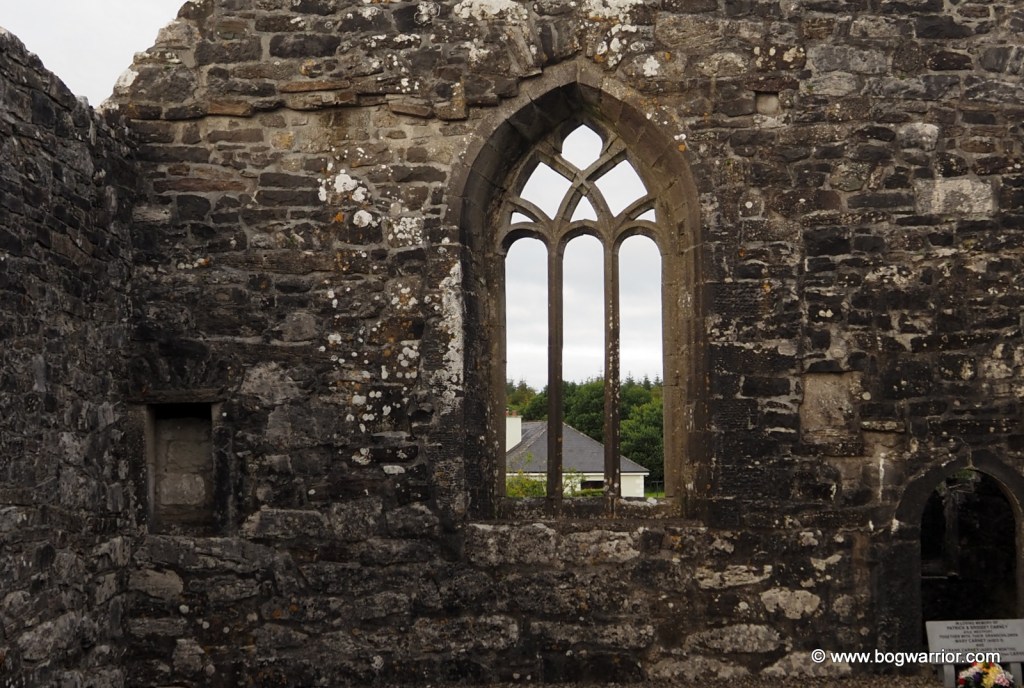
This tower has been through the wars. A large breach on the northern side was repaired in the 1960s. Before the repairs were carried out, parts of the tower’s interior had been visible from the graveyard outside.

Aughagower Round tower

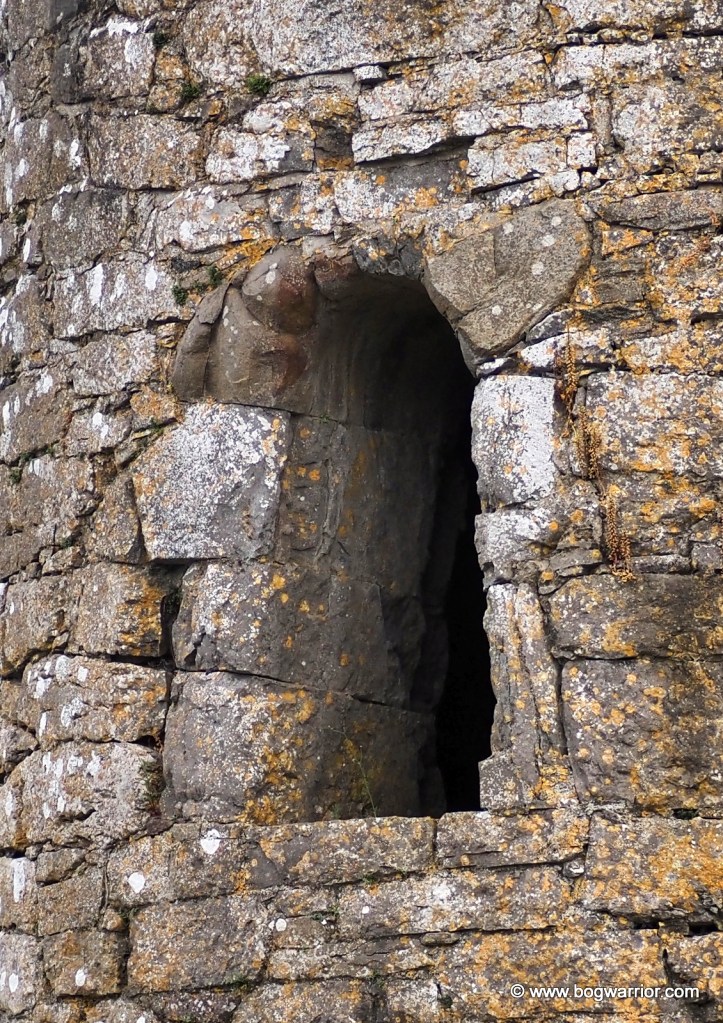
The tower’s original doorway also shows signs of fire damage. It’s a reminder of just how vulnerable these towers could be if someone was determined to set one alight. Shove some flammable material through the doorway, set fire to it, and — whoosh!

There is also a second doorway at ground level, added at a later date. This gives visitors the rather rare opportunity to walk straight into a surviving round tower, which isn’t something you get to do every day.

2nd doorway
The 2nd doorway

The original monastery is said to have been founded by St Senach in the 7th century. The tower now stands beside the ruins of a church dating from the 12th to 15th centuries.

There are also two dried-up holy wells across the road from the graveyard. Works on drainage and water supply in the locality dried them up, but they’re still easy to find. The graveyard itself is quite uneven, so watch your step.

Getting There

Aughagower is 8km from Westport, and the drive takes about 10 minutes. The tower is in an old graveyard, right beside the village church. If you can’t find this one, I don’t know what I can say to you.

Gallery

Clare Island – the clock beat me

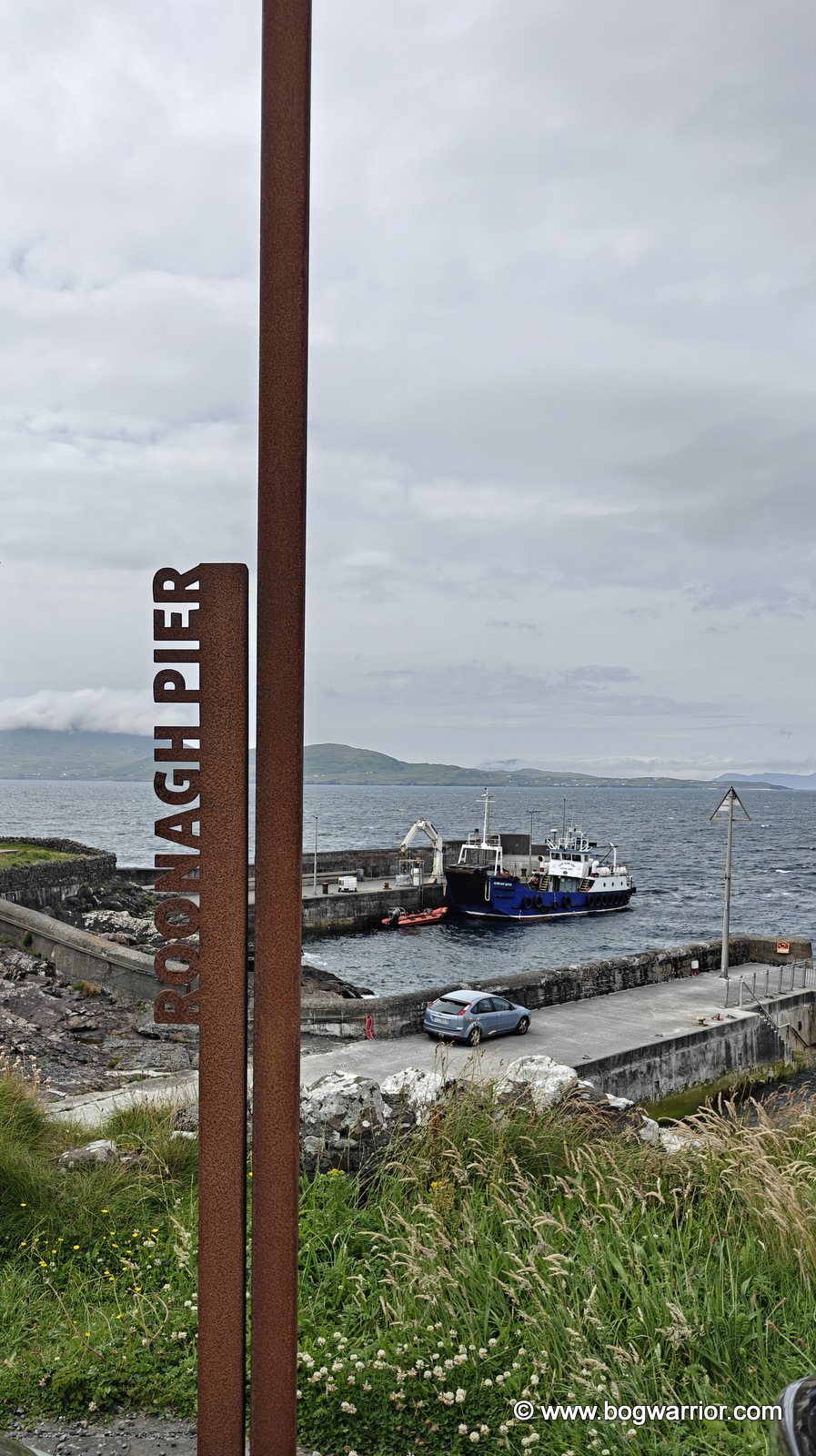
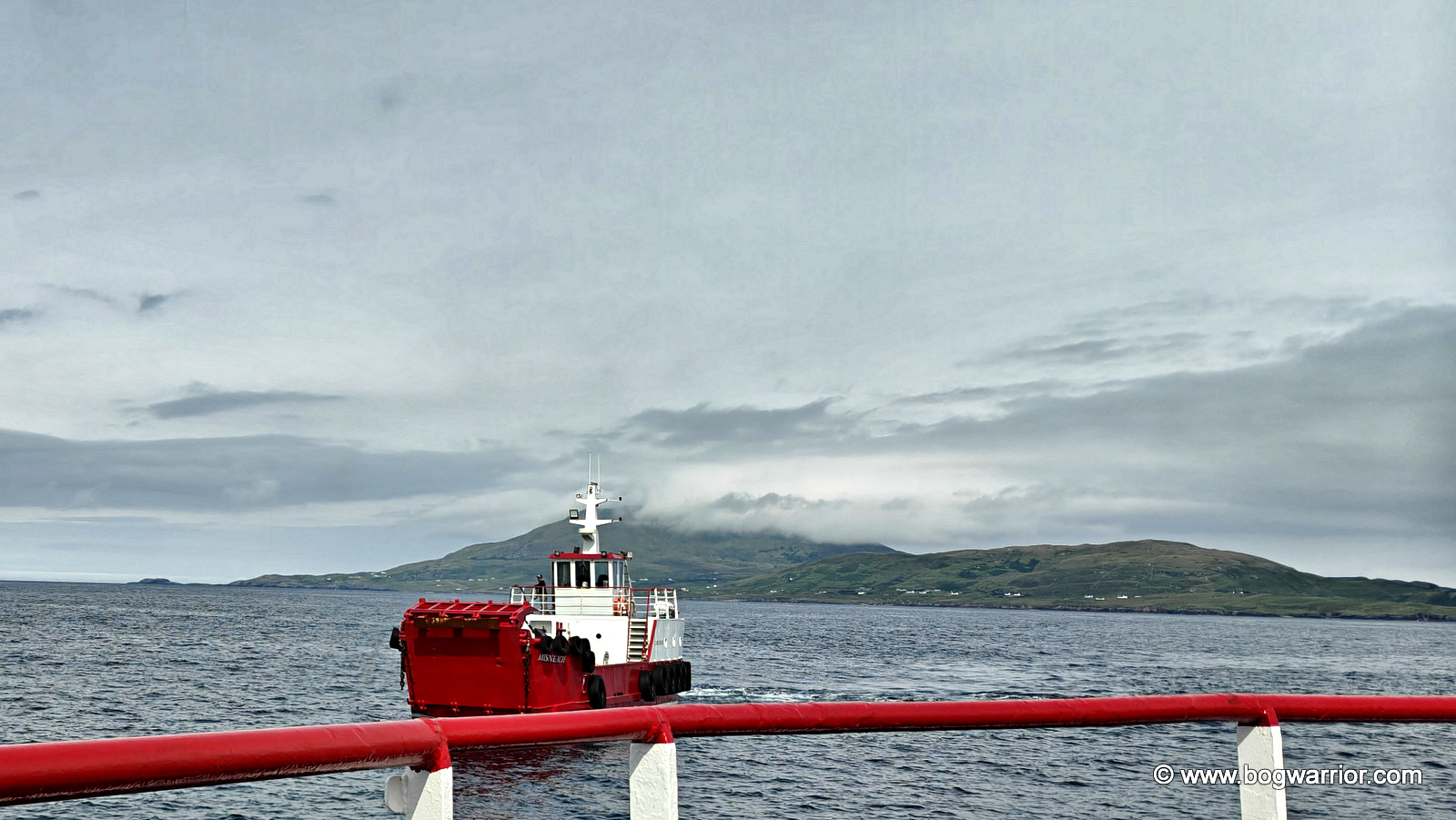
As the ferry pulled away from Roonagh Pier, 1996’s Clare Island by the Saw Doctors was playing on the silent jukebox in my head. The song has a wonderfully carefree feel to it, although I should point out that I had no intention of following all of its characters’ example. They may have gone skinny-dipping; I, thankfully, kept my clothes firmly on.

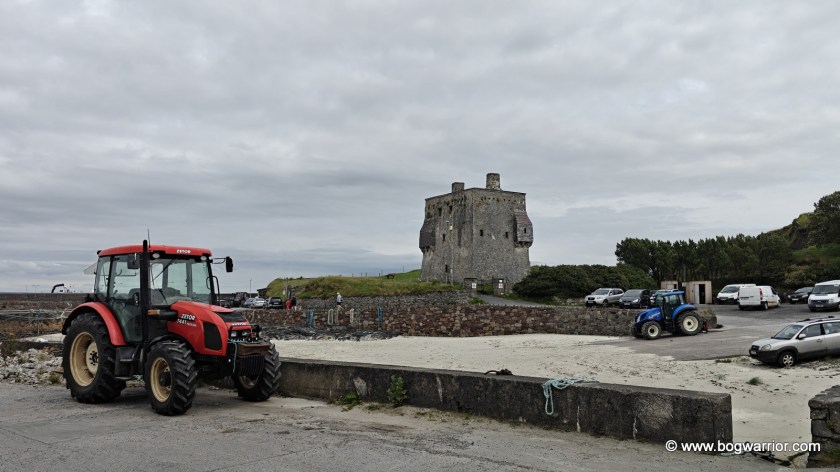
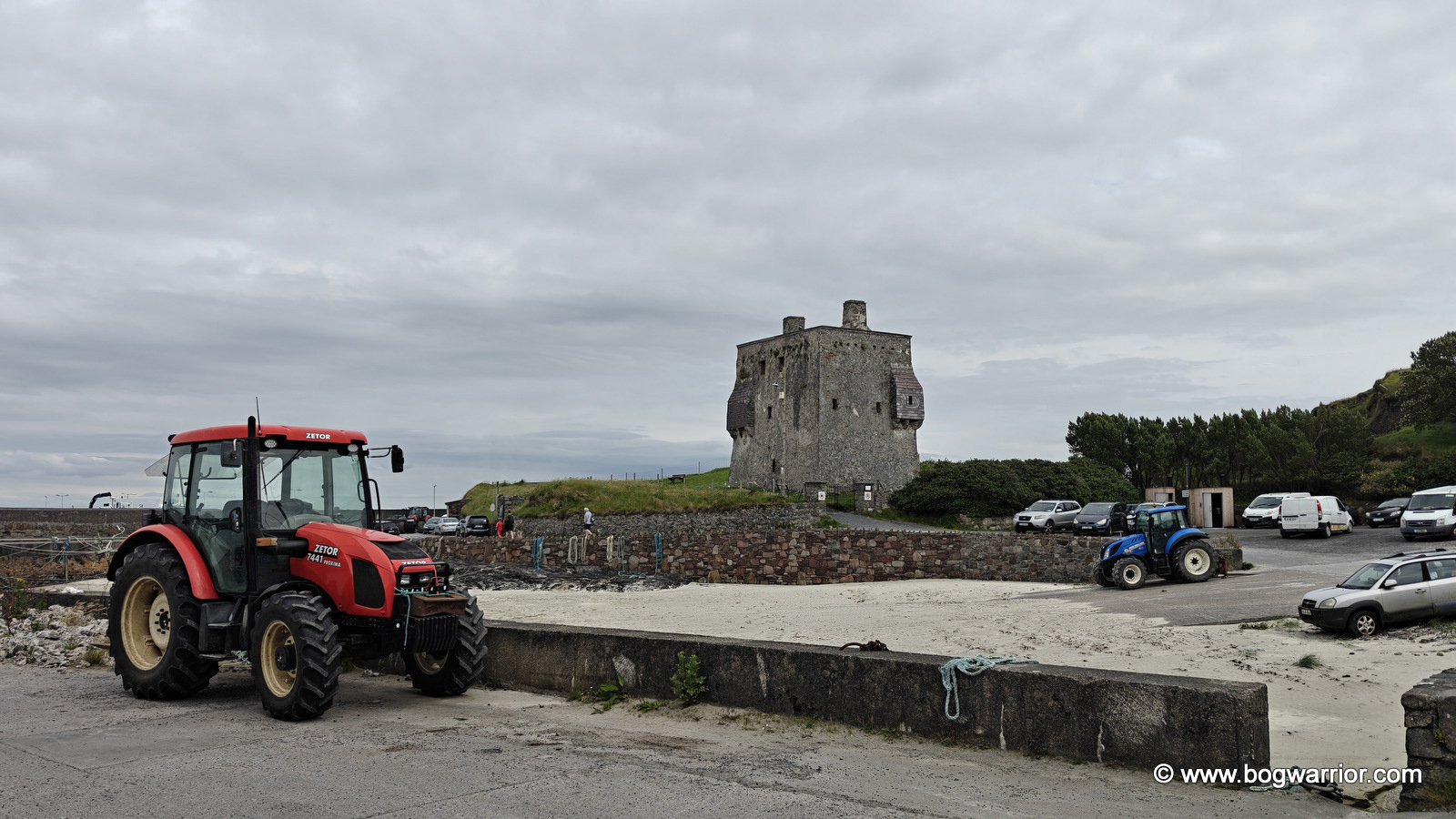
Grainuaile's Castle
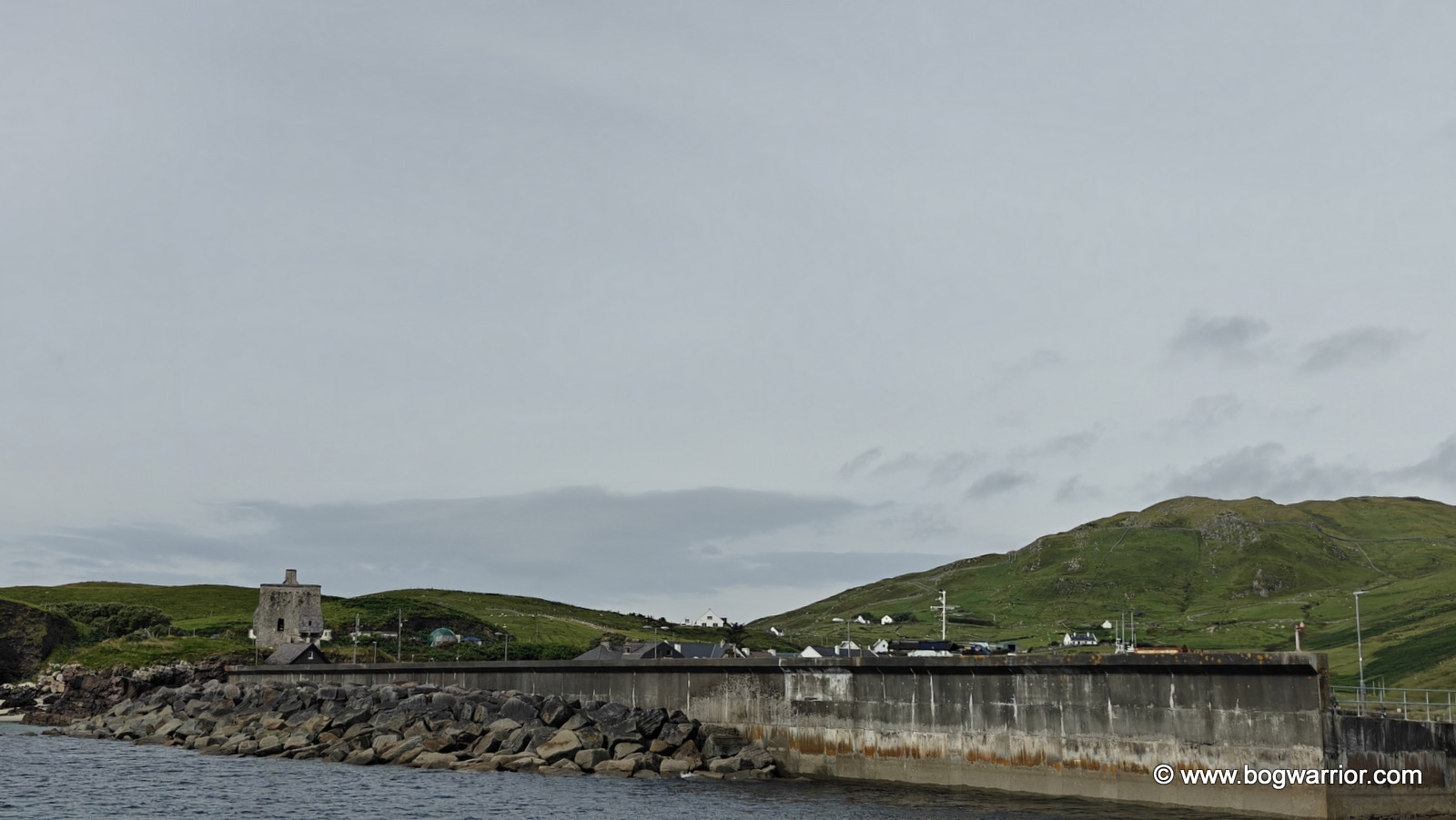
Grainuaile’s Castle and some serious tractorage

It’s hard to miss the imposing tower house standing beside the pier. Known as Granuaile’s Castle, it is associated with one of the most formidable women in Irish history. Grace O’Malley (c. 1530–c. 1603) was a 16th-century chieftain and seafarer, better known as the Pirate Queen. Her Irish name, Gráinne Mhaol (anglicised as Granuaile), has its own story. According to tradition, she cut off her hair to disguise herself, with mhaol referring to baldness or being bare-headed. Unfortunately, the castle is closed to visitors, so all we could do was peer in through the windows and door. Still, it was a fitting place to begin exploring an island so closely associated with the legendary O’Malley family.

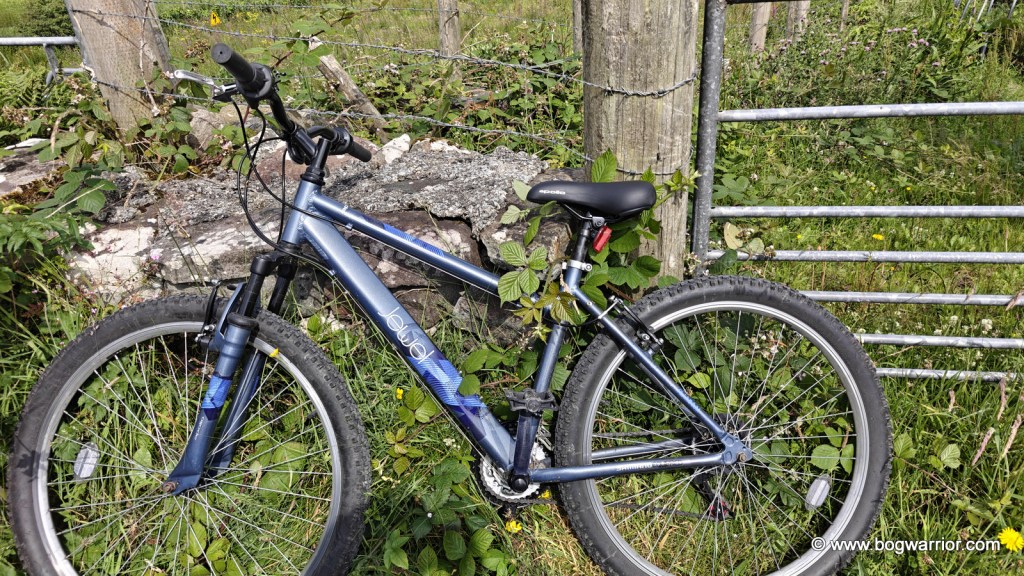
As I was on a day trip, cycling seemed the perfect way to explore the island. It was slow enough to take in the scenery but fast enough to cover some ground — although, as I would discover, Clare Island has a few hills that make you reconsider the definition of “fast enough”.

Obligatory hired bicycle shot

The Abbey

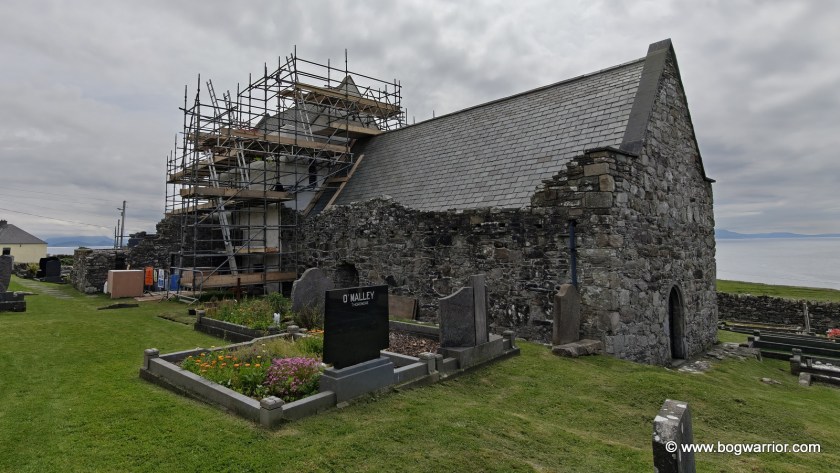
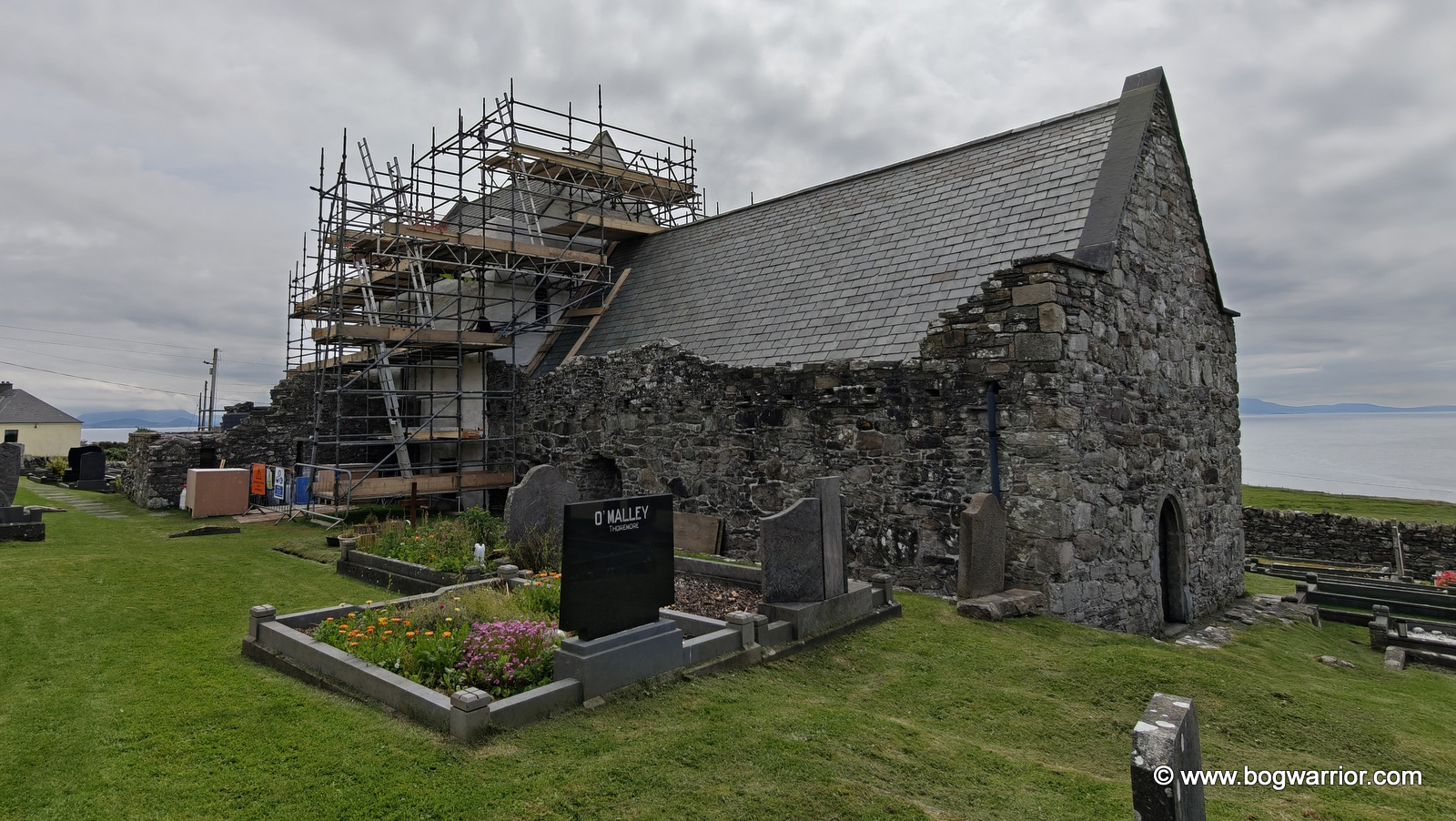
My main destination was Clare Island Abbey, which is thought to date back as far as the 12th century. It is closely associated with Grace O’Malley, whose castle I’d been admiring just 45 minutes earlier. According to local tradition, she was baptised, married and buried here — the auld “hatched, matched and dispatched”.

It is possible that she was laid to rest in the O’Malley tomb, which still survives within the abbey. Wandering around the graveyard outside, it’s hard to miss the many headstones bearing the O’Malley name. It certainly brings home just how deeply rooted the family is in the island’s history.

Clare Abbey
Clare Island Abbey

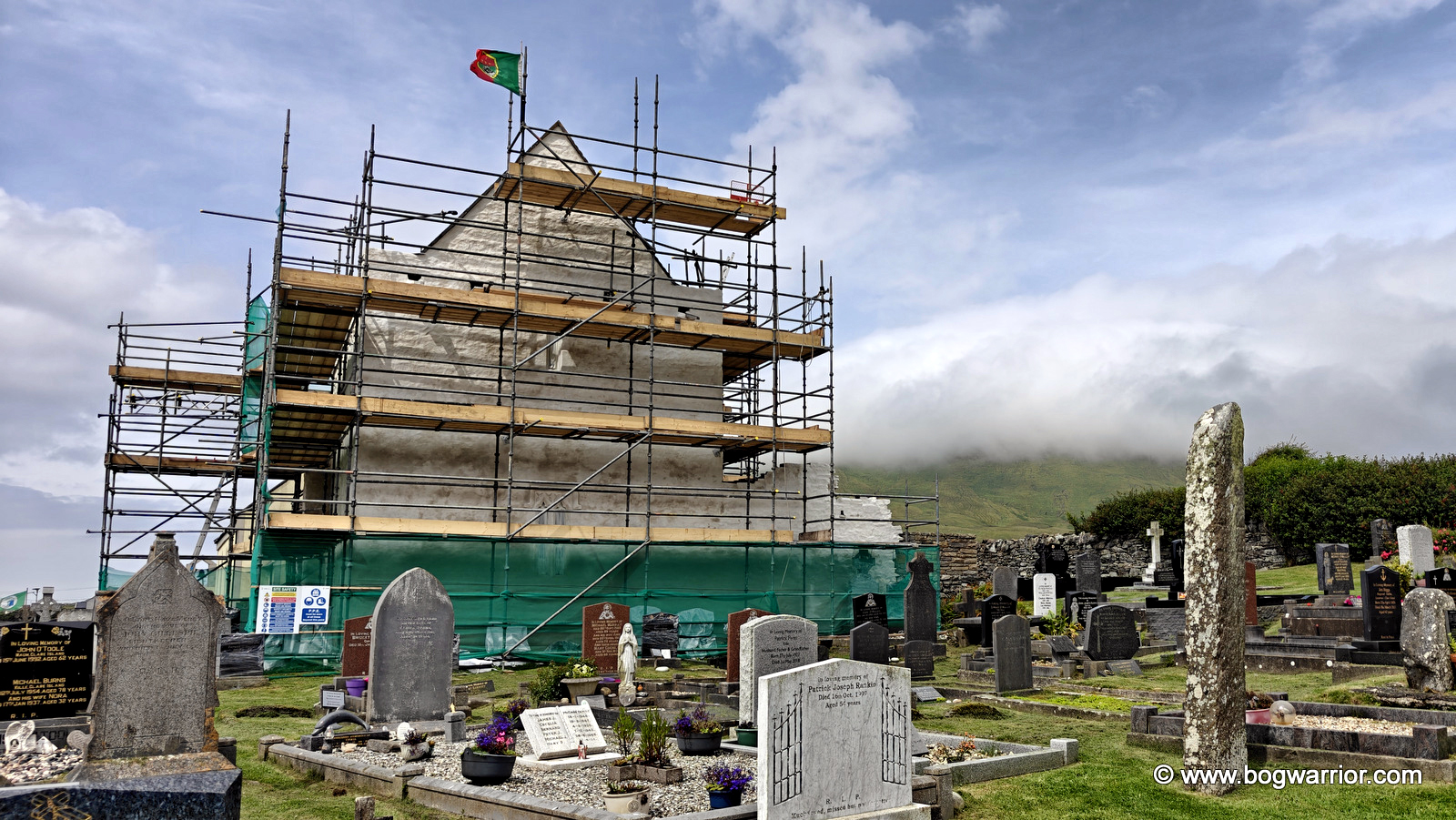
Yet again, my talent for visiting places that are under scaffolding raised its head. Still, it’s good to see an old building being maintained rather than left to the elements.

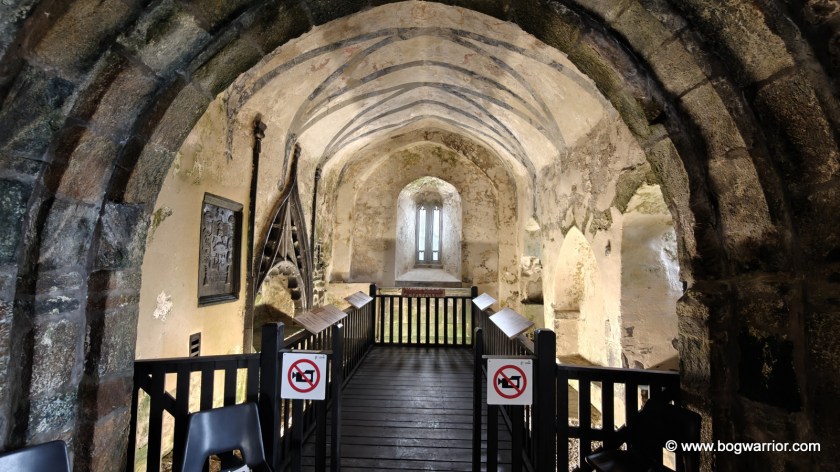
Inside, I spent some time looking at the faded artwork and listening to a conversation nearby. One of the group had visited the abbey many years earlier and recalled that, at the time, the walls had been “weeping”. He wondered aloud about how much of the original artwork had since been lost. Indeed.

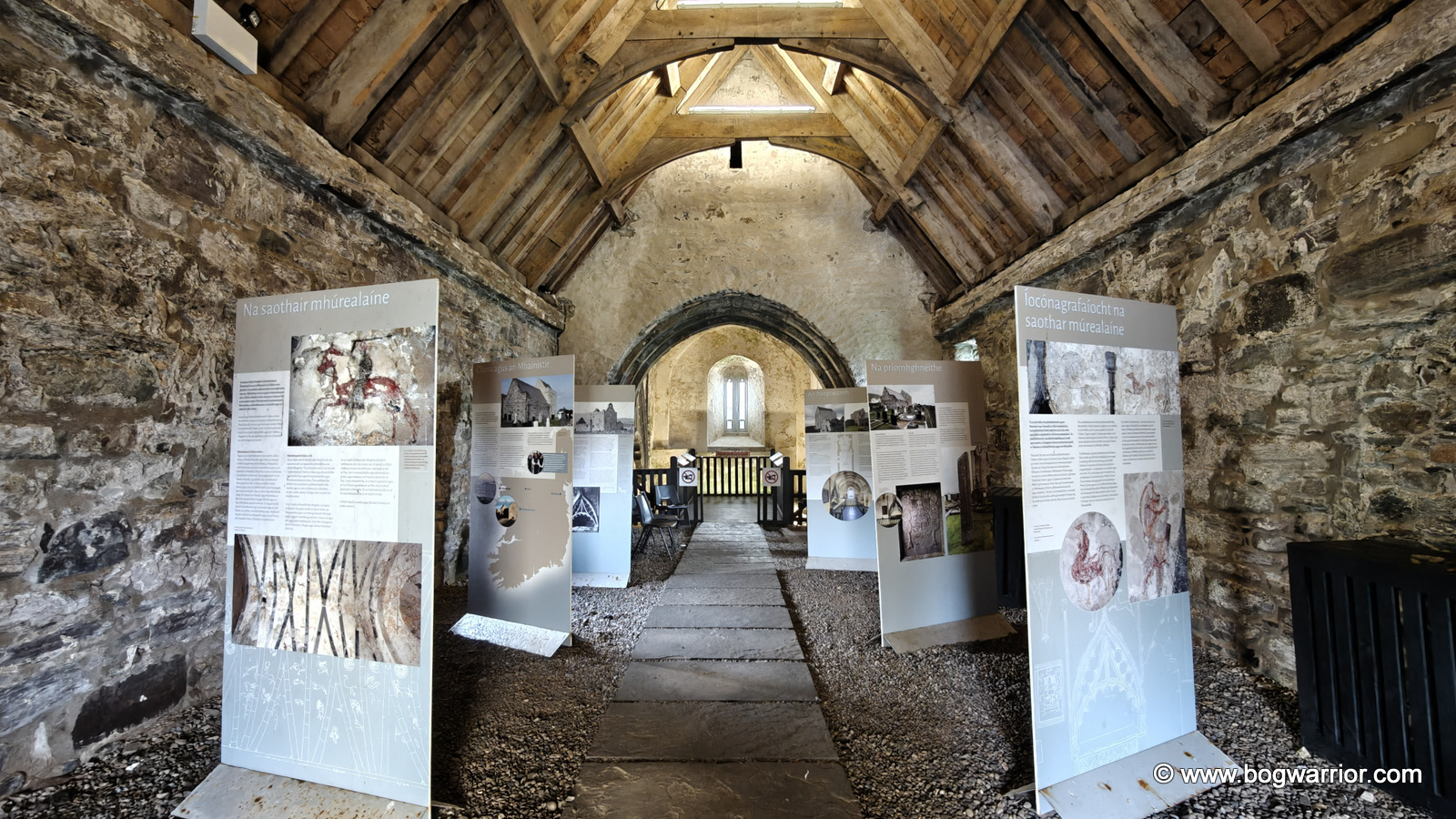
The nave contains a number of bilingual signs with interesting information and photographs showing the abbey throughout the years. The highlight, though, is undoubtedly the chancel at the opposite end of the building.

Interior of Clare Abbey
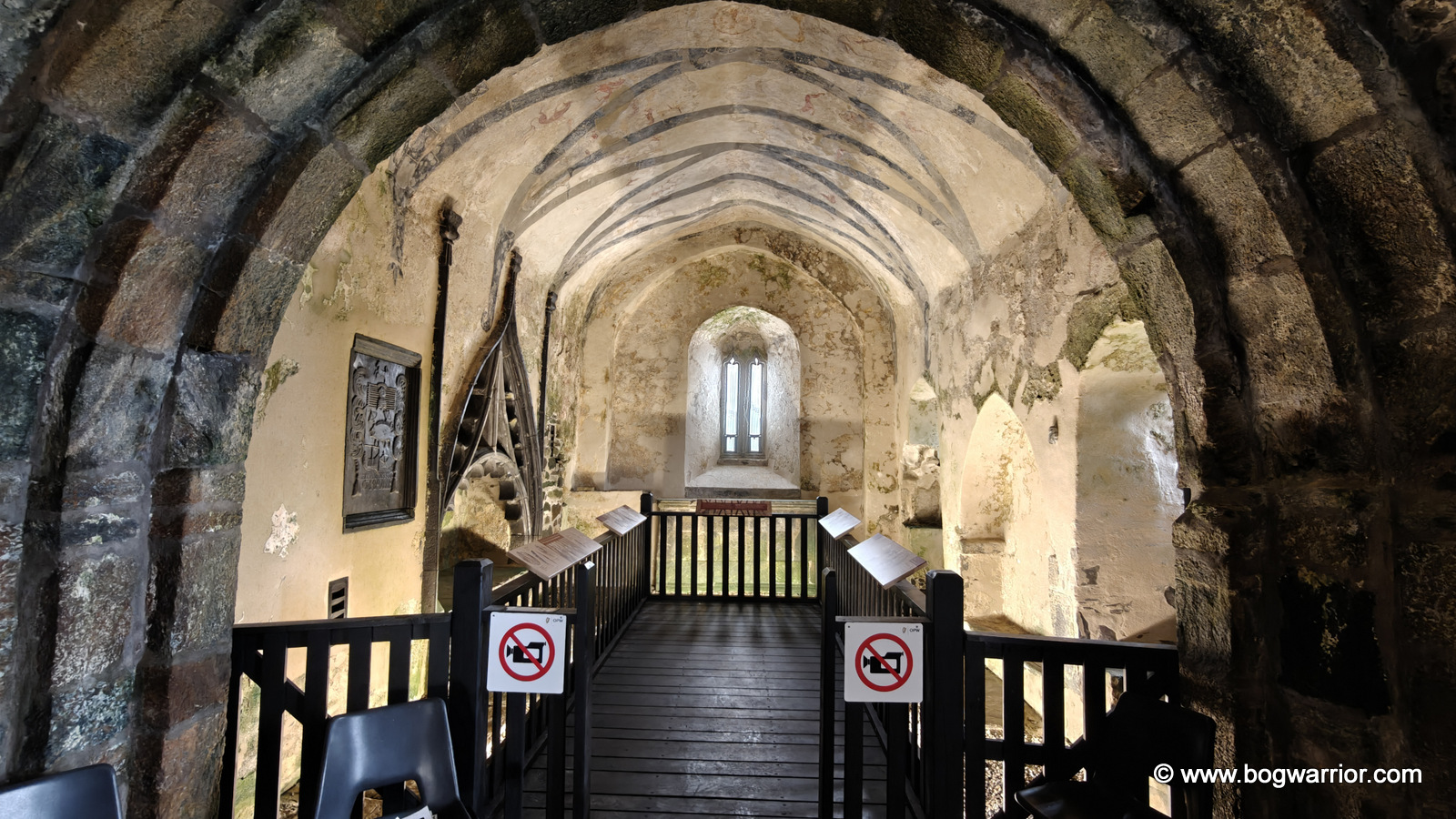
Chancel of Clare Abbey – I didn’t use a 1990’s camcorder so hopefully nobody will come after me!

The walls and ceiling are decorated with a wonderfully eclectic collection of mediaeval artwork: dragons, a cockerel, stags, birds and trees, as well as people on foot and horseback and even a harp-playing musician. Some of the paintings are now quite faint and difficult to make out, but thankfully the information panels include diagrams showing what you’re looking at. The O’Malley tomb and coat of arms, on the left-hand side, are particularly striking.

The Old Napoleonic Signal Tower

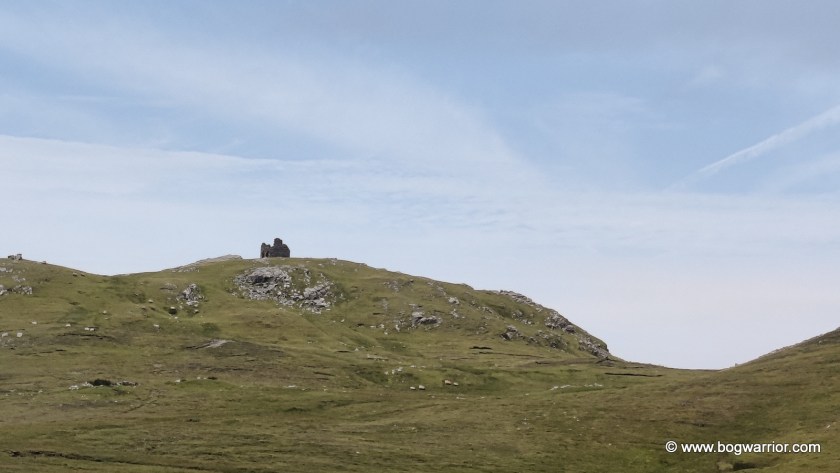
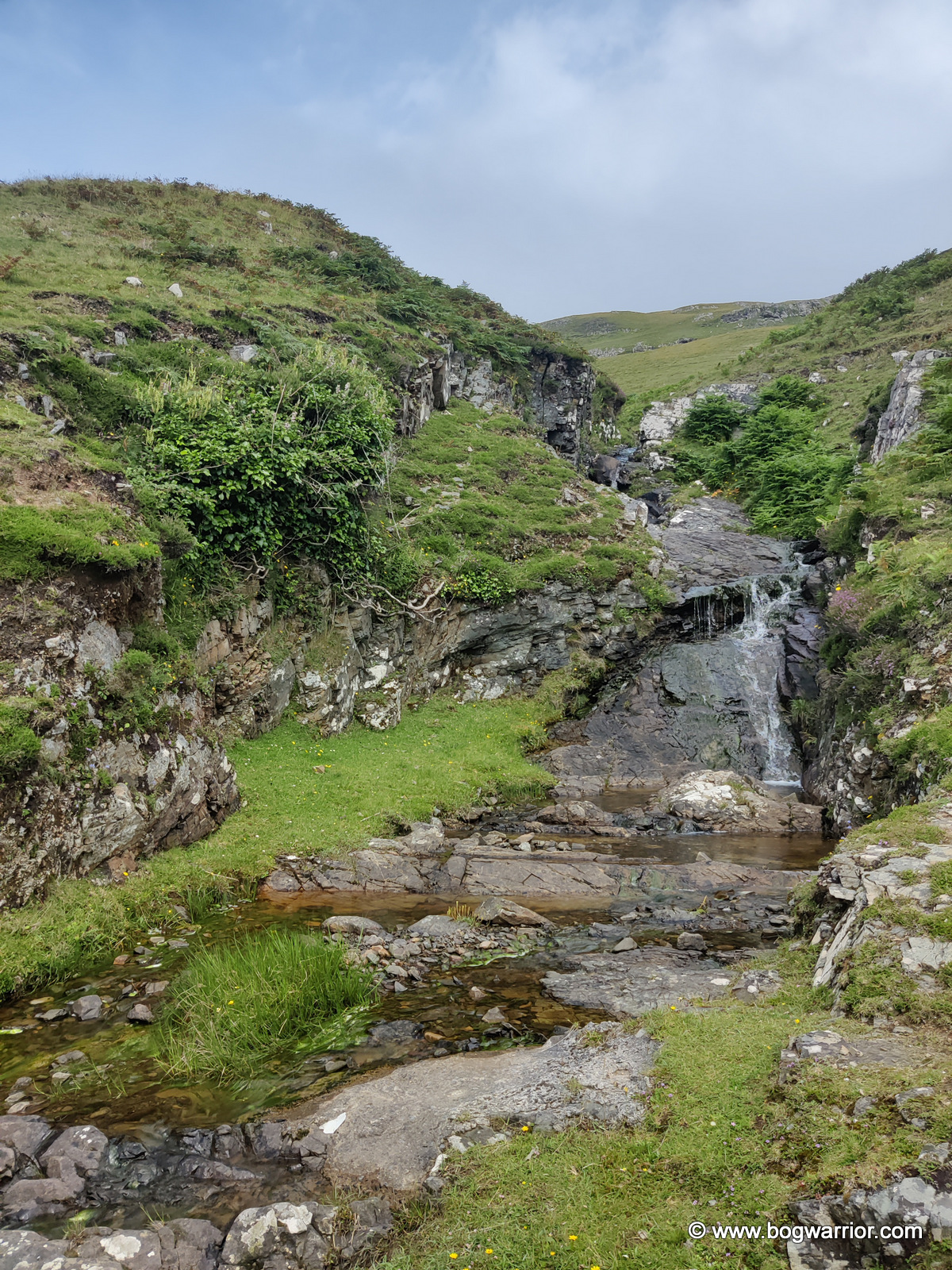
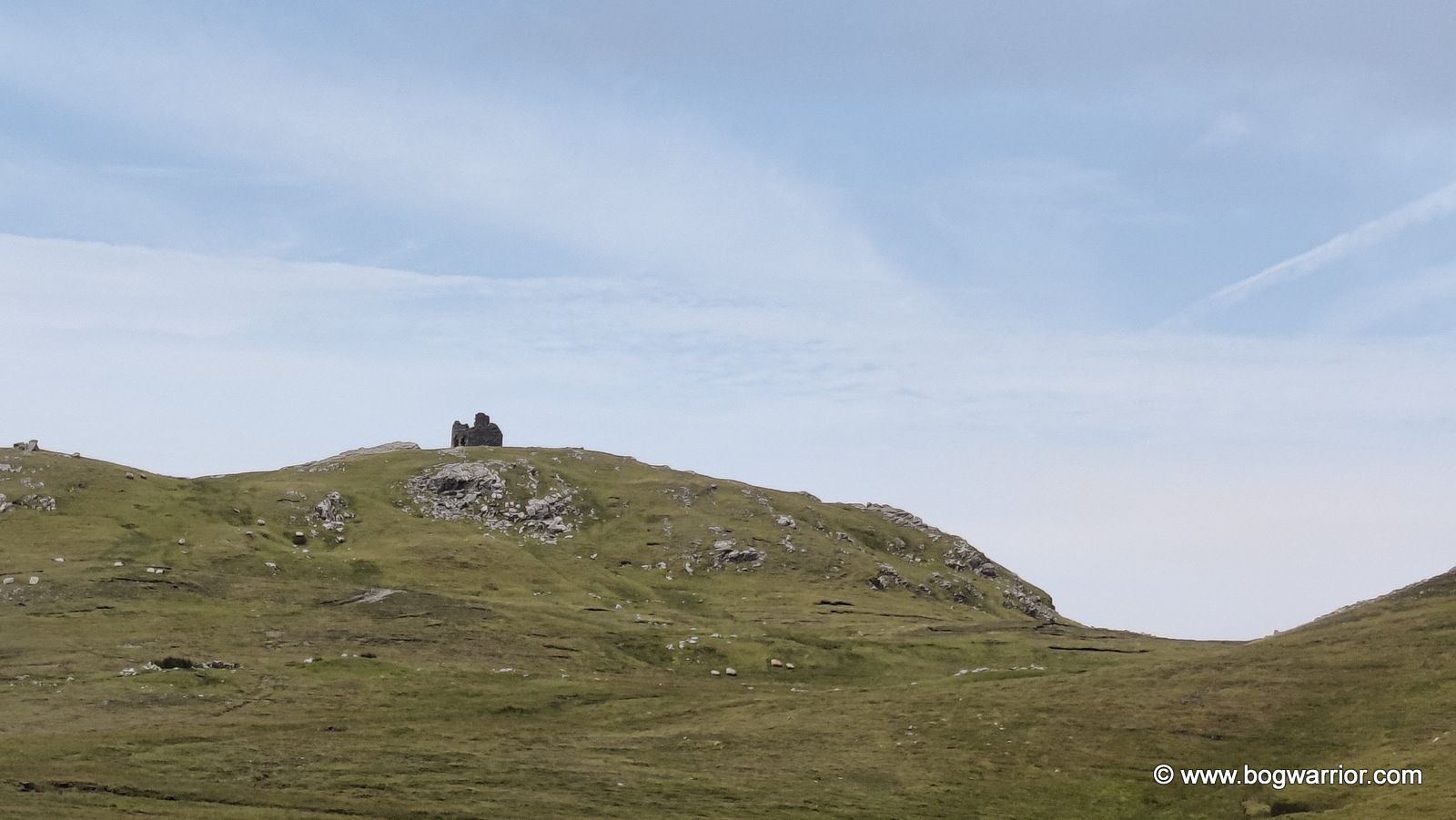
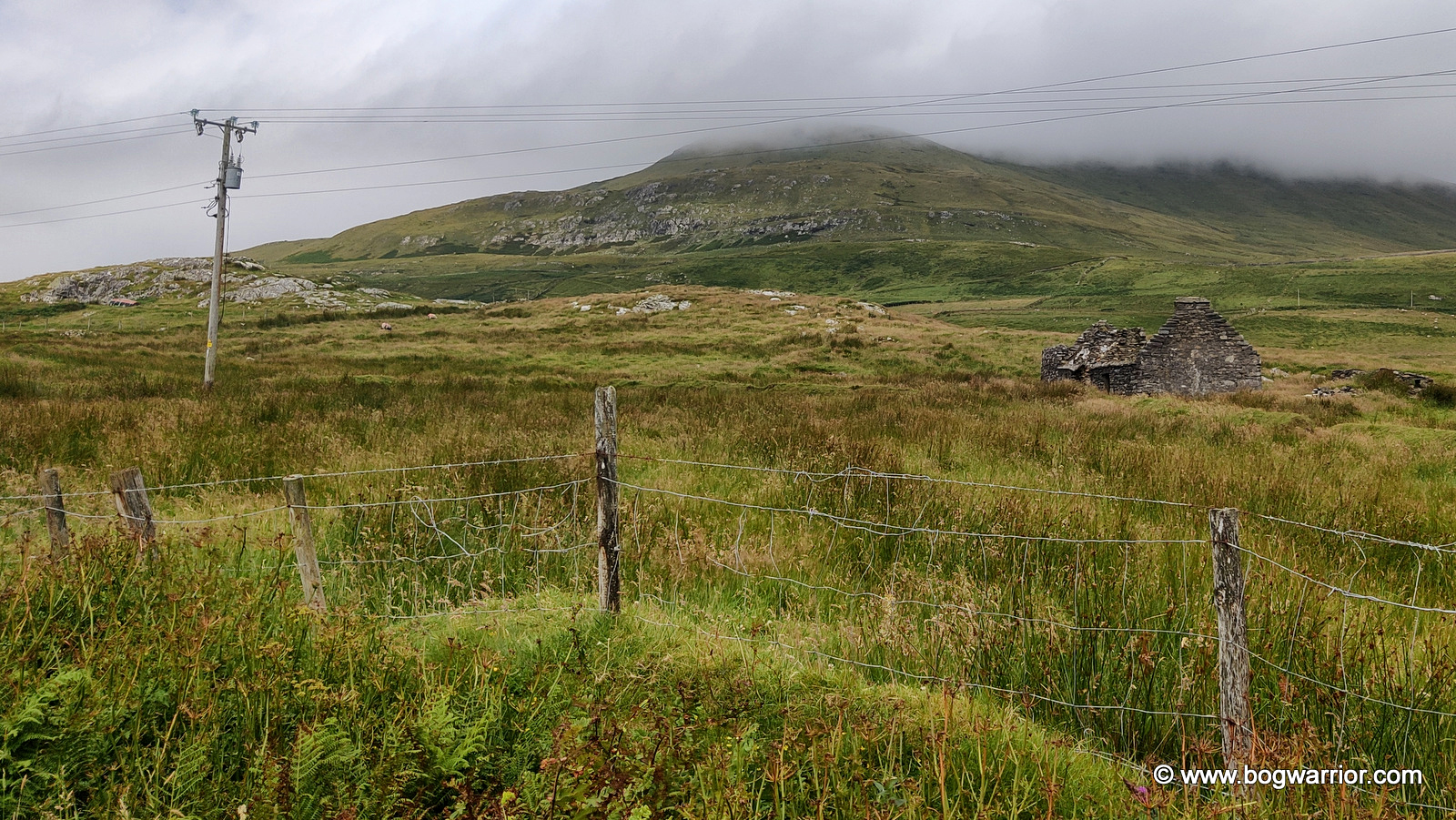
Being something of a tower fiend, I couldn’t leave Clare Island without attempting to find the ruins of the old Napoleonic signal tower, accompanied by the reassuring tones of Google Maps in my ear. It was a scenic journey, taking in sea views, a lovely waterfall, sheep and, looming ahead, a rather large hill with clouds hanging ominously over it.

All went well until the road ended and Google Maps announced that I had reached my destination. I looked at the phone, I looked at the territory, and all I could do was laugh. I was standing at the edge of a bog, looking up at a big hill. The signal tower was at the top of said hill, with no obvious route to reach it. I looked at the landscape. I looked at the bicycle. I looked at the remaining time. I decided that perhaps the signal tower had been quite adequately admired from a distance. At least I can say I saw it.⬇️

Napoleonic Tower
Napoleonic Tower

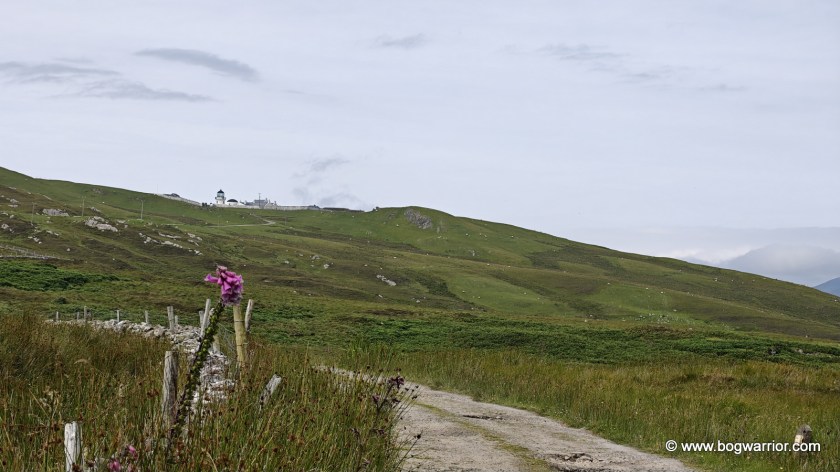
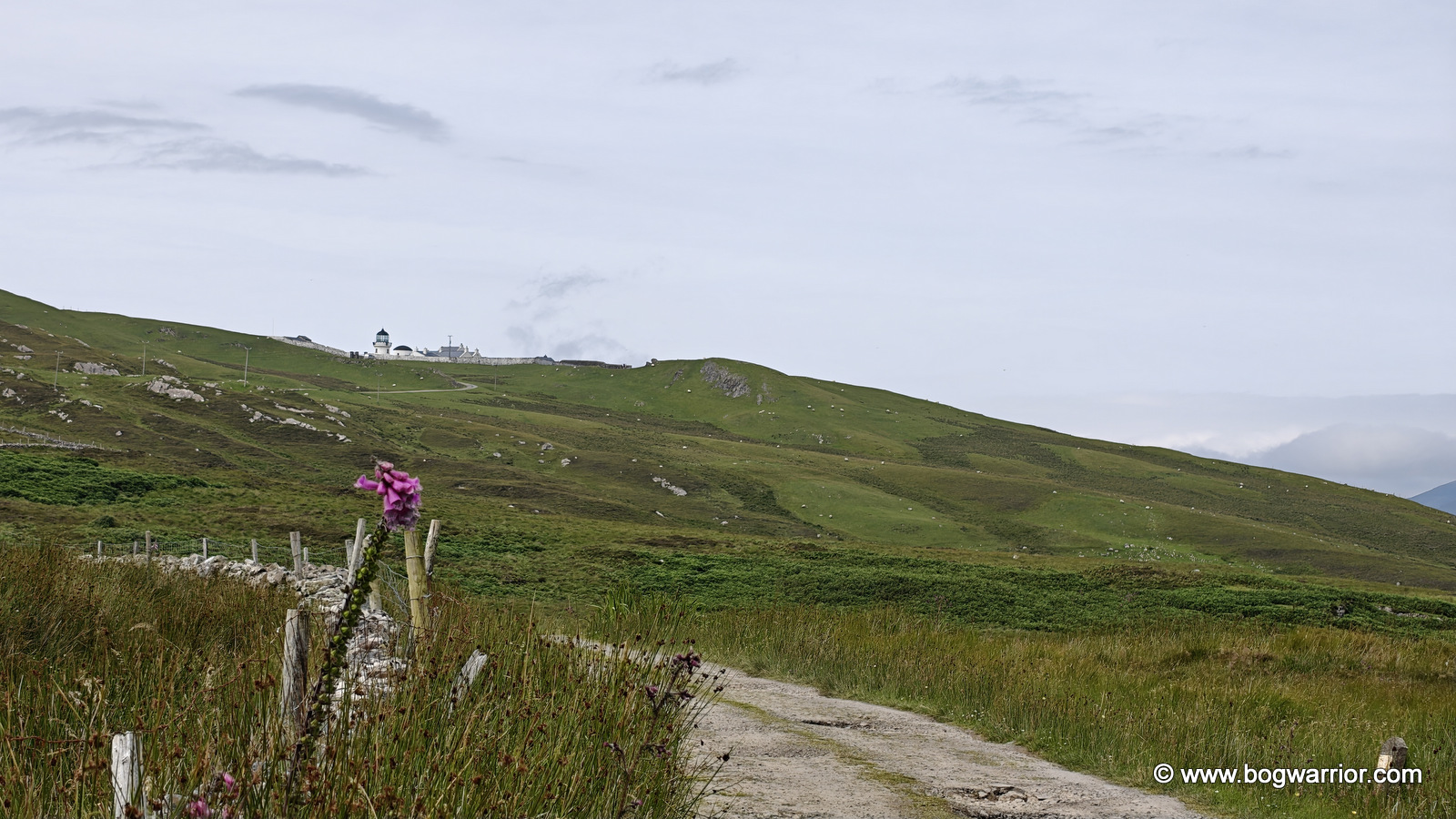
I still wanted to see the lighthouse. These days, it’s rented out to visitors who want to spend more than a busy day trip on the island. The journey from almost reaching the Napoleonic signal tower to the lighthouse involved plenty of uphill cycling, but it also came with some stunning views.

This was the sort of scenery that makes you forget you’re supposed to be watching the clock.

Unfortunately, the clock had not forgotten me.

By the time I reached the gateway leading to the lighthouse, I knew this was going to be another “not quite” visit. One look at the long and winding road leading up to it was enough to make up my mind. It was time to turn around and head back to the pier.
Clare Island Lighthouse

Much as I liked Clare Island, I liked the thought of getting back to my car at Roonagh Pier even more. Sometimes a day trip isn’t about seeing everything. Sometimes you have to leave a few things for the next visit.

Getting There and Getting Around

Two companies – Clare Island Ferry and O’Malley Ferries run numerous daily ferries from Roonagh Pier, which is 7 km from Louisburg, Co. Mayo. The ferry journey took roughly 20 minutes.

There is a bicycle hire place not too far from the pier, should you wish to explore on two wheels. If you’ve read this far, I’d advise against bothering to seek out the Napoleonic Tower unless you really like bogs and ruins 😁. There is a shop near the island church and school, plus a small hut on the pier. I didn’t have time to sample any food or drink in the local hostelries.
Gallery – click on an image to start the slideshow

Why Cobh Deserves More Than a Titanic Stopover

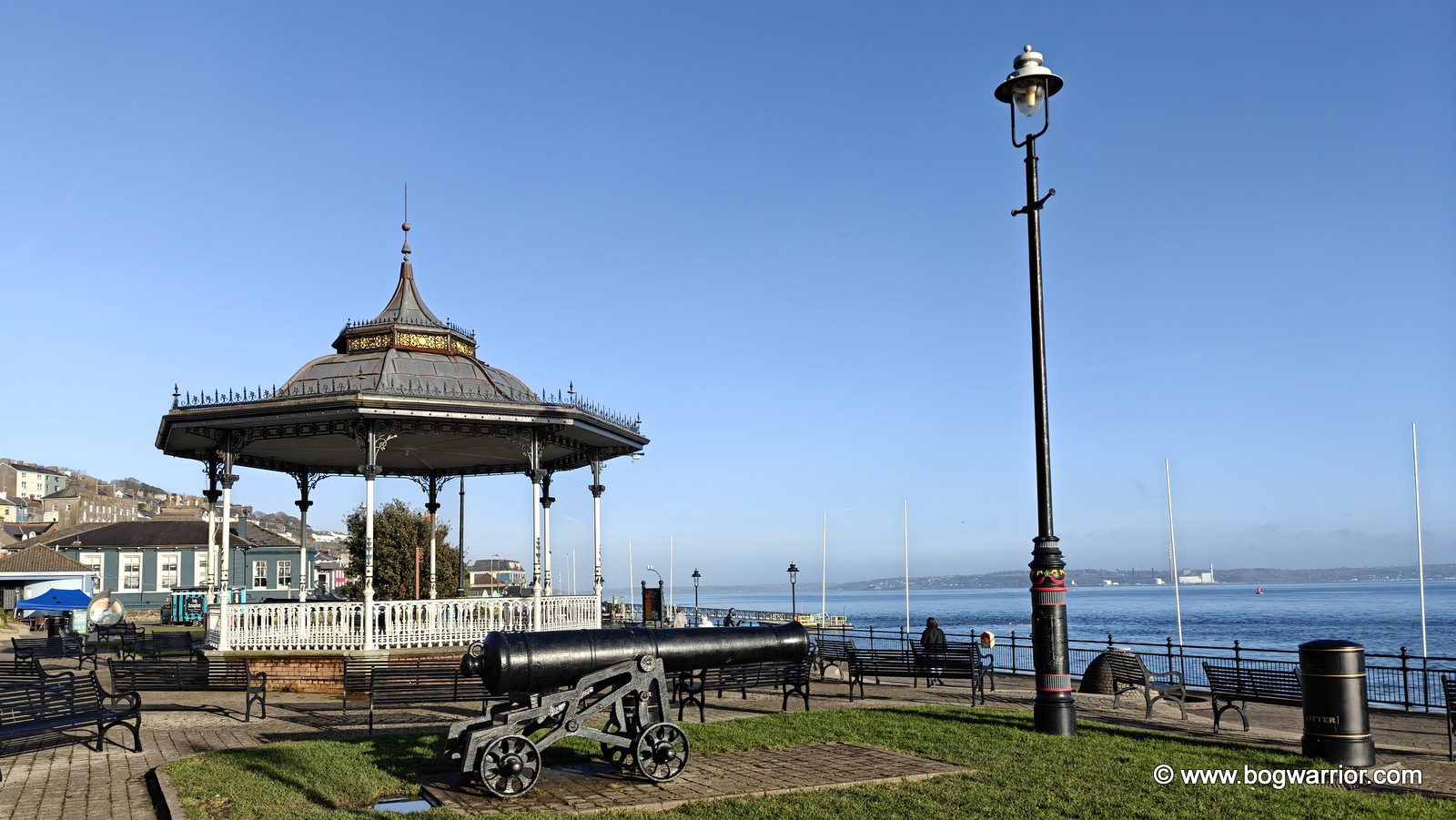
Cobh is a harbour town located about 25 km from Cork City. Called Queenstown until 1922, it is perhaps best known internationally as the final port of call of the ill-fated RMS Titanic. Before I get to that story, though, it’s worth taking a moment to appreciate this bustling and historic town in its own right.

One fact that surprised me was that Cobh is actually situated on an island, although it has long been connected to the mainland by a bridge. The town overlooks Cork Harbour, one of the largest natural harbours in the world. Combined with its position on Ireland’s south coast, this made it an ideal location for a major port.

As an aside, two other islands in Cork Harbour are also notable. Spike Island served as both a fortress and, later, a prison for many years, while Haulbowline Island is home to the Irish Naval Service.

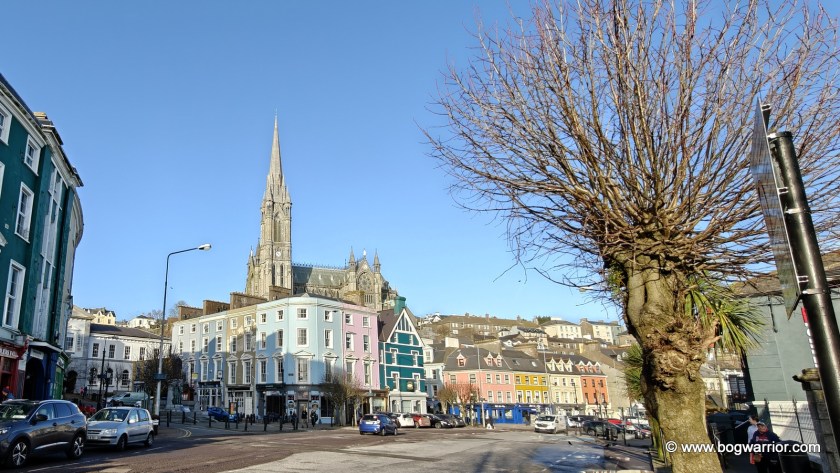
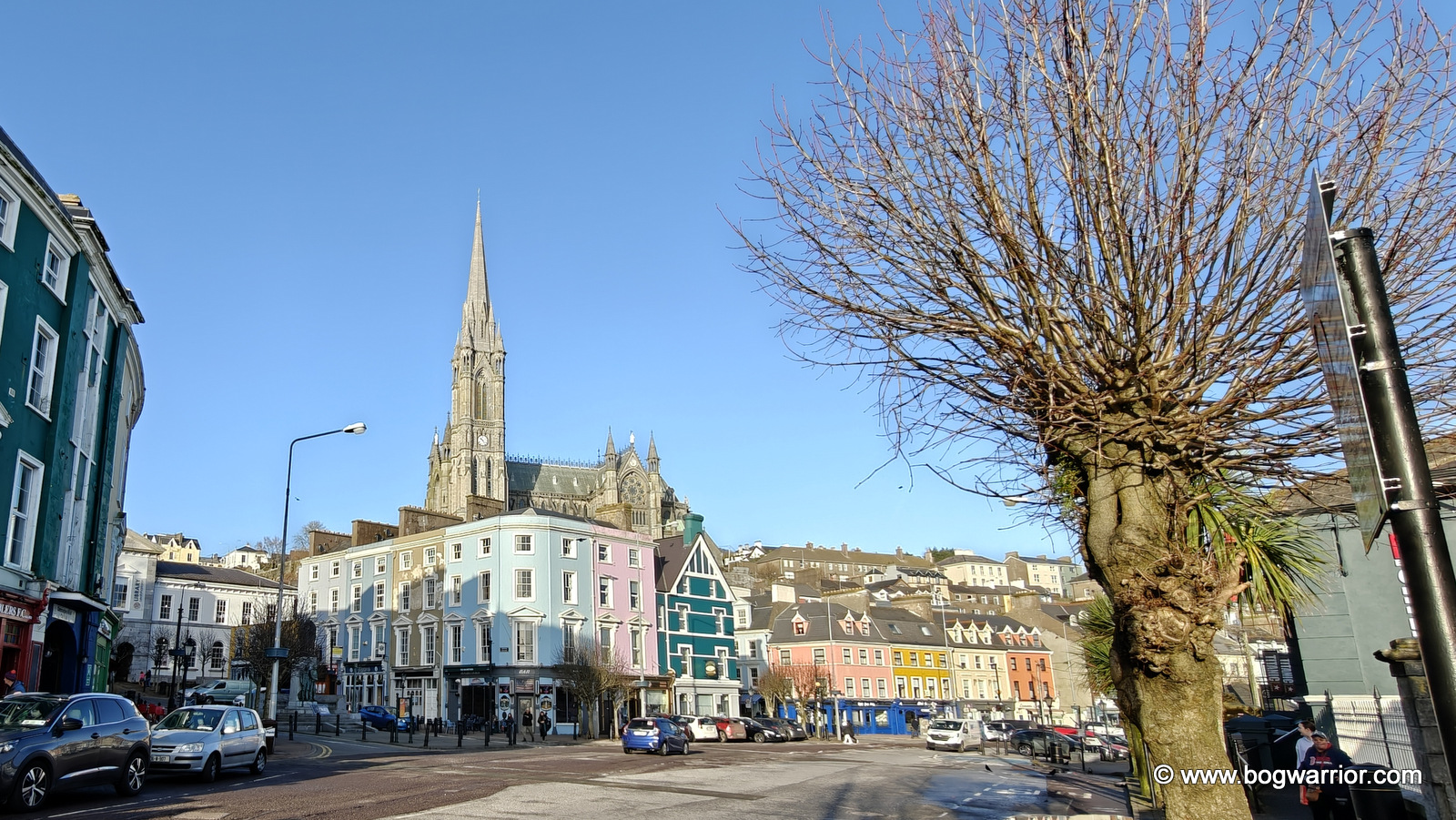
St Colman’s Cathedral, overlooking the town.

One of the earliest large ships to depart from Cobh—then known as the Cove of Cork—was the Queen in 1791. A convict ship bound for Australia, she called here before beginning the long voyage to Botany Bay in Sydney. During the 19th century, the town developed into a major port and became one of Ireland’s principal departure points for emigrants heading to North America and Australia. Following Queen Victoria’s visit in 1849, the town was renamed Queenstown, a name it retained until the establishment of the Irish Free State in 1922. If your Irish is a little rusty, don’t worry—Cobh is pronounced exactly the same as Cove, the town’s original English name.

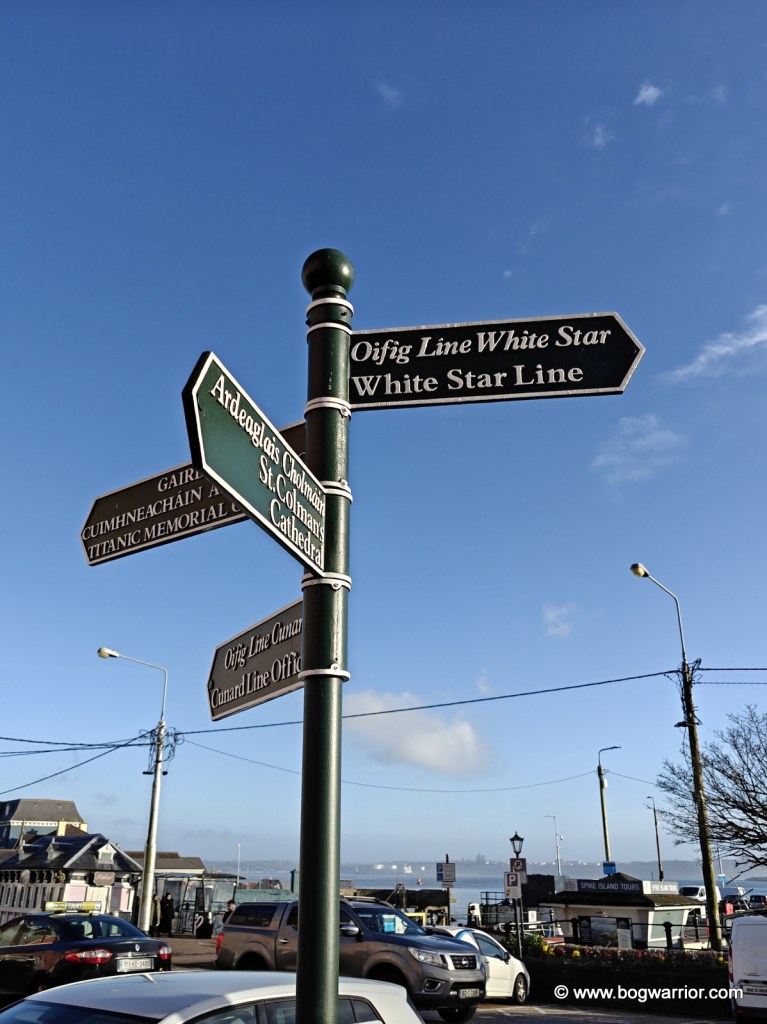
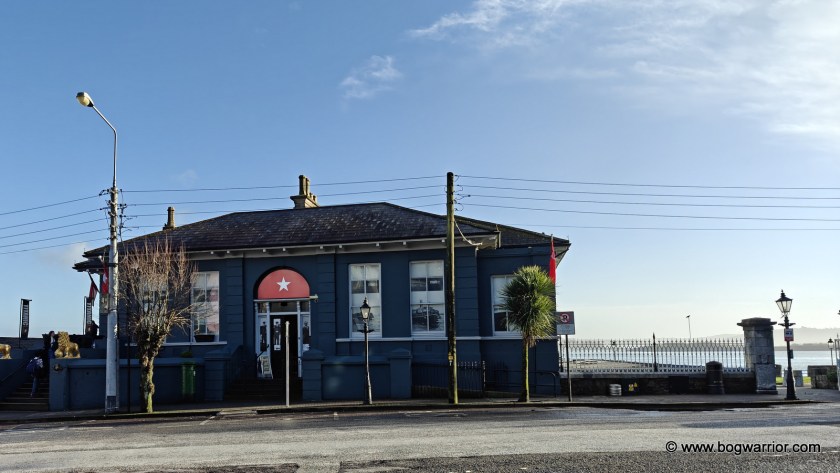
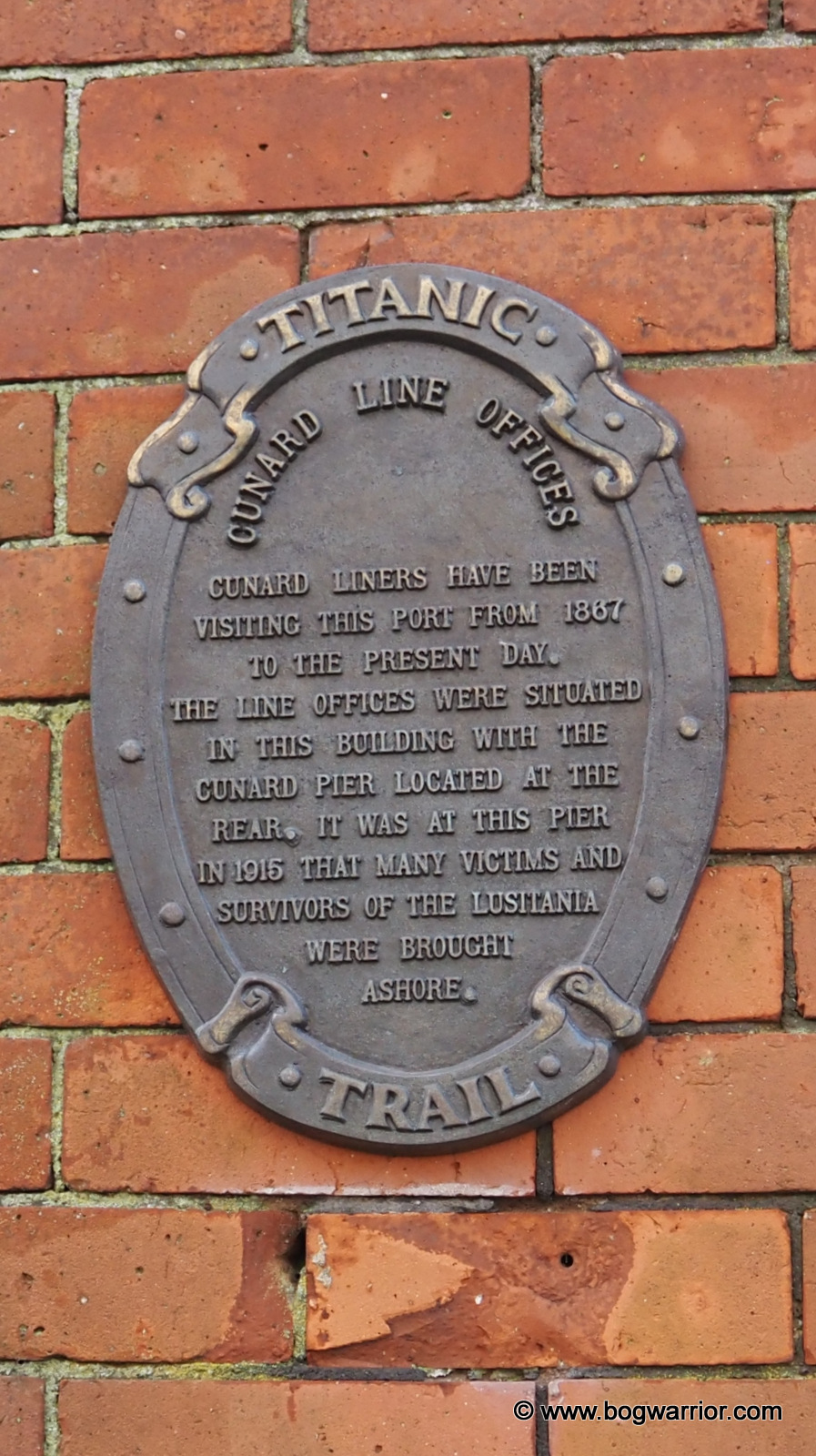
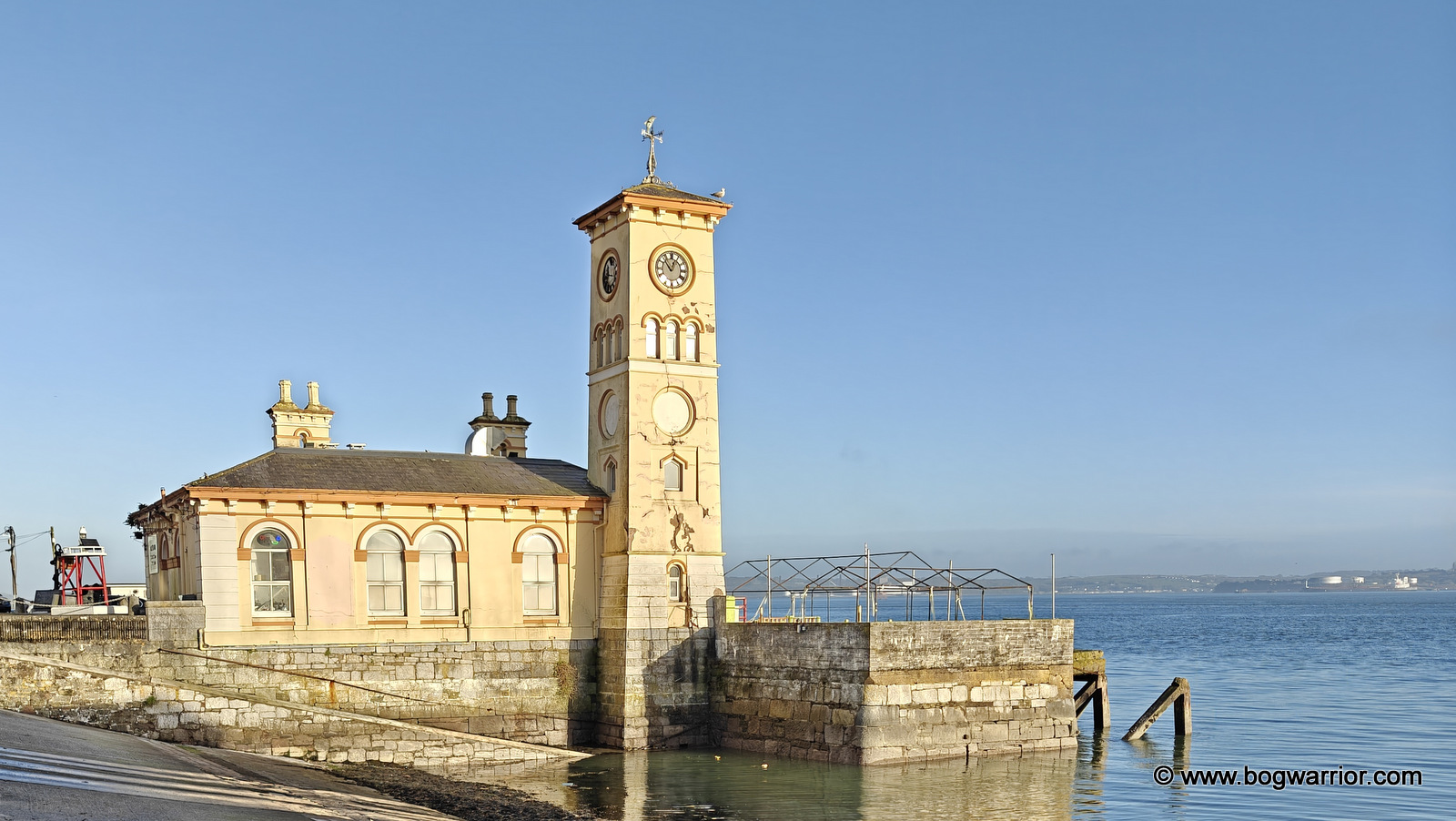
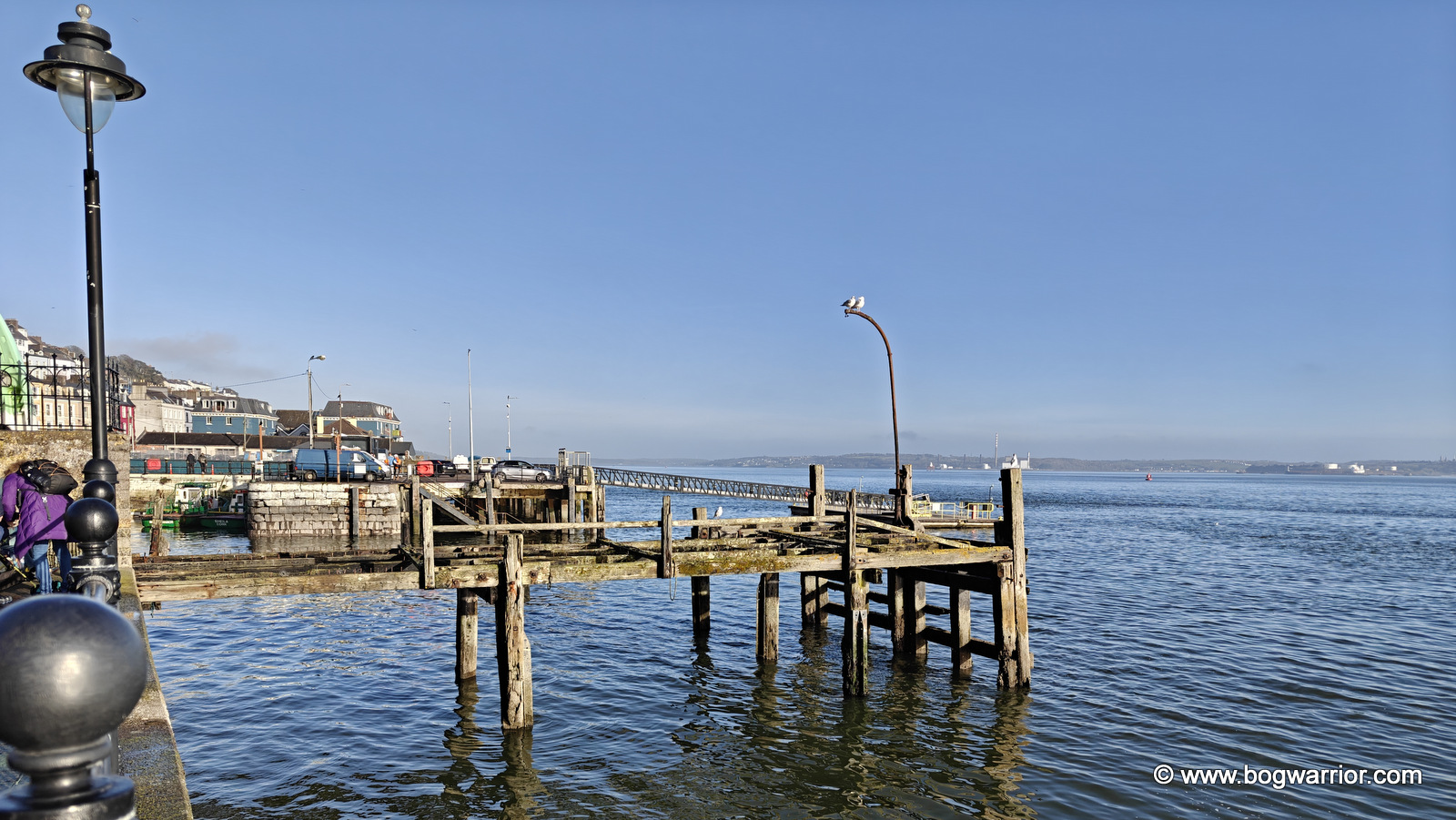
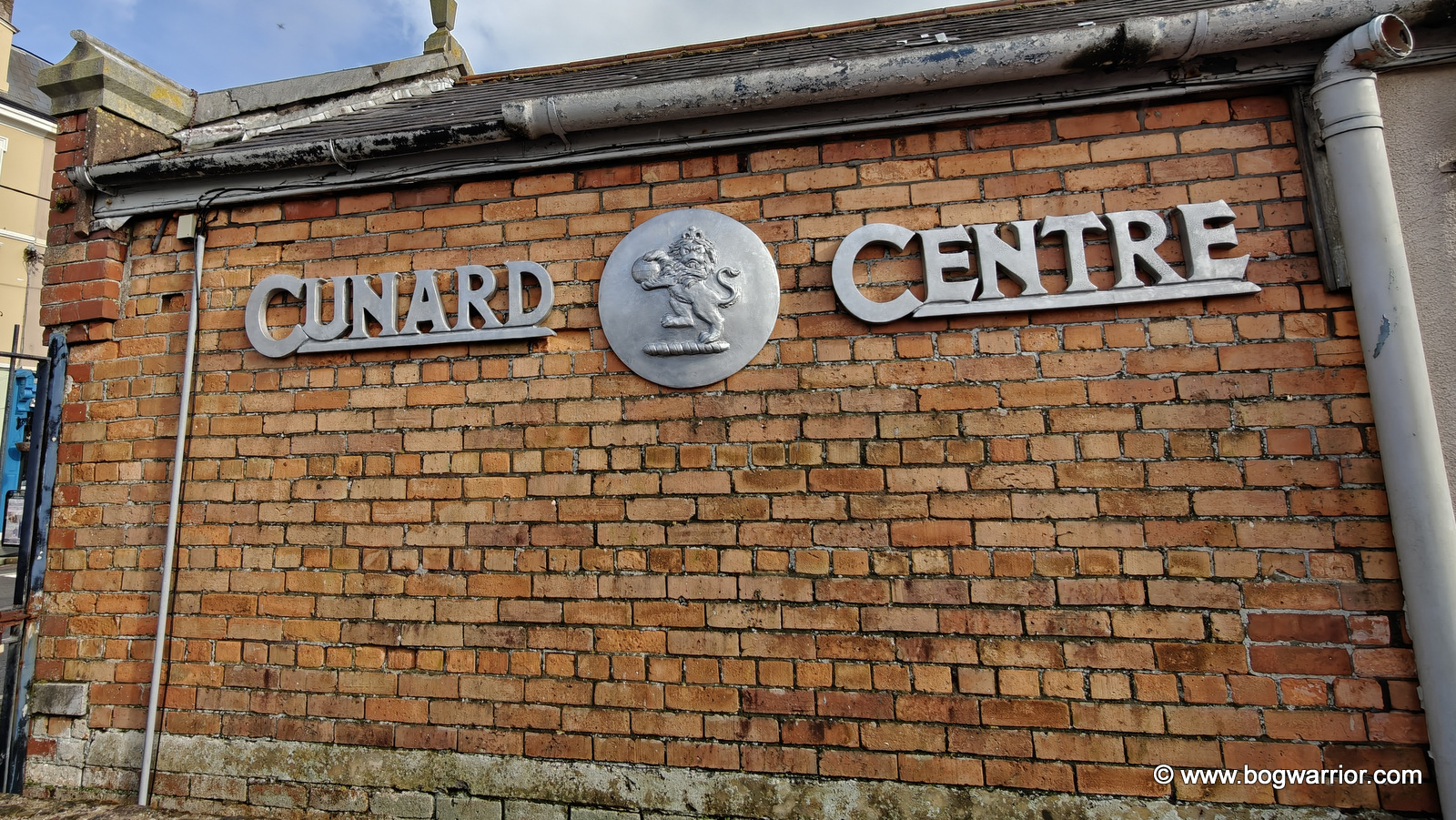
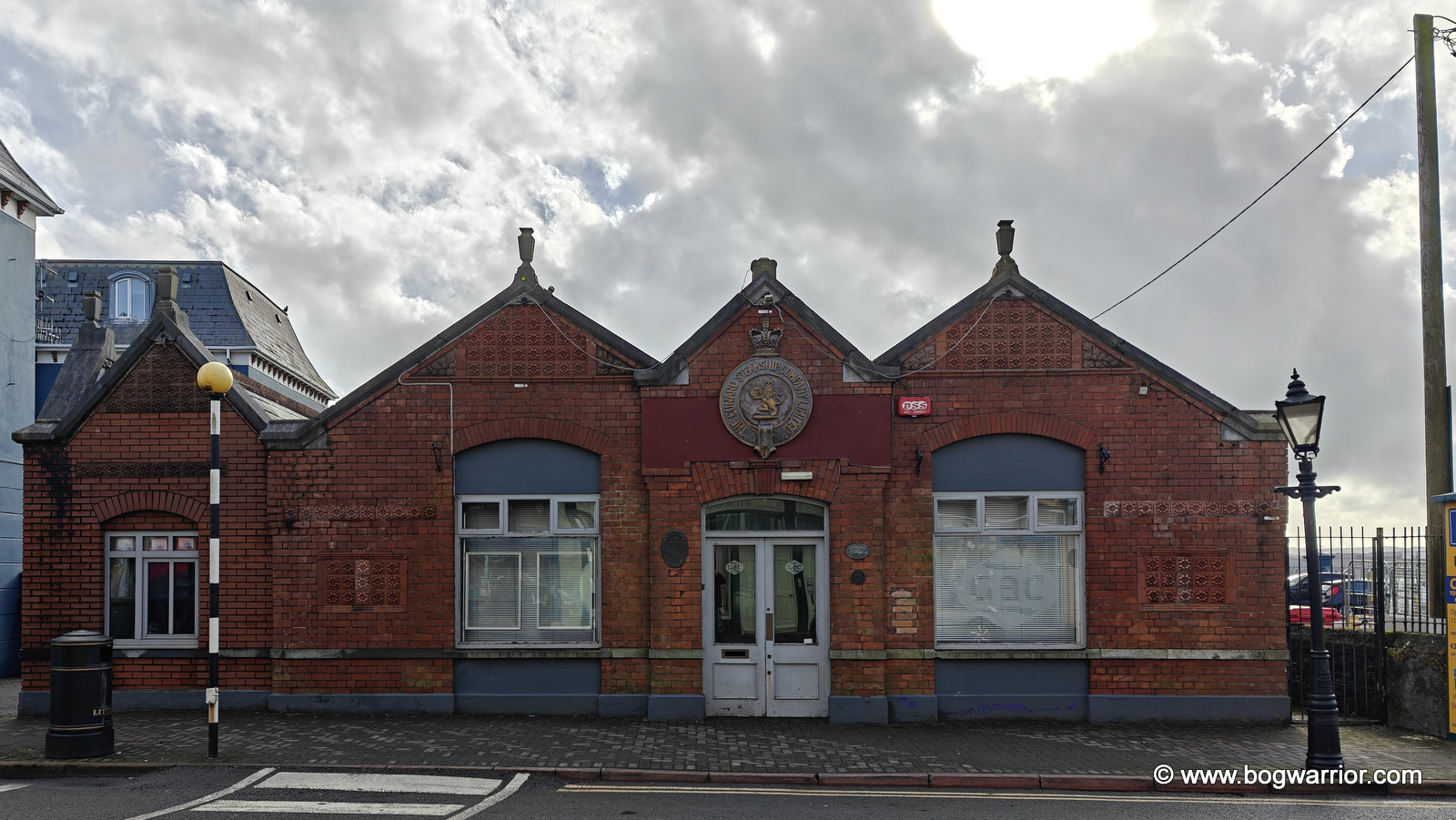
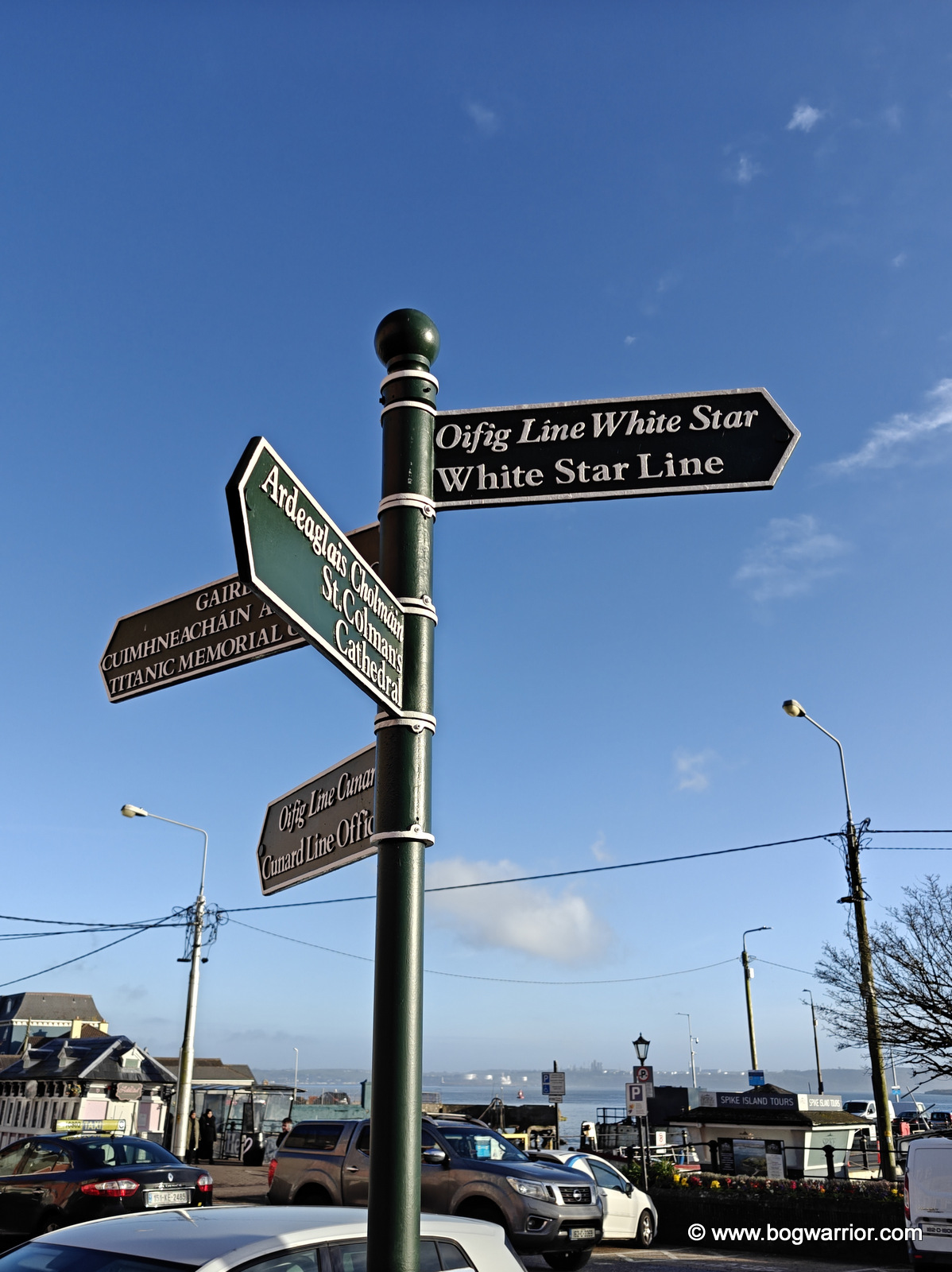
While emigrant ships no longer leave from here, cruise liners continue to call. Anyone taking the time to wander the streets—and I highly recommend that you do—won’t have to look far to find reminders of the town’s rich maritime heritage. The former offices of the White Star Line and Cunard still stand, while the remains of the old piers evoke the days when countless emigrants began new lives overseas. Outside the railway station, a statue of Annie Moore commemorates the first immigrant processed through Ellis Island after it opened in 1892.

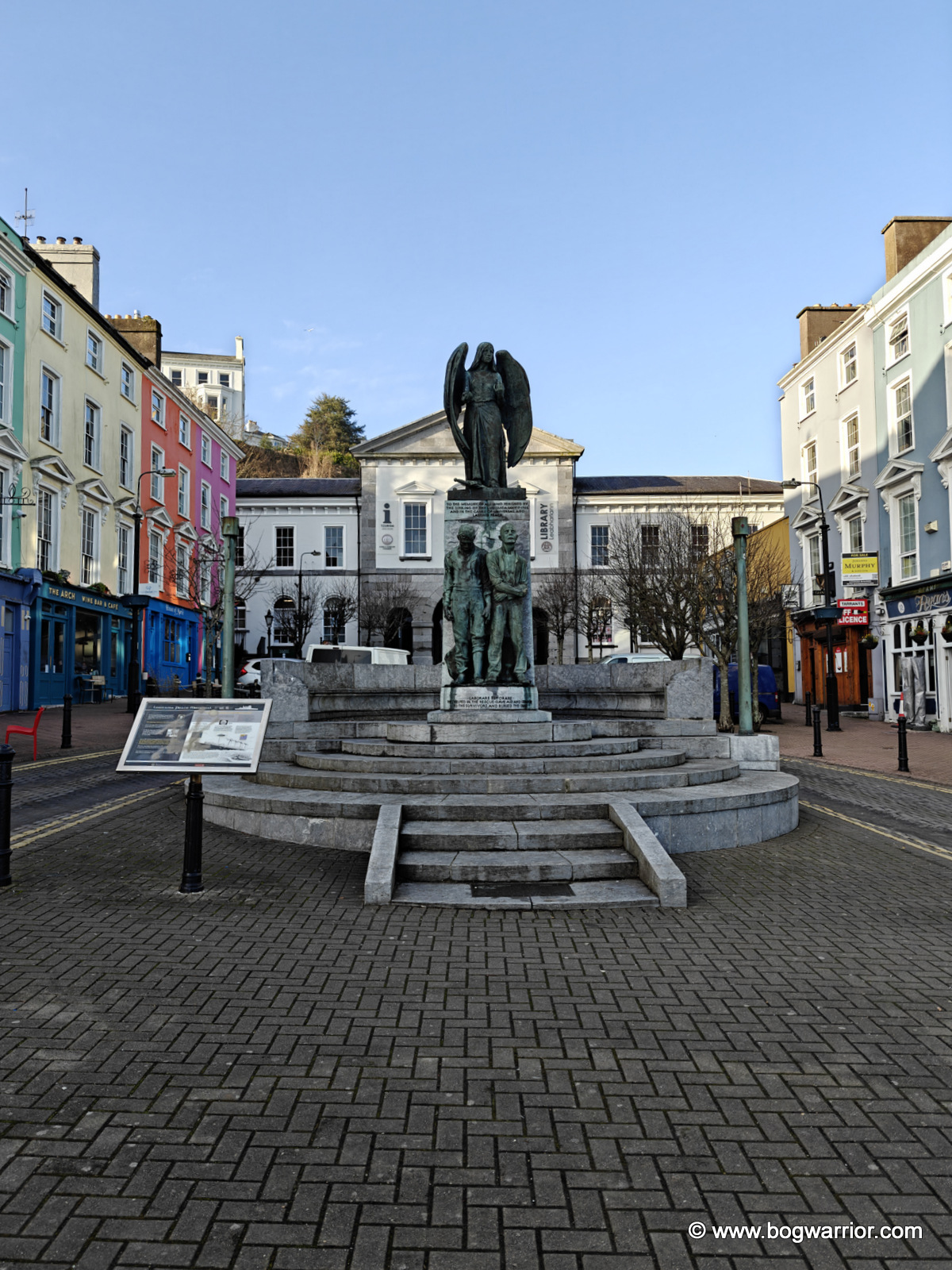
Lusitania Memorial

The Titanic isn’t the only famous ocean liner associated with Cobh. On 7 May 1915, the RMS Lusitania was torpedoed by the German submarine U-20 off the nearby Old Head of Kinsale. Of the 1,962 people on board, 1,198 lost their lives, making it one of the greatest maritime disasters of the First World War. Many of the victims are buried in the Old Church Cemetery just outside the town, while a memorial in Casement Square commemorates those who never made it home.

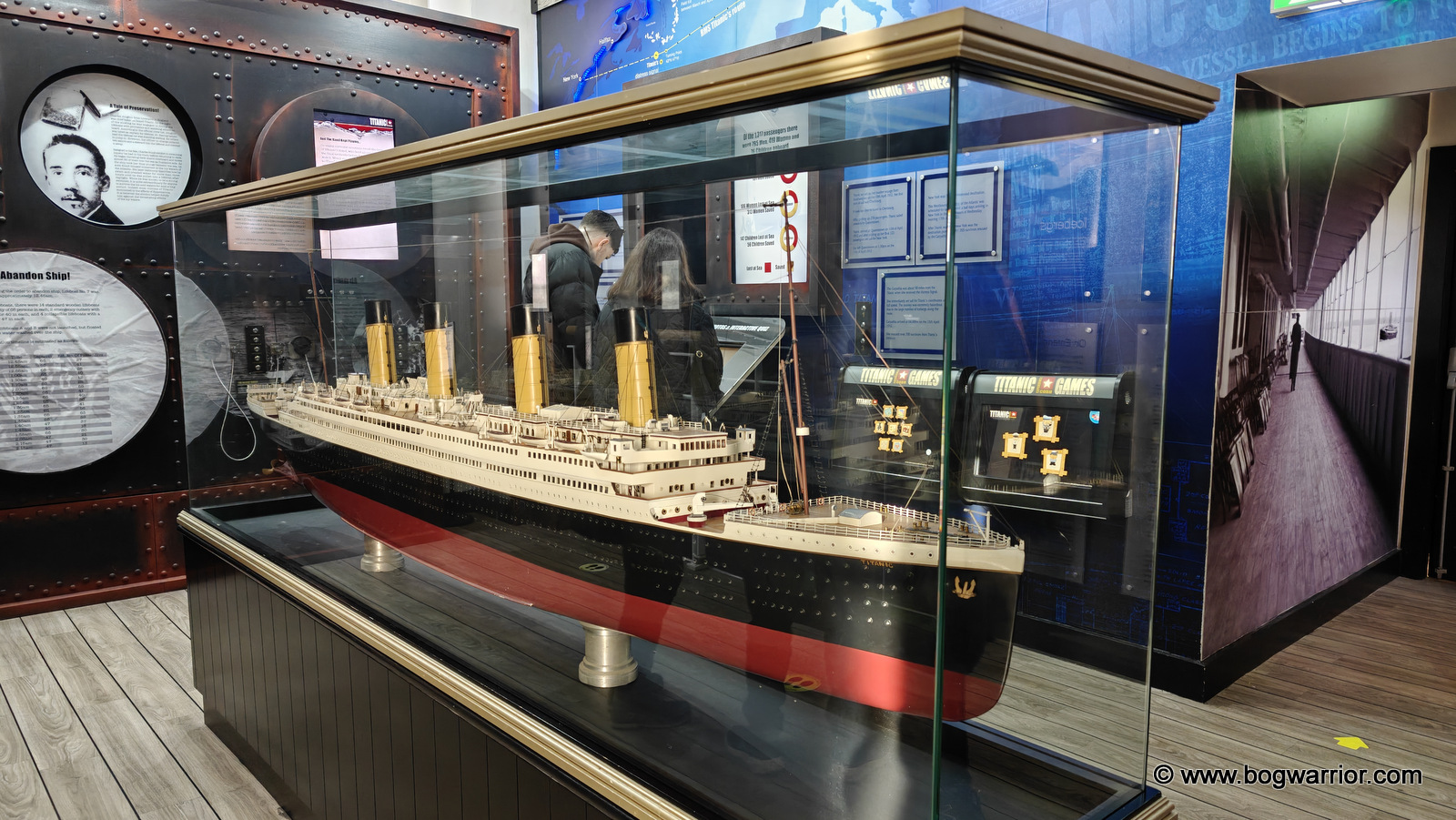
1911 just called. It wants its ship back

It’s hard to miss St Colman’s Cathedral, which stands high above the town and dominates the skyline. It took more than 50 years to build and was finally completed in 1919. Its construction was partly funded by donations from Irish emigrants who had left in search of a better life abroad. The cathedral is home to the only carillon—a keyboard-operated set of bells—in the Republic of Ireland. With 49 bells, visitors to Cobh are frequently treated to music drifting across the town and harbour. In 1953, the famous comedy duo Laurel and Hardy visited Cobh. They were visibly moved when the cathedral’s bells rang out with their signature tune, The Cuckoo Song, during the warm welcome the town gave them.

Not all of Cobh’s famous names are linked to the sea. The town is also the birthplace of Olympic silver medallist Sonia O’Sullivan, and a statue on the waterfront pays tribute to one of Ireland’s greatest distance runners.

The Titanic Experience

Titanic Experience

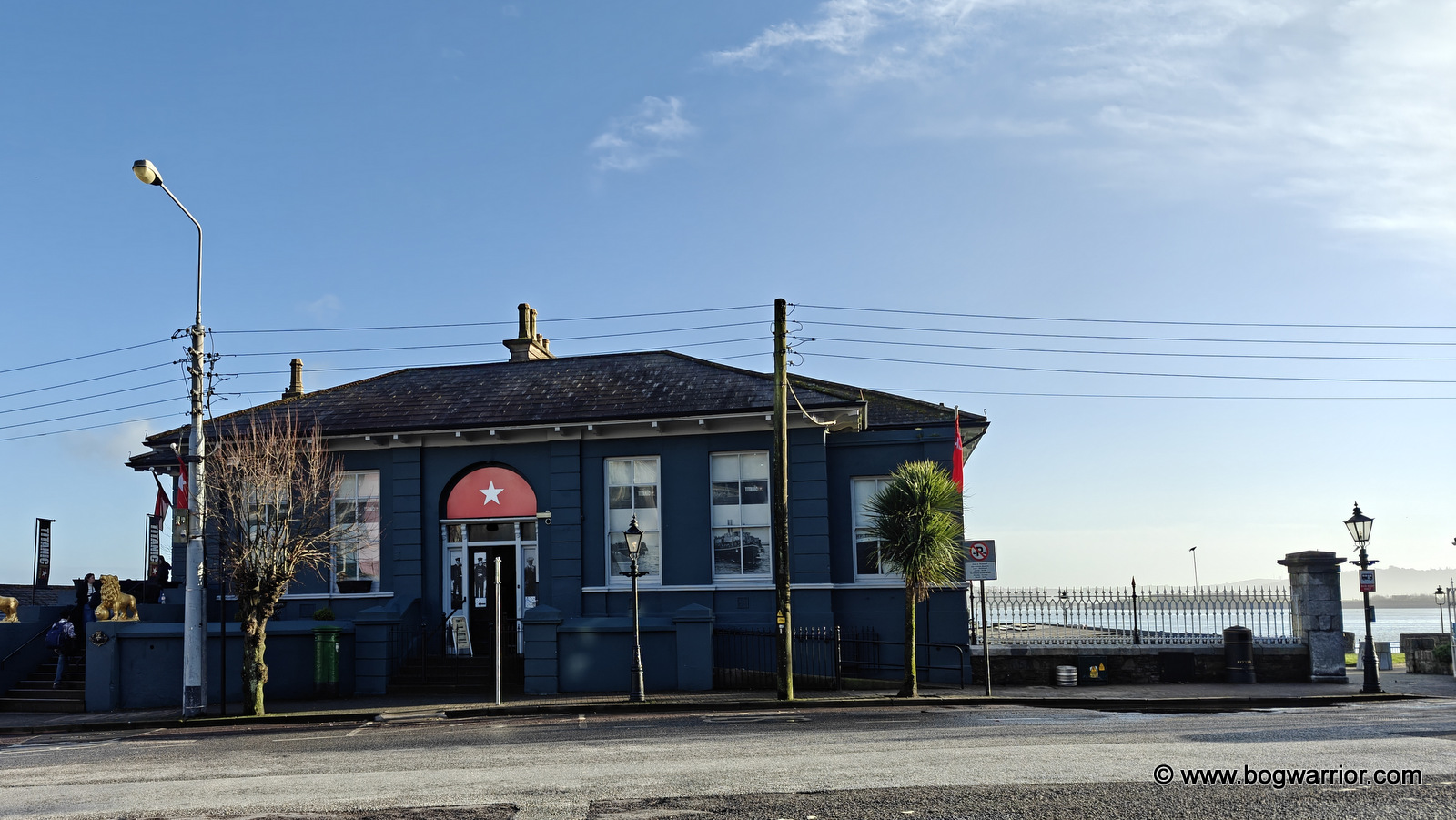
The Titanic Experience is housed in the original White Star Line ticket office, where the last passengers checked in before boarding the Titanic. Rather than telling the story of the ship itself, the attraction focuses on the people who boarded here on 11 April 1912. At the start of the tour, each visitor is given a boarding card with the details of one of the 123 passengers who joined the ship at Queenstown. As the guided tour unfolds, you follow their story and, at the end, discover whether they survived. It’s a simple idea, but one that humanises the tragedy and creates more of a connection. I was relieved to discover that the passenger whose story I had been following lived to tell the tale.

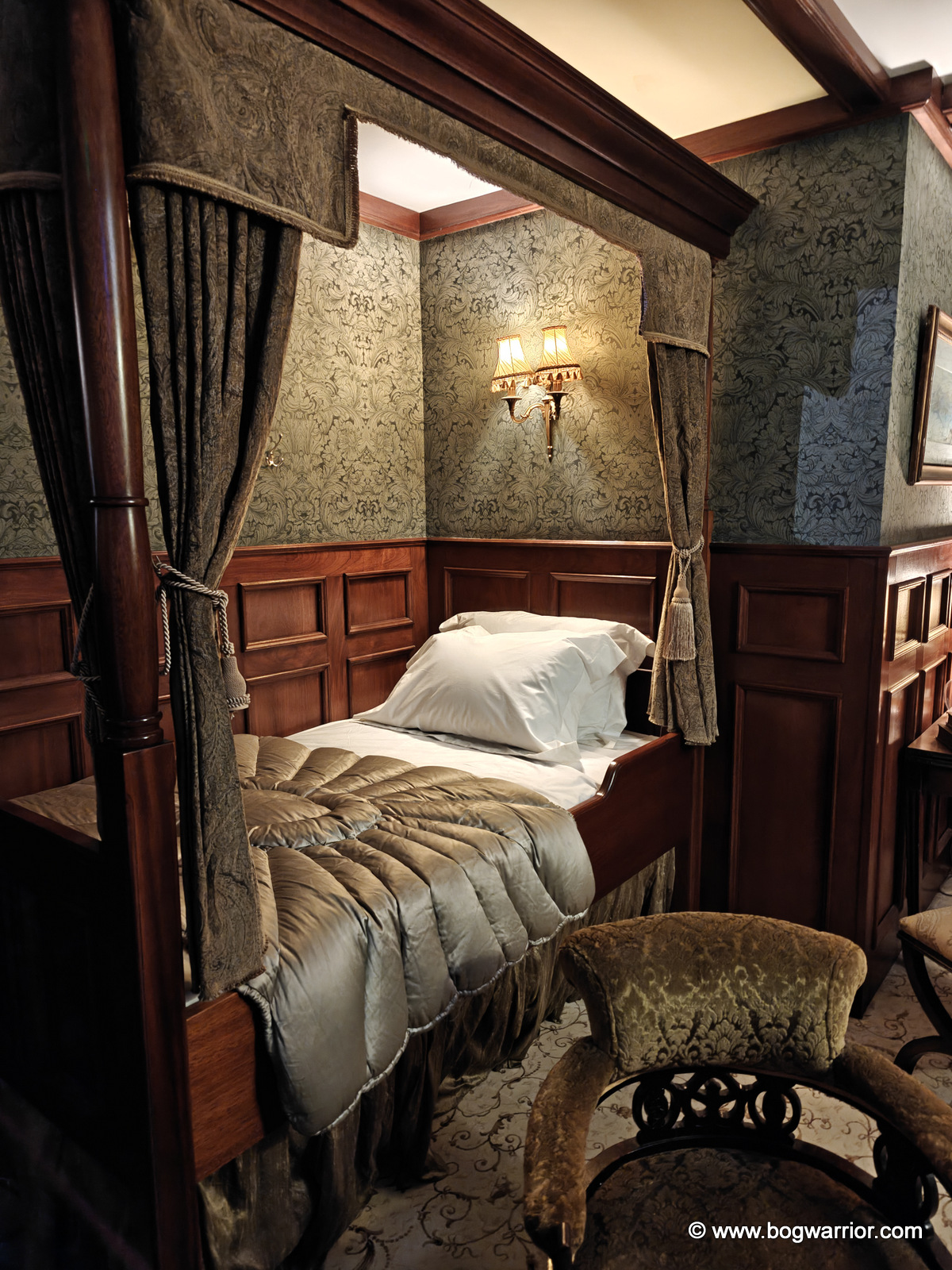
As the guided tour unfolds, you follow the story of your passenger while learning about the events leading up to the disaster. One of the highlights is stepping outside onto the original platform where the last passengers waited to board the tender that would take them out to the Titanic, anchored in Cork Harbour. Standing in the very place where they took their final steps on land gives the story a real sense of immediacy. The tour also includes a replica first-class cabin, an insight into conditions experienced by many third-class passengers, and an animated recreation of the sinking.

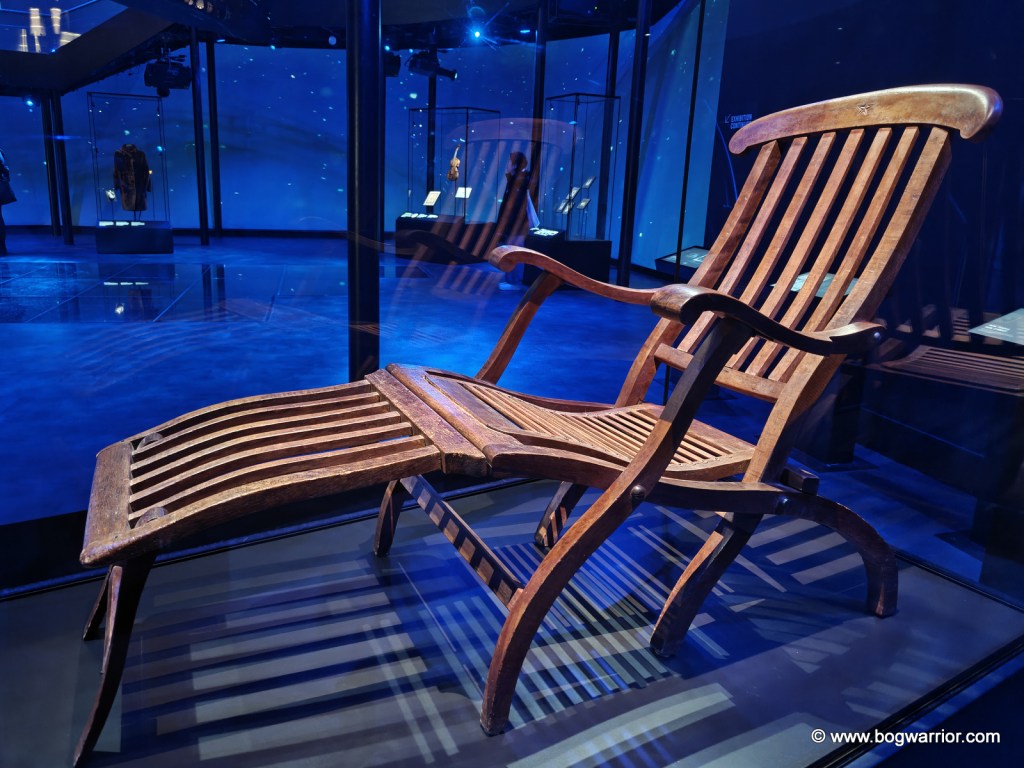
The tour concludes with an exhibition of Titanic artefacts, including White Star Line crockery, promotional leaflets and other memorabilia. While the museum doesn’t have the scale of Titanic Belfast, that’s hardly surprising given it’s housed in the original White Star Line ticket office. There’s still plenty to see, and I spent a good while browsing the exhibits before leaving.

Links

The Titanic Experience

Cobh Heritage Centre

Belfast – A flying visit on the train

In March of this year, I finally got around to visiting Belfast. I’ve only been to Northern Ireland sporadically, and not recently. I’d never been to Belfast either, so it was time to fix that omission.

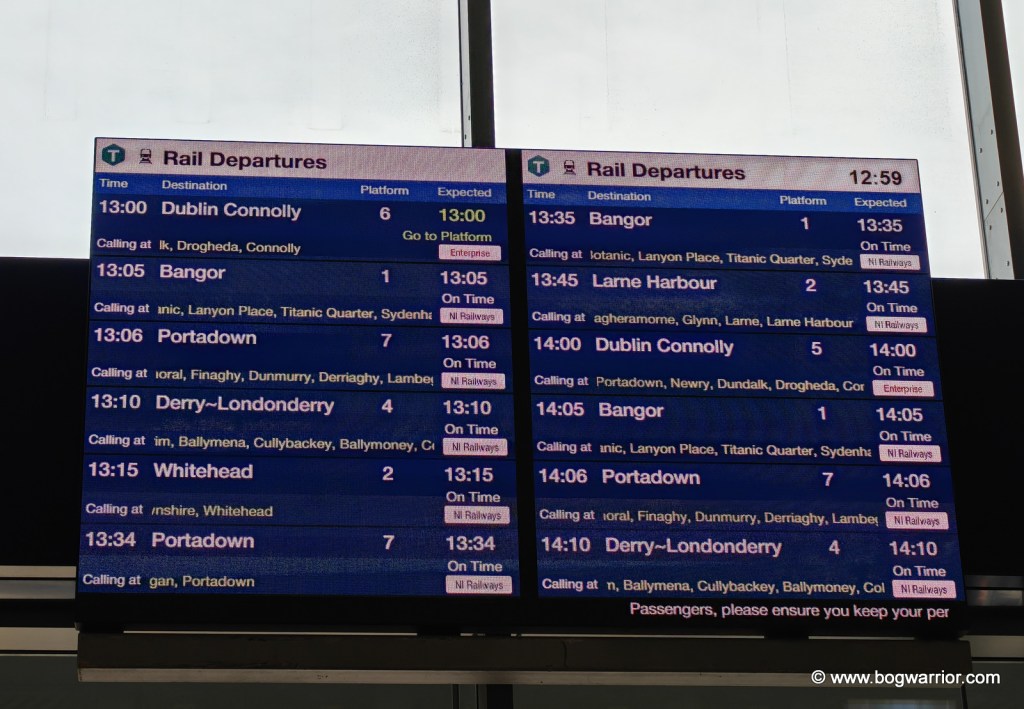
Rather than driving, I travelled there by train. I began the long trek north by catching a morning train to Heuston Station, then a Luas across Dublin city centre to Connolly Station. Then finally, an Enterprise train to Belfast. I’d never caught a train to or from Connolly Station, so the journey along Ireland’s north-east coast was a pleasant diversion. A lifetime of shuttling up and down the line from Heuston had long since killed my enjoyment of simply looking out the window! The Enterprise train was modern, comfortable, and not too crowded. It also boasted that rarest of beasts on Irish trains these days – a catering trolley. Seriously, Irish Rail, what are ye at? The pandemic was 5 years ago… The trains to Belfast now terminate at the brand-new Grand Central Station. It’s within walking distance of the city centre, which is ideal if you don’t want to be bothered with buses or taxis. Should you wish to travel further into Norn Iron, there are plenty of buses and trains to get you there.

Trains to and from Dublin run every hour

I didn’t get to explore the city to any great extent (hence the flying visit comment) so here are the highlights.

The Ulster Museum is in the grounds of the city’s Botanic Gardens and has been extensively renovated in recent years. There’s plenty to see, but a highlight for me was a recreation of the famous blackboard from Derry Girls. It’s a beautiful building and I’ll definitely make a return visit when I have more time on my hands. The museum and Botanic Gardens are next door to Queen’s University. It was lovely to feel the energy that comes with a third-level institute, while at the same time being glad that those days were well behind me!

I keep my toaster in a cupboard #truestory

Walking around the city centre, it was interesting to see the mix of old and new. And as someone who grew up in the era when this part of the world was constantly in the news for the wrong reasons, placenames, buildings and signposts looked very familiar.

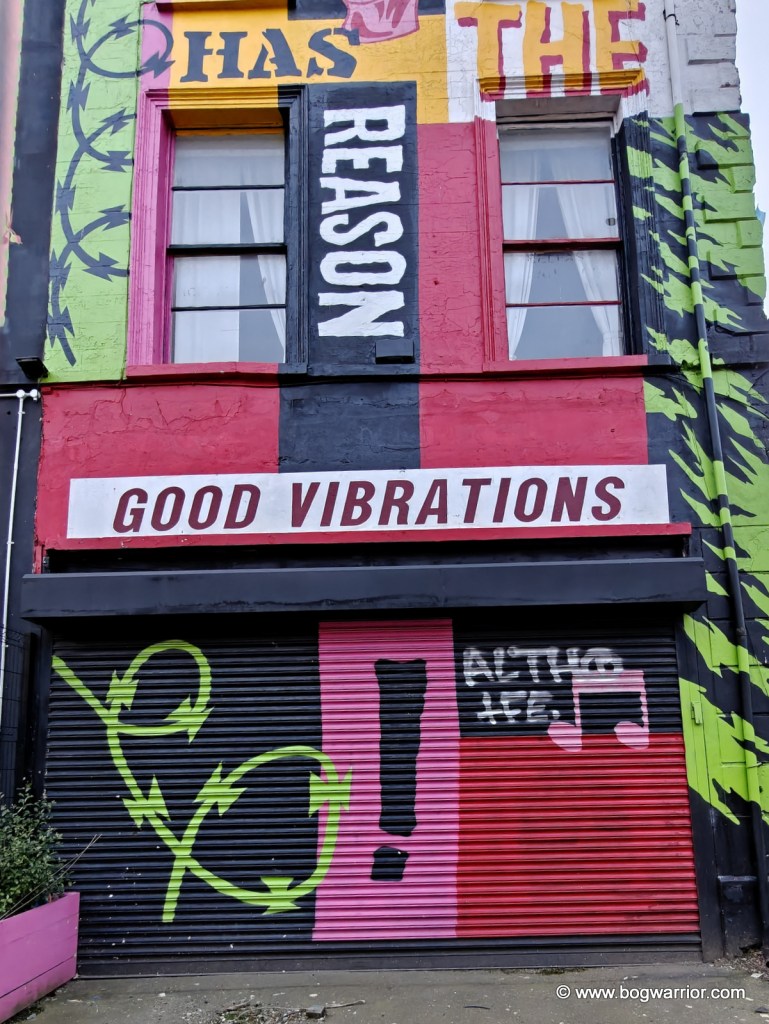
Good Vibrations, maaaaan

I spotted this disused building on Great Victoria Street. It was one of the places in the area where Terri Hooley ran his Good Vibrations record shop. For anyone who hasn’t got a clue what I’m on about, Terri Hooley was (and is) Belfast’s so-called “Godfather of Punk”. As well as running a record shop called Good Vibrations, he established an indie record label. Its most famous release was Teenage Kicks by The Undertones. A film about Terri’s life was released in 2012

Titanic

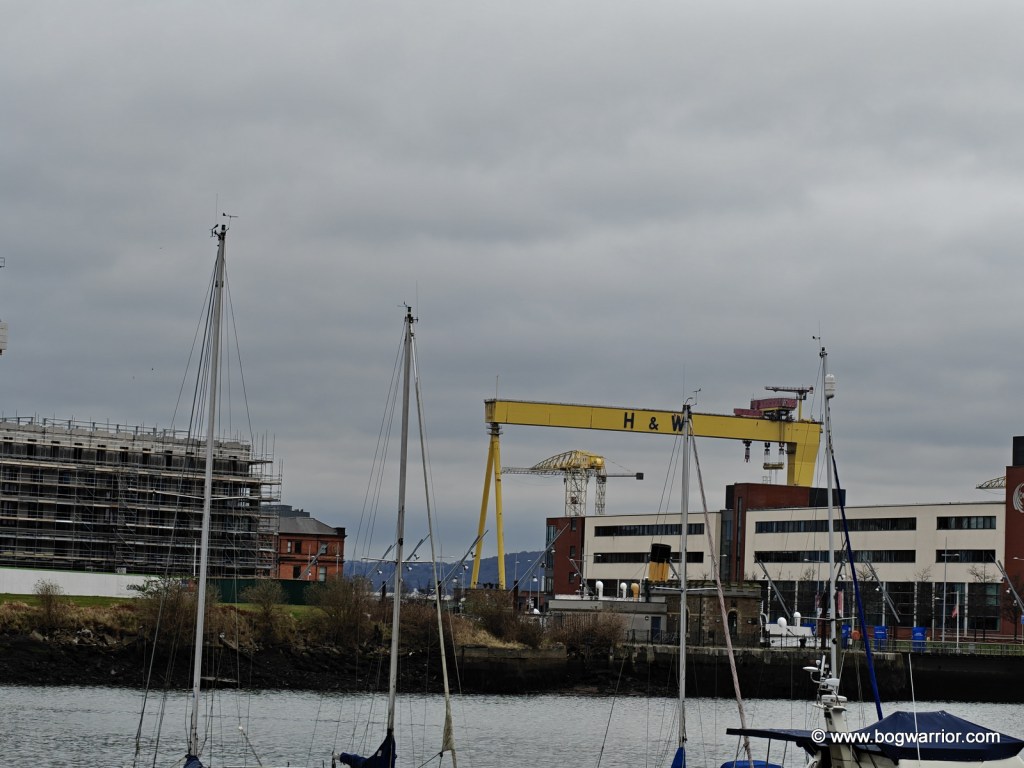
Because Belfast City Centre is so compact, the walk out to the Titanic visitor centre didn’t take that long. It was also a great way to take in the riverside area of the city, and to see how Titanic and Game of Thrones have benefited the region. There are many shiny new buildings in the area. These, presumably, have replaced something that was much grittier.

Replica Titanic – one of many

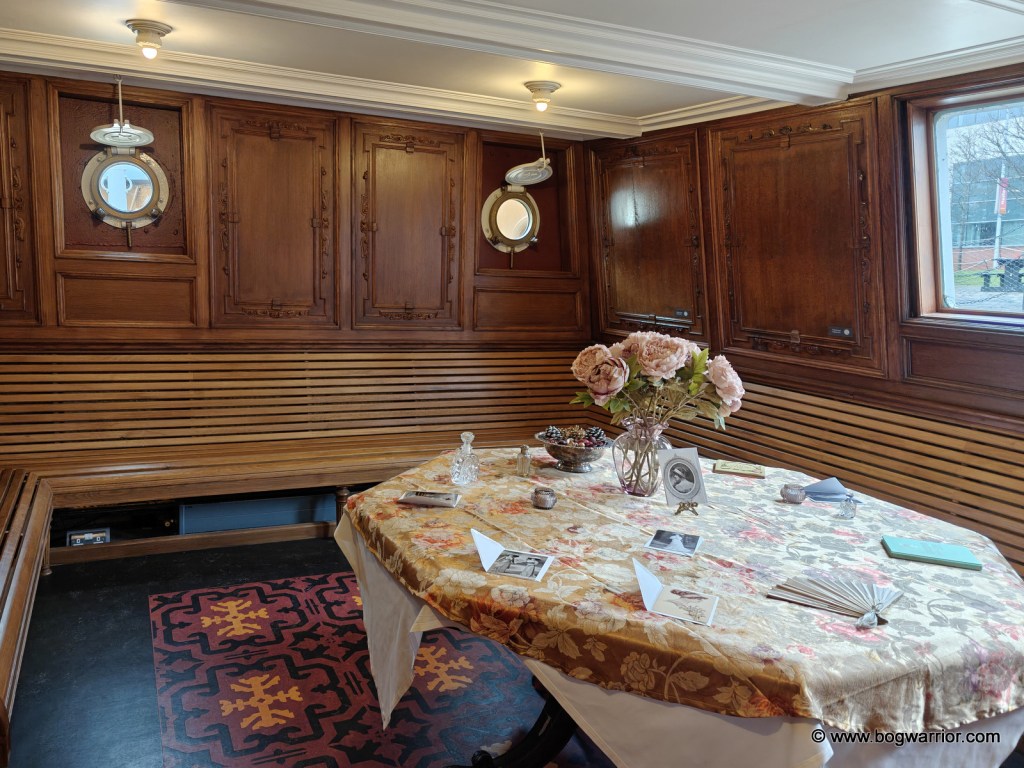
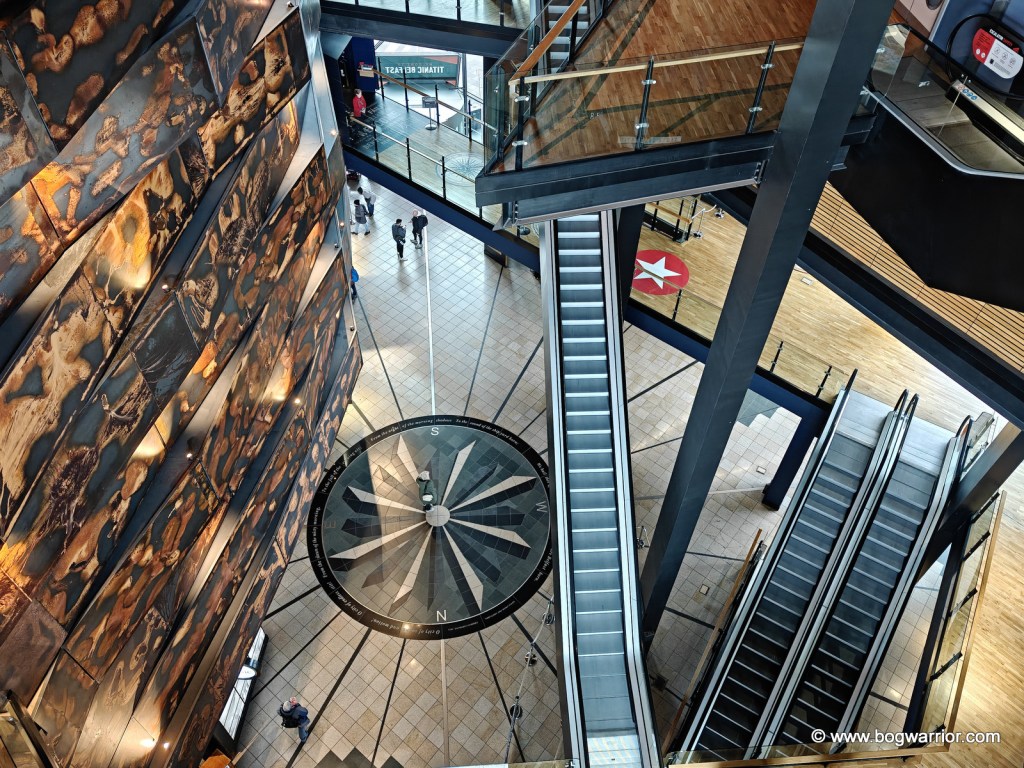
I’m a sucker for shiny floor exhibitions, so the Titanic Experience was right up my sleeve. It’s a self-guided tour which takes in everything from the social history of Belfast right up to the aftermath of the disaster. It has pretty much everything you’d expect from such an exhibition – multimedia displays, rolling interviews and documentaries, and reproductions of carpets/crockery/cabins on the ship. Another highlight of the exhibition is a fairground-style ride through the shipyard. It’s accompanied by sounds from the shipyard, voiceovers and heat. The building itself overlooks the original slipways where the Titanic and its sister ship, the Olympic, were launched.

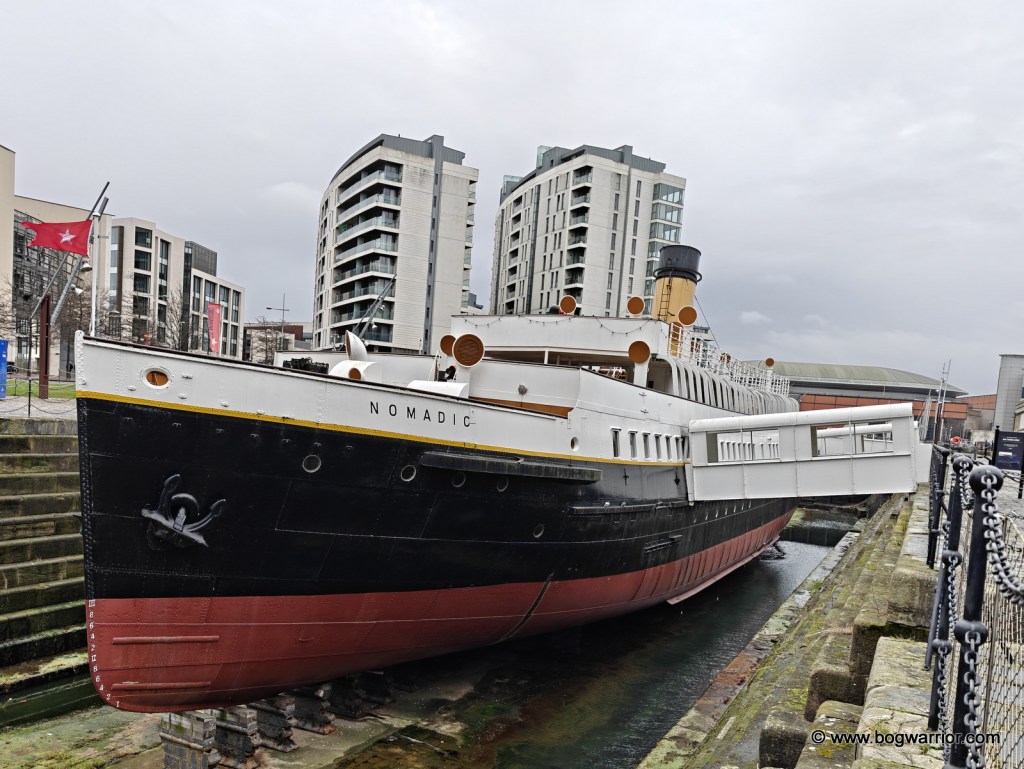
SS Nomadic

The entry ticket also gives you access to the SS Nomadic, which is to be found in a nearby dry dock. This is the last surviving White Star Line ship and was built at the same time as the Titanic. It was designed by Thomas Andrews, who was also responsible for designing the Titanic. As it happens, it’s also the only surviving ship designed by Andrews. SS Nomadic was essentially a shuttle bus on water and was used to ferry first and second-class passengers from the dockside out to their ship. In 1911, it brought passengers from Cherbourg out to the Titanic. It continued to operate as a working tender for 50 years before being converted into a floating restaurant/casino in Paris. It was purchased in 2006 by the local government and restored. It’s well worth a visit, even if it’s just to observe the differences between the 1st and 2nd class areas.

I caught a Glider bus back to the city centre (I bought a ticket at the bus shelter near the Titanic centre) before doing some shopping/exploring. Yet again, I wished that we hadn’t gutted our rail network in the mid-20th century because the train is such a nice way to travel. The train back to Dublin was an Irish Rail one but was no less nice than the Enterprise one from the day before. Seeing as I started this post with a photo of a railway station information board, I might as well end with one as well.

The last leg – Heuston Station

Getting There

An hourly train runs between Dublin and Belfast – see Irish Rail or Translink’s website for more info. Belfast Grand Central railway station is within walking distance of several hotels and of the city centre.

Belfast has a regular bus service, including some Glider bendy buses.

As well as the famous black taxi tours, there are open-top bus tours which also come recommended.

Inis Meáin – the low key one and all the better for it

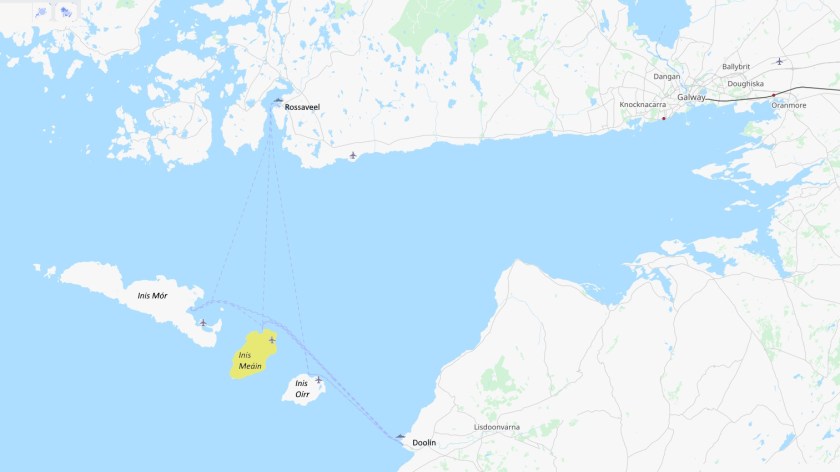
Having visited Inis Mór and Inis Oírr, it was only right that I should make a trip to the remaining one of the three Aran Islands. Inis Meáin (or Inismaan) is the least visited of the three islands, making it a very different experience from the other two.

Getting Around 🚶‍♂️

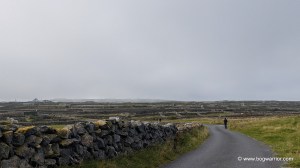
Straight away, you know things will be a little different here. For starters, there is no direct ferry – the boat which dropped us off was en route to Inis Mór and would make the same trip in reverse later on. Although the ferry was busy enough for mid-September, only a handful of people disembarked at the pier on Inis Meáin. And then…nothing! The piers on the other two islands are at the heart of their main villages and visitors are greeted straight away with the trappings of modern-day tourism. Bike hire shops, locals offering guided tours by horse or minibus, food trucks, signs for nearby shops and businesses. Here, the pier is 3km away from the main village, which is located inland. In a way, this is symbolic of the way this island works. You have to work that little bit harder to to get around but it is definitely worth it. There were no bikes to hire, perhaps the summer season was over, so walking was the only game in town.

The long walk into town

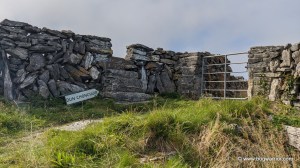
As with the two other islands, the signposting is a bit sketchy. There are some signs for loop walks but really, your life will be made easier if you have a good printed map or decent map app on your phone. I used Google Maps and found it very useful, both for finding my way around and for calculating how long it would take to walk to the various highlights. Being on Shank’s mare meant a few places on the “to visit” list were snipped out. Still, there was plenty to see on the day. More than anything, a day out on this wonderful island proved to be a wonderful way to get away from it all and to clear my head.

Clochán

A Clochán is a dry stone hut which is built from stone and has a corbelled roof. Many of them were monastic huts and there are some dramatic examples around. The best known of these are probably the beehive huts on Skellig Michael off the south coast. Star Wars fans will recognise them from The Last Jedi. Like the other clocháns which are found in Ireland, it isn’t known when this one was built but it is many centuries old. Unfortunately, this one isn’t in good condition but the roof is still intact. As well as the little front entrance, it has a side window. You can still crawl into the hut but I chose not to – the photos online were enough to satisfy my curiosity! There is a small, very old graveyard overlooking the clochán.

Ancient monastic hut or clochán

Dun Chonchúir

Because I was on foot, I didn’t get more than a cursory look at the outer edges of this extensive and ancient fort. I was also conscious of how much time I’d spent going to and from Dún Aongasa on Inis Mór, only to conclude that it looked far more impressive from the air… It is the largest of the stone forts on the Aran Islands and is built on the highest point of Inis Meáin. There are a few small clocháns in its inner keep which were repaired in the 19th century.

Dún Chonchúir

Séipéal Mhuire gan Smál

I have to admit that modern-day churches don’t do a lot for me, especially the 19th century gothic revival ones. However, the 1930s church here is lovely and worth a visit. Most of the stained glass windows are from the Harry Clarke Studio1 and they’re exquisite. The altar was crafted by James Pearse, the sculptor father of Irish revolutionaries Padraig and Willie Pearse. James died in 1900 (i.e. long before this church was built) so I assume this altar had been in an older island church before this. (Please let me know)

Teampal na Seacht Mac Rí and St. Kennerg’s Bed

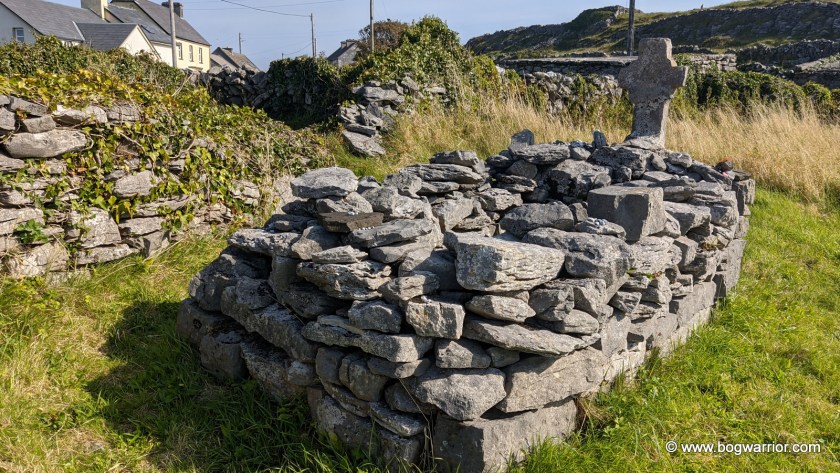
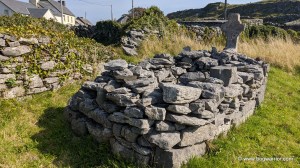
On the way into the village, I walked past the remains of Teampall na Seacht Rí and St. Kennerg’s Bed or grave which is right beside it. There isn’t much left to see of the church but the grave beside it is more striking. Kennerg was the daughter of the King of Leinster and was highly venerated at one stage.

St Kennerg's Bed or grave. Stands beside the ruins of Teampall na Seacht RíSt Kennerg's Bed or grave. Stands beside the ruins of Teampall na Seacht Rí
St Kennerg’s Bed or grave. Stands beside the ruins of Teampall na Seacht Rí

Lunch

Armies and occasional bloggers don’t like to march on empty stomachs. And so, lunch was the next important milestone. Teach Ósta is the only pub on the island so being barred is not a wise move. Happily, they serve hot food and cold drinks – the chicken goujon wrap was very welcome. It was also a chance to hear the locals chattering as gaeilge because Irish is the first language here. There is a shop nearby but it was closed for lunch so I didn’t get to see what it was like. Like this pub, I believe it’s the only one on the island.

Teach Osta – the only pub in town

Teach Synge

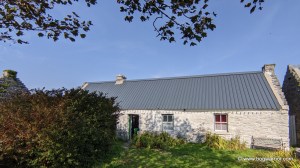
The Irish writer John Millington Synge (1871-1909) is known for his connection to the Aran Islands. His travelogue “The Aran Islands” was published in 1906. It proved to be a far less controversial work than his play “The Playboy of the Western World” (1907). When it was staged in Dublin, and later in New York, the audience rioted. Happily, visiting this old cottage where he used to holiday is a far more peaceful experience. It is still in the hands of the family who owned it in Synge’s time and it has been restored to look like it did in his time. It is hoped that the cottage can be thatched again, which will bring it back to what it looked like in Synge’s time.

Restored cottage where playwright JM Synge lived for a time

Carrowlisheen/Diarmuid and Gráinne’s Bed

The Pursuit of Diarmuid and Gráinne (or “Tóraíocht Dhiarmada agus Ghráinne” if you did Leaving Cert Irish fadó fadó) is a tale from Irish mythology. Gráinne, the daughter of the High King of Ireland, decides she can’t go through with her arranged marriage to the ageing Fionn McCumhaill (Finn McCool of Giant’s Causeway fame). Diarmuid, a hunky and younger warrior catches her eye and she magically enchants him so she can avoid marrying Fionn. Before you can say “Bye Granddad”, the pair go on the run and thus the adventure begins. The story inevitably ends in tragedy but not before the couple criss-cross Ireland. There are many prehistoric sites around Ireland which bear the name “Diarmuid and Gráinne’s Bed, including this one. It is actually a megalithic wedge tomb which is looking the worse for wear now.

One of the many Diarmuid and Grainne's Beds around Ireland. In reality it is a megalithic wedge tomb
Diarmuid and Gráinne’s Bed. Not very comfy.

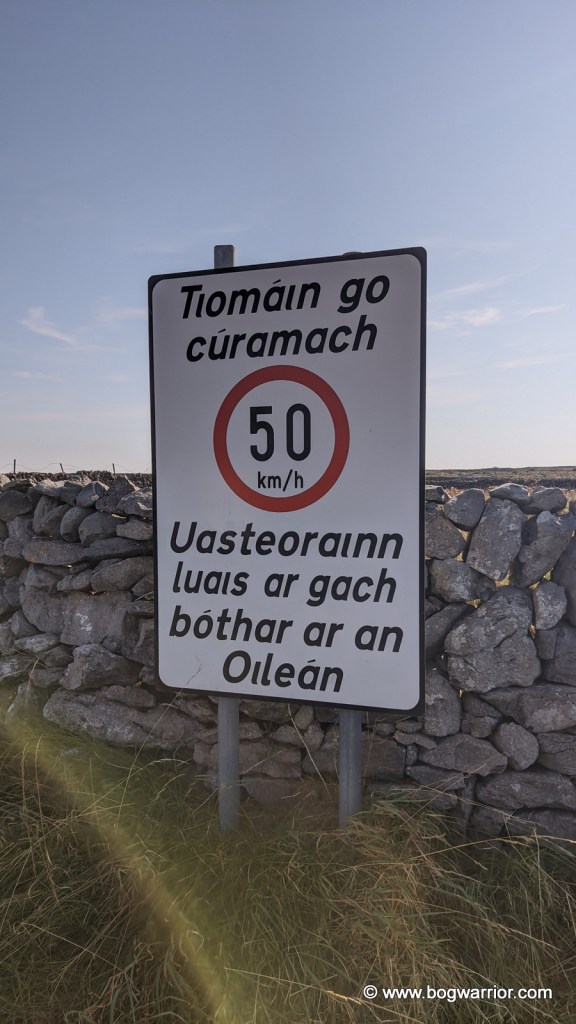
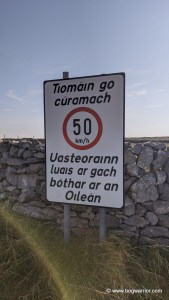
After this, I headed back to the pier to catch the ferry back to Rossaveel. The walk took me past the small airport which brings people to and from the mainland. It also gave me a chance to look at this chatty sign telling motorists to drive carefully, and that the speed limit is 50km/h on the island. After that, it was a short walk to the pier and the wait for the ferry home.

Speed Limit is 50km/h

Getting There

Inis Meáin is served all year round by ferries which leave from Rossaveel in Co. Galway or from Doolin, Co. Clare. Aran Islands Ferries operate out of Galway and you can either travel to Rossaveel Pier yourself, or catch their shuttle bus from Galway city centre. Two ferry companies sail from Doolin, Co. Clare – the Doolin Ferry Company and O’Brien’s Ferry. Aer Arann fly from Inverin in Galway if you fancy something different or like small planes.

As you will have gathered by now, a visit to Inis Meáin is a much more low-key affair than the other two islands. If you want the place almost entirely to yourself, go off-season and enjoy the solitude (in a nice way). Details on bike hire are sketchy but it would appear that during the summer season, bikes are available at the pier. It is possible to bring your own bike to the island but if you intend to do so, contact the ferry company first.

  1. Harry Clarke(1889-1931) was a renowned Irish stained-glass window artist. After his death, the studio he founded continued to produce high-quality stained glass windows. ↩︎

Inis Oírr – sunken churches and wrecked ships

In 2023 I visited Inis Mór, the largest of the three Aran Islands. You can read about that here. Anyway, in 2024 I decided to visit the other two. First up was Inis Oírr (Inisheer) which is the smallest of the three. Despite its small size, there’s plenty to see, and you’ll still be back in time for the ferry. I’ve added more of the travel details at the end, if you’re still awake by then.

Getting Around 🚤✈️🚲🏇🚶‍♂️

I hired a bike from one of the two hire businesses that operate near the pier. Inis Oírr is relatively flat, so even if you don’t hire a fancy e-bike, you can still whizz around quite comfortably. The road surfaces are generally OK, but there are uneven patches, and you never know who might come around the corner. So be careful when going downhill—the language of eating concrete transcends international borders.
These warning signs also mean you can stop pedalling for a while

O’Brien’s Castle

O’Brien’s Castle (aka Furmina Castle) is one of the most noticeable buildings on the island. It’s a ruined 15th-century tower house built on top of a hill. The ruins themselves are a bit ho-hum, but they’re in good condition. Once upon a time, wooden stairs linked the floors, but they have long gone. The view from the grounds is worth the short climb, though.

O’Brien’s Castle

Further up the hill is An Túr Faire, a ruined Napoleonic signal tower. It was built in the early 19th century when it was feared that the French might attempt to invade Ireland. The grounds were locked up so this photo was taken through the gate. There are several more of these dotted around the Irish coastline.
An Túr Faire

The sunken church/aka Teampall Chaomháin

This is a ruined church found in the local cemetery. Its age is up for debate—although the OPW sign nearby indicates that it’s a 10th-century church, other sources claim otherwise. What isn’t up for debate is that this church is largely below ground level and looks like it has sunk into the ground. In times past it was buried by shifting sands from the nearby beach. There is a little roofed tomb nearby, which is believed to house the remains of St. Caomhán who may have founded this church. You can walk into the church, and that is an unusual experience. It is odd to be looking straight down into the ruins rather than up and to find a church window at waist height. This may have been a larger church in times past—the chancel is what remains now.

St. Caomhán’s Church

The Plassey Shipwreck

This rusting shipwreck dates all the way back to WWII. It was built in 1940 by the British Royal Navy and was originally called HMS Juliet. It served its time in the war and was later converted into a cargo vessel. It was renamed Peterjohn. In 1951 the Limerick Steamship Company purchased it and renamed it MV Plassy/Plassey (spellings vary). It continued to operate as a cargo vessel until 8th March 1960. On that day, the ship was caught up in a severe storm and was driven up onto Finnis Rock off Inis Oírr’s coast. The crew of 11 was rescued by a group of islanders. Some weeks later, another storm hit, and this one brought the Plassey onshore. It has remained here ever since, slowly deteriorating and occasionally shifting if an Atlantic storm is particularly ferocious. It became better known in the 1990s when it was featured in the opening titles of the sitcom Fr. Ted. Somebody made a sign directing visitors to the shipwreck (see gallery below), but it too is starting to succumb to the elements.
Ironically, the shipwreck isn’t too far from a lighthouse…

Eatenin’ and Drinkenin’

You can, of course, bring your own food to Inis Oírr but if you’d rather grab something on the island, there is plenty of choice. There are some pubs, cafés, and food trucks serving all sorts of food, snacks, and drinks. I kept it simple and had some fish & chips from Tigh Ned. Other eateries are available.

Fish & Chips from Tigh Ned

If you have never been to any of the Aran Islands, I think Inis Oírr is a great place to start. It’s a small island, so you should be able to tick off most, if not all, of the places of note in one day. The locals are friendly too, and the scenery is beautiful. You can buy Aran sweaters here too—according to online reviews, they are cheaper than what you’d pay in Dublin. All the shops and pubs seem to take card payments, so there’s no need to load up on cash.

Getting There

Inis Oírr is served all year round by ferries that leave from Rossaveel in Co. Galway or from Doolin, Co. Clare. Aran Islands Ferries operate out of Galway, and you can either travel to Rossaveel Pier yourself or catch their shuttle bus from Galway city centre. Two ferry companies sail from Doolin, Co. Clare—the Doolin Ferry Company and O’Brien’s Ferry. Aer Arann flies from Inverin in Galway if you fancy something different.

Inis Oírr can be explored on foot, but most people hire a bike from Joyce Bike Hire or Rothaí Inis Oírr. Both hire out all sorts of bikes, from e-bikes to tandems to dog buggies. If you fancy something less energetic, you can hire a local to bring you around the island by horse and cart or by minibus.

Gallery.

Click on a picture to launch